Can the Israeli military be trusted to investigate itself? Evidence shows genuine accountability is rare
- Written by: Weekend Times
Australian Prime Minister Anthony Albanese says it’s an “outrage” the Israeli Defense Forces (IDF) have decided not to open a criminal investigation into the Israeli strikes that killed an Australian aid worker,
Zomi Frankcom, and six of her colleagues in Gaza in April 2024. He added:
It falls far short of the accountability that we expect and consistently called for on behalf of Australia.
International law is clear: states are obligated to investigate alleged war crimes committed by their nationals or armed forces, or on their territory. And, if it’s appropriate, they are obligated to prosecute the suspects.
To this end, military and civilian leaders must report suspected breaches of the law up the chain of command to ensure prompt, independent and impartial investigations are carried out.
On Wednesday, the IDF published the findings of an internal investigation into five incidents in Gaza since the war began in October 2023.
Two incidents were deemed to raise “reasonable suspicion of criminal misconduct”. The IDF ordered the Military Police Criminal Investigation Division, the primary investigative unit within the IDF, to open criminal probes into them. They are:
The killing of Hind Rajab, January 2024: The IDF acknowledged that soldiers opened fire on a vehicle carrying five-year-old Hind Rajab and her family as they fled Gaza City. In addition, the IDF said “a shell was fired toward” an ambulance trying to reach the car, killing two paramedics.
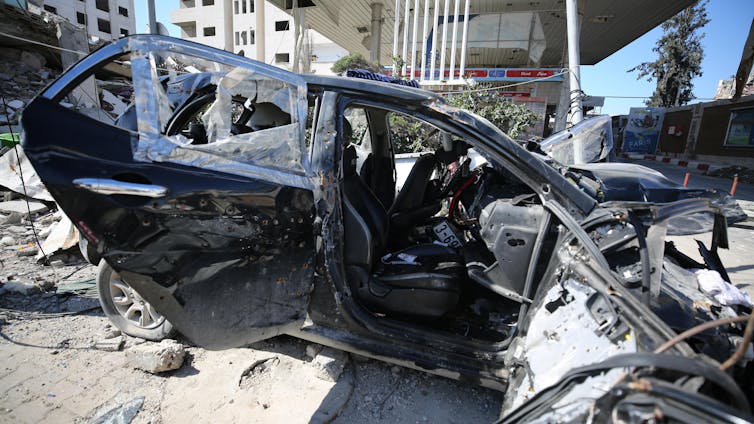
The killings of Palestinian rescue workers, March 2025: The review also referred the killings of 15 Palestinians in southern Gaza – some of whom it recognised as paramedics and medical personnel – to criminal investigators.
It said Israeli troops fired on three vehicles, which were later identified as ambulances, a fire truck and a UN vehicle.
Forensic Architecture, a research group at the University of London, alleges the military tried to cover up the killings by crushing and burying the medics’ vehicles.
The IDF investigators did not recommend further investigations into three other incidents, including:
The strikes on the World Central Kitchen convoy, April 2024: In addition to Frankcom, three British nationals, a Palestinian, a Pole and a dual US-Canadian citizen were killed when the IDF mistakenly identified their vehicles as carrying Hamas operatives.
The investigation found serious operational failures in the soldiers’ actions. Two commanders were stripped of their ranks and three officers were reprimanded. However, the review did not find “reasonable suspicion” of criminal conduct.
The other two incidents related to the killings of four employees of Médecins Sans Frontières in 2023 and 2024.
How often are Israeli soldiers prosecuted?
Statistically, very few complaints against IDF personnel result in investigations or criminal convictions.
The Israeli human rights group Yesh Din analysed complaints made to the IDF in 2019–20 and found 72% were closed without criminal investigation and just 2% led to prosecutions.
Another investigation of 52 Israeli military probes between 2023 and 2025 found 88% were either still under review or had been closed. Only one case had led to a prison sentence for an Israeli soldier.
What are the concerns with the IDF investigating itself?
Human Rights Watch has expressed serious concerns with IDF investigations into incidents involving Palestinian civilians. The group says they are “not impartial, thorough or timely”.
Cases often take months or years to navigate the IDF investigative process). Critics say this undermines the cases and diminishes the prospects for prosecutions.
Human Rights Watch reports that initial investigations largely rely on soldiers’ own accounts. The military advocate general, who advises the IDF during military operations, subsequently determines whether conduct should be criminally investigated or prosecuted.
Critics also argue that investigators frequently fail to contact readily available Palestinian witnesses, lack Arabic-speaking investigators, and rely heavily on Israeli NGOs to locate witnesses and obtain evidence.
Palestinian witnesses are often reluctant to cooperate in investigations because of fears of arrest, retaliation or mistreatment.
The military insists investigations are slowed by the difficulties of ensuring due process for its personnel in an active combat zone.
But rights groups say that by the time detectives are authorised to investigate, physical evidence is often long gone, the scenes have been compromised, and witnesses’ memories have faded.
That said, war crimes are not subject to any statutory limitation, meaning prosecutions can occur decades after an alleged offence.
What happens next in these cases?
The Hind Rajab and paramedic cases will now be transferred to military police for formal criminal investigations. They will collect forensic evidence, review communications logs and interrogate the soldiers and commanders involved.
Once complete, the investigation will be handed back to the military advocate general, who will decide whether to issue criminal indictments.
Structural legal barriers suggest, however, that the cases may not go anywhere.
Under Israeli military law, the legality of conduct in war must be assessed based on what a “reasonable commander” knew (or should have known) at the split-second the trigger was pulled. Did they honestly believe they were firing at a legitimate target?
Unless prosecutors can prove explicit intent to murder civilians, cases are often downgraded to “negligence” or closed entirely.
Lengthy proceedings can also create difficulties for eventual prosecution. As evidence becomes unavailable or less reliable over time, defence lawyers may argue that continued proceedings would prejudice their clients’ rights to a fair trial.
In some cases, concerns such as these can lead to reduced charges, plea agreements or the withdrawal of an indictment.
What other options exist?
The International Criminal Court (ICC) is designed to be a “court of last resort”. This means it only steps in if a nation is “unwilling or unable” to genuinely carry out investigations of suspected war crimes.
Israel has long argued that its investigative procedures in cases such as these are both credible and independent.
However, international observers and groups like the Hind Rajab Foundation maintain these internal probes function primarily as a public relations shield rather than a pathway to genuine accountability for wrongdoing.
As Human Rights Watch has put it: “a system that overwhelmingly closes cases without accountability, years after the fact, and only in response to sustained international pressure, is not justice, it’s a whitewash”.
Cases like these could also be investigated and tried in other countries’ courts under what’s known in international law as universal jurisdiction.
This allows domestic courts to launch prosecutions, even when the countries have no link to the perpetrator, victim, national interest or territory where the incidents occurred.
These prosecutions can be supported by UN-appointed independent international commissions of inquiry. These fact-finding bodies collect evidence, interview witnesses and compile exhaustive archives of offences in war zones.
While these UN panels do not hold trials, their formalised, verified evidence files are designed to be handed over to foreign prosecutors or future tribunals.
Shannon Bosch does not work for, consult, own shares in or receive funding from any company or organisation that would benefit from this article, and has disclosed no relevant affiliations beyond their academic appointment.