The effectiveness of private prisons is debatable – why does Australia have so many?
- Written by: Rick Sarre, Emeritus Professor in Law and Criminal Justice, Adelaide University
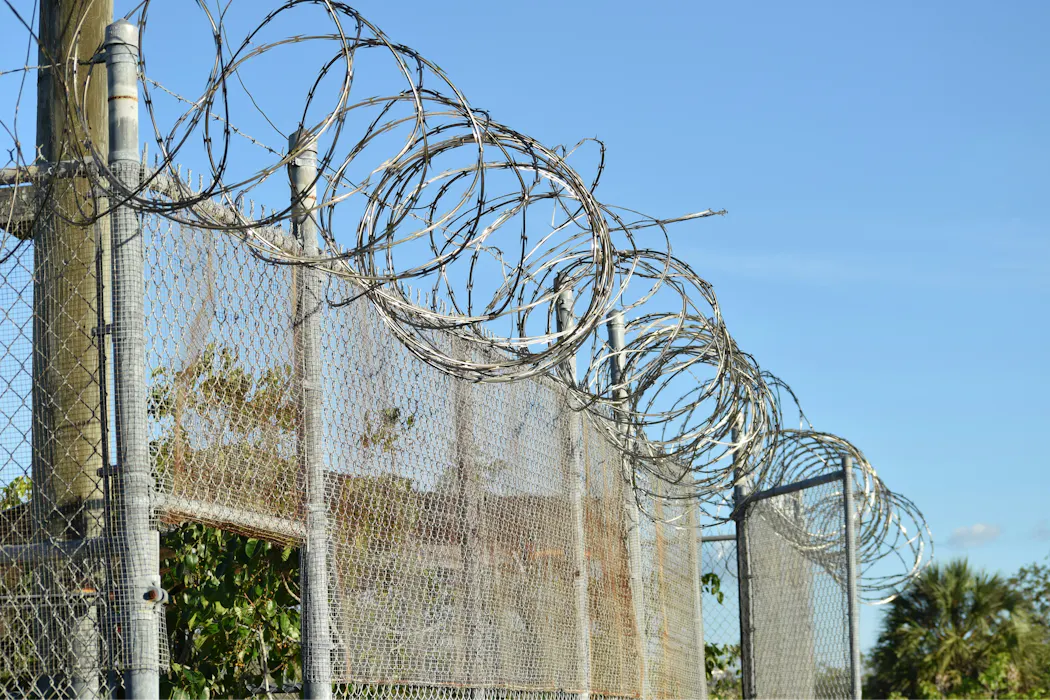
This month, the South Australian government extended a contract[1] with a private firm to manage a men’s prison in Adelaide for another five years, despite a damning report about its operations.
The report[2] from the McKell Institute – a non-profit, progressive Australian public policy think tank – concluded the private operation of the Adelaide Remand Centre had been a failure.
It found understaffing had created a volatile environment that put staff and inmates at risk. It also cited security breaches and higher costs per inmate compared to publicly run prisons.
The report prompted the head of the Public Service Association to implore the state Labor government not to extend the contract[3] with Serco[4], a multinational security and justice system management firm.
But Corrections Minister Michael Brown ignored that plea[5], causing the head of the Community and Public Sector Union, Stewart Little, to say[6] Premier Peter Malinauskas would have “blood on his hands for this decision”.
The controversy renews the focus on private prisons in Australia.
In 2025, eight of the 114 custodial facilities in Australia were privately operated, making up 16.5% of the prisoner population[7]. This is down from 19%[8] a decade earlier when it was the highest percentage [9] among advanced economies worldwide.
A history of privatisation
While many countries[10] allow the privatisation of correctional institutions, they are principally found in the United States, the United Kingdom, New Zealand and Australia.
Let’s look at the history and trajectory of this in Australia.
In January 1990, Queensland’s Borallon Correctional Centre opened as the first private prison in Australia[11].
It came after a 1988 Commission of Review into Corrective Services[12] in Queensland revealed a “tired, demoralised [and] inefficient” prison system.
The report suggested the private sector could manage some custodial functions better than state-run facilities, if performance measures were properly applied.
In due course, a contract was drawn up between the Queensland government and Corrections Corporation of Australia. Management of the prison was then transferred to Serco Australia in 2007.
The experiment lost political support several years later, and Borallon was decommissioned in 2012. It reopened in 2016 as a publicly run facility.
Despite this setback, private operations continued to be adopted around the country.
Is private better?
Evaluations[13] of the effectiveness of privatised prisons are mixed.
A 2022 review in the US[14] compared private and public prisons across key performance measures, including cost, quality of care, rehabilitation and recidivism rates. The evidence indicated the differences between the two systems were negligible.
Australian audit reports tell a different story. The Queensland Audit Office in 2016[15] and the Victorian Auditor-General’s Office in 2018[16] indicated cost savings of up to 20% for private prisons operating at similar standards as state-run prisons.
However, concerns [17]have been raised about private prisons. The Victorian auditor report observed:
Serious incidents at both Port Phillip and Fulham have, in some instances, exposed weaknesses in how [private prison operators] G4S and GEO [Group] manage safety and security risks, and neither operator is investigating serious incidents using methods that effectively identify root causes.
Allegations have also surfaced about cost cutting[18] that has resulted in understaffing, inadequate therapeutic programs, health and safety[19] issues, and poor security with consequential assaults and even deaths in custody[20].
A review of corruption risks[21] in Queensland’s prisons in 2018 noted the corrective services commissioner “has limited visibility of, and ability to influence, the culture of the private centres”, given the nature of commercial-in-confidence[22] contractual provisions.
In 2016, a national review[23] of prison privatisation determined that evaluations were hampered by the opaque nature of correctional data. The authors concluded:
The purported benefits of introducing private prisons along the lines of accountability, costs, efficiency and performance still remain to be proven.
A genuine comparison in terms of performance, cost and efficiency will only be possible once all private prisons are subject to similar levels of public accountability.
The authors recommended an immediate halt to prison privatisation until adequate supporting evidence became available.
Contract controversies
All prisons, public and private, outsource some of their work to external businesses or non-government organisations. These include health services, rehabilitation programs, electronic monitoring and visitor amenities.
These contracts, too, are not without controversy. For example, the Victorian government has now abandoned its use of private health services in women’s prisons, due in part to the death of an Indigenous inmate[24] whose repeated desperate requests for medical assistance were ignored.
The remaining two private prisons in Queensland – the Arthur Gorrie Correctional Centre and the Southern Queensland Correctional Centre – were returned to state hands in 2020 and 2021, respectively, after a recommendation from the state’s Crime and Corruption Commission report in 2018[25].
The minister for corrective services, Mark Ryan, stated at the time[26]:
The transfer to public operation will lead to improved staff safety […] the transition will strengthen corruption resistance in Queensland prisons and improve overall integrity.
In correctional terms, adequate contract management by governments is essential.
One can only hope the South Australian government keeps that in mind as it manages the performance of Serco at the Adelaide Remand Centre.
References
- ^ extended a contract (premier.sa.gov.au)
- ^ report (mckellinstitute.org.au)
- ^ not to extend the contract (aapnews.aap.com.au)
- ^ Serco (www.serco.com)
- ^ ignored that plea (www.indailysa.com.au)
- ^ to say (au.news.yahoo.com)
- ^ 16.5% of the prisoner population (www.pc.gov.au)
- ^ 19% (cdn.jss.org.au)
- ^ the highest percentage (www.sydney.edu.au)
- ^ many countries (investigate.info)
- ^ the first private prison in Australia (www.aic.gov.au)
- ^ Commission of Review into Corrective Services (www.publications.qld.gov.au)
- ^ Evaluations (doi.org)
- ^ review in the US (doi.org)
- ^ Queensland Audit Office in 2016 (www.qao.qld.gov.au)
- ^ Victorian Auditor-General’s Office in 2018 (www.audit.vic.gov.au)
- ^ concerns (www.aic.gov.au)
- ^ about cost cutting (www.indailysa.com.au)
- ^ health and safety (michaelwest.com.au)
- ^ consequential assaults and even deaths in custody (www.parliament.nsw.gov.au)
- ^ review of corruption risks (www.ccc.qld.gov.au)
- ^ commercial-in-confidence (theconversation.com)
- ^ a national review (www.researchgate.net)
- ^ death of an Indigenous inmate (theconversation.com)
- ^ Crime and Corruption Commission report in 2018 (www.ccc.qld.gov.au)
- ^ stated at the time (statements.qld.gov.au)
Authors: Rick Sarre, Emeritus Professor in Law and Criminal Justice, Adelaide University