Desperate to flee abuse in Cambodian scam compounds, these young Indonesians are now facing suspicion back home
- Written by: Charlotte Setijadi, Lecturer in Asian Studies, The University of Melbourne
In the first two weeks of March, two young Indonesian women died alone in a hospital in Phnom Penh, Cambodia.
The first[1], who Indonesian officials have identified as 22-year-old Susi Yanti Br. Sinaga died following a critical illness, despite having no prior health conditions.
Her family said Susi left Indonesia in December 2025 with her boyfriend and a promise of a job in Malaysia. She ended up being trafficked into a scam compound in Cambodia. Within three months, she was dead.
The other woman, a 20-year-old shopkeeper from Pekanbaru, Riau province, arrived in Cambodia under similar circumstances and died only a few days after Susi. According to multiple NGO sources who assisted her in her final days, her death was linked to the physical and sexual abuse she suffered in the compound.
These women are among the thousands of young people[2] who have found themselves stranded in Cambodia in recent months after leaving scam compounds that had opened their doors in anticipation of rumoured police raids.
Many who have made their way to the Cambodian capital are Indonesian. They began lining up[3] outside the Indonesian embassy in Phnom Penh in mid-January, seeking help to return home.
By March 9, the embassy said it had received more than 5,400 requests[4] for assistance from Indonesian citizens in less than three months. Over 1,800 have so far been repatriated with the embassy’s assistance. Most of the others are now hosted in a dedicated facility, where they wait for their turn to leave.
These numbers represent a sharp increase from 2025. They highlight the scale of trafficking of young Indonesians into “scam factories[5]” across Southeast Asia, mostly in Cambodia, Laos, Myanmar and the Philippines.
Clearly, what is happening to these Indonesians is a complex structural problem, shaped by regional labour precarity and weak regulation.
Yet, Indonesia is largely overlooked in existing media coverage of the issue. Relatively little is known about how Indonesians are entrenched in the industry as victims, operators and stakeholders.
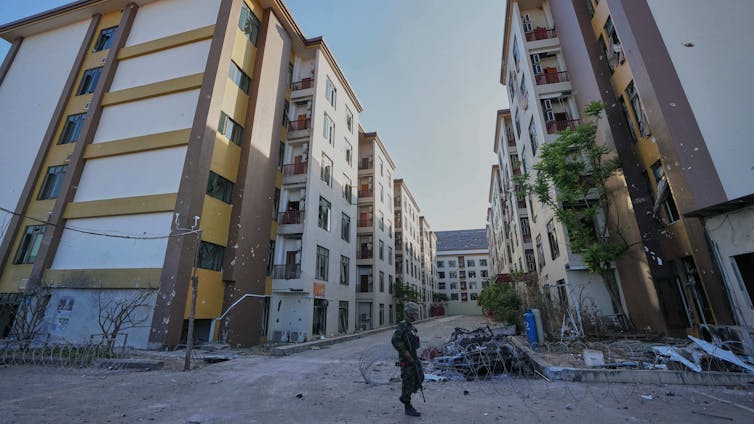
Why young Indonesians are in the industry
In March last year, the Indonesian government reported that, with the assistance of the Thai government, it had rescued and repatriated 569 of its citizens[7] from online scam compounds in Myanmar.
This drew national attention to the issue, raising urgent questions about why and how so many young people are being lured into this work.
Read more: Scam Factories: The inside story of Southeast Asia’s fraud compounds - Part 1[8]
Spurred by limited employment opportunities, low wages and political discontent, Indonesian youths have been leaving the country in droves.
Some of these young people enter the scam economy willingly. Others go voluntarily but find themselves trapped once inside. Many more are deceived from the outset, lured into becoming so-called “cyber slaves[9]”.
Among rescued trafficking victims, familiar stories emerge. Most are recruited through friend referrals or fake job offers on social media. Once at their destination, however, they are abducted and trafficked into scam compounds[10]. Their passports are confiscated. They are told they owe large fees for flights, visas, accommodation or training, and must work to repay this debt.
Some of these victims eventually rise through the ranks to become scam operators, supervisors or even recruiters who lure other Indonesians, often friends or family, into the industry.
As NGOs have highlighted, however, progression in the industry[11] often involves coercion and debt bondage. Many are compelled to recruit others as a condition for repaying imposed debts, avoiding punishment or securing improvements in their living conditions.
These dynamics blur the boundary[12] between victim and perpetrator.
This contributes to the criminalisation of trafficked individuals. They should instead be recognised and protected as victims of modern slavery.
Escaped from slavery, greeted as suspects
In Indonesia, public discourse tends to frame those who end up in scam compounds either as criminals or gullible youths who fell for false promises.
Following the mass repatriation of Indonesian nationals from Myanmar scam centres last year, returnees were detained and questioned[13] before being released.
They were processed primarily through law enforcement procedures rather than victim support mechanisms.
Indonesian police have also noted some citizens returning from Myanmar’s scam centres refused to be repatriated[14] because of the money they were earning as scammers.
Those who have recently emerged from scam compounds in Cambodia are even more likely to be perceived as willing perpetrators. Cambodia’s growing reputation[15] as a regional hub for cybercrime has fostered a widespread assumption that Indonesians who travel there already know what kind of work awaits them.
Recent news coverage highlighting the large number of Indonesians working in Cambodia’s online industries[16] has further entrenched this narrative, casting them as complicit actors deliberately scamming fellow citizens.
In the wake of the reports of the recent Cambodian raids, some government officials have called for returnees to face criminal prosecution[17] under Indonesian law.
On social media, some popular commentators have argued Indonesian scam workers should not be repatriated. Some have even called for them to be stripped of their citizenship[18].
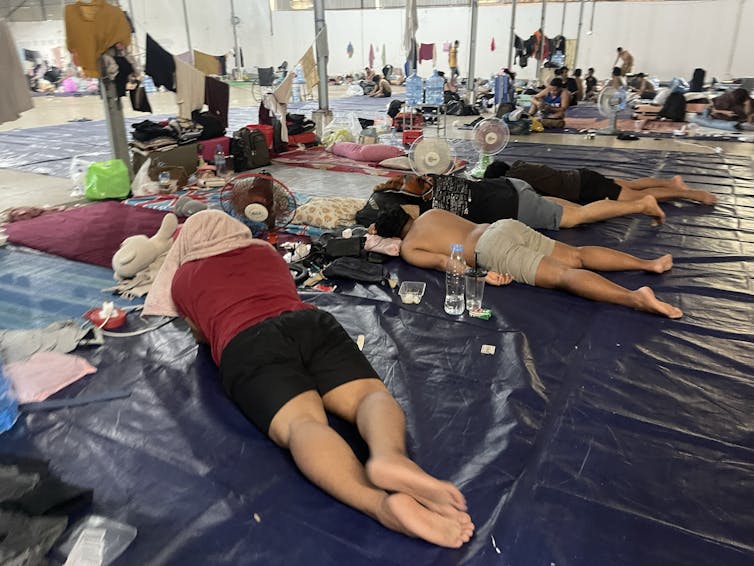
Who benefits from blaming trafficked workers?
Framing returnees as potential criminals is politically convenient but counterproductive. It discourages victims from seeking help from authorities.
It also makes it more difficult for civil society organisations, already strapped for funding, to mobilise support for these young Indonesians.
This ultimately benefits traffickers and industry operators.
This narrative also obscures how Indonesians are now involved at all levels of the scam industry, from recruiters and transnational operational staff to elites with financial stakes in the businesses.
The persistent focus on criminalising trafficked workers diverts attention from the deeper structures of deception and exploitation underpinning the industry.
With youth unemployment still high in Indonesia, this issue is not going away. Until trafficked workers are treated as victims rather than criminals, and the structures that feed this industry are addressed, the cost will continue to be borne by vulnerable young people like Susi and the young woman from Pekanbaru who died alone in Phnom Penh.
References
- ^ first (www.thejakartapost.com)
- ^ thousands of young people (theconversation.com)
- ^ lining up (jakartaglobe.id)
- ^ more than 5,400 requests (kemlu.go.id)
- ^ scam factories (theconversation.com)
- ^ AP Photo/Sakchai Lalit, File (photos.aap.com.au)
- ^ 569 of its citizens (www.ijm.org)
- ^ Scam Factories: The inside story of Southeast Asia’s fraud compounds - Part 1 (theconversation.com)
- ^ cyber slaves (www.aljazeera.com)
- ^ trafficked into scam compounds (www.reuters.com)
- ^ progression in the industry (www.bluedragon.org)
- ^ blur the boundary (aeon.co)
- ^ returnees were detained and questioned (www.reuters.com)
- ^ refused to be repatriated (www.metrotvnews.com)
- ^ growing reputation (theconversation.com)
- ^ online industries (en.tempo.co)
- ^ face criminal prosecution (www.youtube.com)
- ^ stripped of their citizenship (www.instagram.com)
Authors: Charlotte Setijadi, Lecturer in Asian Studies, The University of Melbourne