Australia has granted some Iranian soccer players asylum – but 2 questions remain
- Written by: Catherine Ordway, Visiting Scholar, UNSW Sydney
Last week, the Iranian soccer team refused to sing the national anthem[1] before their Asian Women’s Cup opener on the Gold Coast.
It was a silent protest in solidarity with thousands killed in deadly crackdowns in Iran.
But some of these athletes could be facing the death penalty should they return home, after being labelled “war traitors” on Iranian state television.
Late on Monday, news broke that five players have been granted asylum[2] in Australia and are now safe with police.
So how did it get to this and what may happen next? And what about the rest of the team?
‘Wartime traitors’
Sport, and soccer in particular, carries enormous political weight in Iran.
Athletes are symbols of the nation’s endurance. Their victories are political capital while their silence is viewed as a threat.
It’s perhaps no surprise, then, the players’ refusal to sing the national anthem sparked fury with regime hardliners, days after US-Israel strikes on the country[3].
Radical conservative television presenter Mohammad Reza Shahbazi, who is considered a mouthpiece[4] for the Iranian government, characterised the women’s team as “wartime traitors[5]” for not singing the anthem, and called for reprisals.
The team subsequently sang and saluted the anthem at their next two matches, but the pressure on them did not abate.
If some members of the team return home, they may be charged for a crime that attracts the death penalty in wartime.
For those who stay in Australia, it’s likely their families’ safety will be threatened.
On Sunday, after Iran’s third and final match of the tournament, supporters protested around the team’s bus leaving the stadium, expressing their fear for the team’s safety.
Supporters surrounding the bus reported noticing at least one player making the hand gesture signalling for help (SOS)[6] from the bus window.
Visas granted
As the situation escalated on Monday, US President Donald Trump implored Australia to give the athletes asylum.
He initially claimed the athletes were being forced to leave Australia, but later posted “he’s on it!” after discussing the issue with Prime Minister Anthony Albanese.
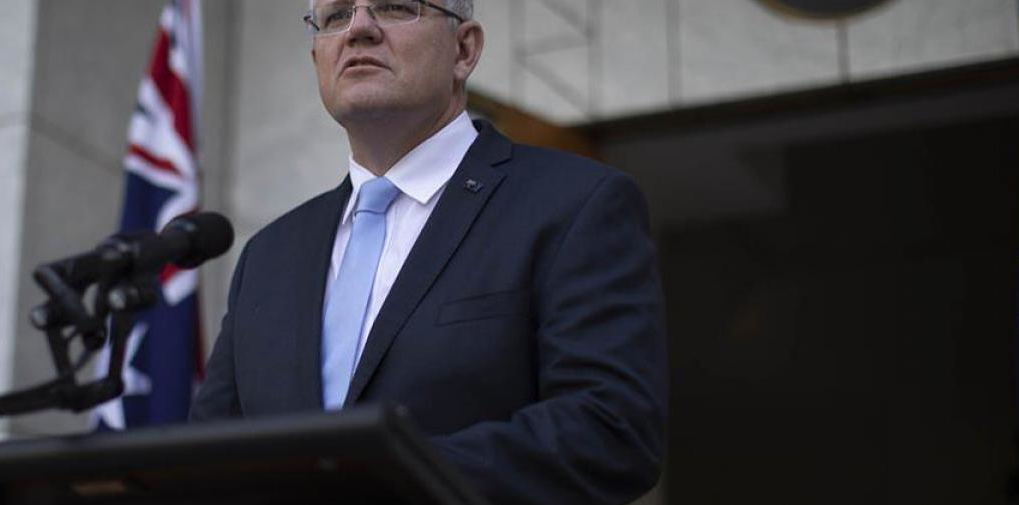
On Tuesday morning, Home Affairs Minister Tony Burke confirmed five Iranian athletes have been granted humanitarian visas to stay in Australia after escaping the squad’s security detail.
Burke said the the Australian government was keeping the door open for other athletes[7] to claim asylum:
Last night, I was able to tell five members of the Iranian women’s soccer team that they are welcome to stay in Australia, that they are safe here, and they should feel at home here. Not everyone on the team will make a decision to take up the opportunity that Australia would offer them. What matters here is that they have the best agency they can over those decisions. So we’re making sure that the opportunity to seek assistance is there.
Two more questions
The dramatic events have sparked two serious questions.
First, what could the football organisations involved – the International Federation of Association Football (FIFA), the Asian Football Confederation (AFC), and Football Australia – have done to be more prepared?
All have policies that promote and protect human rights. A human rights assessment is also done as part of the host nation bid process.
FIFA has a human rights framework to which bidding host nations must adhere, focused on protecting players and their entourage from discrimination and other human rights abuses.
This framework is also reflected in the AFC statutes for its members, including Football Australia.
Football Australia, as Asian Cup host, states in its constitution[8] that it:
strive(s) to promote the protection of human rights in accordance with FIFA’s human rights policies and commitments.
Beau Busch, Asia/Oceania president of world soccer’s professional players’ association, FIFPRO, said the refusal to sing the anthem had been anticipated[9].
Busch said he had written to FIFA, the AFC and the tournament organisers on February 11 to express concern for the players’ welfare and offering to work proactively to protect their human rights, but did not receive a reply.
This lack of preparedness meant the Iranian athletes were forced into a last-minute, life-or-death decision under immense pressure.
A second question revolves around the Iranian team’s security detail, which includes people linked to the Islamic Revolutionary Guard Corps (IRGC)[10].
While in Australia, the players have been extremely restricted both inside their hotel and at press conferences by their minders – unable to speak with friends or move freely.
Australia officially listed the IRGC as a state sponsor of terrorism[11] in November 2025.
The IRGC has a strong influence over the Iranian Football Federation, including through its president, Mehdi Taj, who is one of five vice-presidents[12] of the AFC.
But how were these security personnel allowed into the country?
Julian Leeser, Shadow Minister for Education, said anyone associated with the IRGC should be detained[13].
Lessons for the future
So what lessons can be learned to reduce the chances of this gut-wrenching situation happening again?
A similar situation may emerge in June at the men’s FIFA Men’s World Cup in the United States, Canada and Mexico, for which Iran has qualified.
The president of Iran’s soccer federation has stated he “does not know” if the team will compete, as the US government has not confirmed who from the security team will receive visas[14] to enter the country. The current visa rules in the US places a full restriction on Iranian nationals[15] entry with exceptions subject to case-by-case waivers.
If they do play, FIFA and the World Cup’s local organising committees must be prepared for similar scenes.
Of course, sports organisations aren’t the United Nations. But if these powerful organisations are more proactive and prepared – with clear safeguards and secure access to support – it should help minimise the drama that has affected, not just the athletes and their coach, but their friends and families abroad.
References
- ^ refused to sing the national anthem (www.abc.net.au)
- ^ five players have been granted asylum (www.abc.net.au)
- ^ US-Israel strikes on the country (theconversation.com)
- ^ considered a mouthpiece (www.theage.com.au)
- ^ wartime traitors (www.abc.net.au)
- ^ hand gesture signalling for help (SOS) (www.mirror.co.uk)
- ^ keeping the door open for other athletes (www.foxsports.com.au)
- ^ states in its constitution (footballaustralia.com.au)
- ^ had been anticipated (www.facebook.com)
- ^ linked to the Islamic Revolutionary Guard Corps (IRGC) (www.abc.net.au)
- ^ state sponsor of terrorism (ministers.ag.gov.au)
- ^ five vice-presidents (www.espn.com.au)
- ^ should be detained (www.2gb.com)
- ^ will receive visas (www.espn.com.au)
- ^ full restriction on Iranian nationals (www.theguardian.com)
Authors: Catherine Ordway, Visiting Scholar, UNSW Sydney