why being politically prepared for the next pandemic is crucial
- Written by: Grant Duncan, Research Associate, Public Policy Institute, University of Auckland, Waipapa Taumata Rau
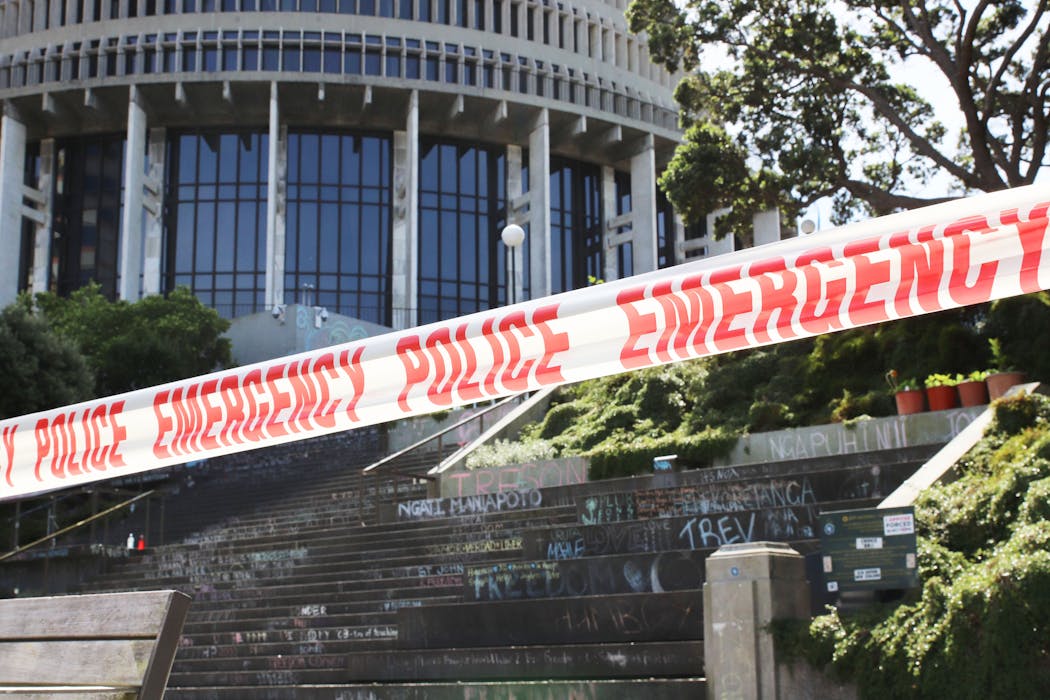
COVID-19 changed the course of New Zealand’s political history.
Labour’s 50% of the vote in 2020 came from a huge electoral swing[1] as a reward for the main coalition party’s effective evidence-based policies, and then prime minister Jacinda Ardern’s leadership.
It gave the party the first (and possibly last) single-party majority under the MMP proportional system.
But as the second report[2] of the Royal Commission of Inquiry into COVID-19 says, “New Zealand’s exit from the elimination strategy was difficult, rather than prepared and staged.”
In late 2021, the report adds, “social licence and willingness to comply with restrictions diminished”.
Central decision-makers became risk-averse and didn’t keep up with shifts in public sentiment from late 2021. This contributed to a decline in public confidence and to Labour’s election defeat in 2023[3].
NZ First’s return to parliament with 6% of the vote in 2023 was aided by voters who had resisted vaccination. In its coalition agreement with National, NZ First negotiated to widen the COVID inquiry to focus on vaccine mandates, lockdowns and testing systems.
While politically contested, this phase two inquiry report[4] is still valuable for what it reveals.
Deep social divisions
Whether one supported the previous government’s pandemic responses or not, everyone has been affected by those policies which now form a big part of our life stories.
It was the largest fiscal outlay (NZ$70.4 billion) and the biggest national emergency in recent history. That calls for a thorough policy evaluation to help prepare for similar public-health emergencies in future, if not to heal some of the wounds that were opened.
The second report of the royal commission airs many (now familiar) grievances about the vaccine, the vaccine mandates, the lockdowns and their consequences.
Personal submissions to the inquiry reflect a deep social division – and the strength of feelings still associated with that – as well as much support for those policies.
If New Zealanders were to face a similar health emergency in the near future, these often unresolved differences of opinion would reemerge and affect public compliance. New measures would remind people of “last time”.
It doesn’t end the conversation simply to say “thousands of lives were saved”, maybe even 20,000[5] when compared with the mortality rate in the US. Saving or prolonging lives has consequences for those who live through and pay for the policy choices, especially on such a profound scale.
Unpredictable consequences
Any rational evaluation of the COVID response is inevitably clouded by politics, however, even after all the scientific evidence is weighed up. Using evidence to inform policy is essential, but even the best evidence doesn’t dictate what a whole country ought to do.
Decision-making is political and has consequences, some of which will be unpredictable. In May 2020, for instance, a vaccine strategy was drafted, but the report notes this “did not anticipate the extent to which concerns about vaccine safety would emerge”.
Similarly, no one was predicting the ostracisation of fellow citizens that would follow from vaccine mandates. Many of the personal impacts of that policy are now usefully recorded in the report.
It was already clear[6] before the 2020 election, however, that most National and ACT supporters believed the economic costs of lockdown were too high and outweighed the public-health benefits.
More people, especially on the left, agreed with the Labour-led government’s line that it would damage the economy more in the long run if we had no strict lockdown.
Many people wanted to hang on to “elimination” as a permanent objective; others wanted the country to learn “to live with COVID” – as we now do.
Labour’s resounding 2020 victory may have convinced many that the debate over pandemic policy was won. But there was more to come: controversy over managed isolation and quarantine, and vaccine mandates.
In mid-2022, a spike in inflation induced by the massive fiscal response led to the cost-of-living crisis that became the leading issue in the 2023 election – and which looks set to become a leading issue in this year’s election as well.
Readiness for next time
The second COVID report will inevitably be politicised – in fact, the National Party began scoring points the moment the report’s embargo lifted.
But it’s important differing opinions are heard now, without judgement, to uphold democratic values.
To be serious about a public-health response means to take seriously the word “public” and take account of the effects of policies on people and communities.
That includes the experiences, needs and opinions of the ordinary people who were directly affected by the pandemic and by the government’s policies.
This also means hearing out those who don’t agree with expert advice. Some of the opinions shared with the Royal Commission are, in my opinion, misguided. But they should nonetheless be heard, given the magnitude of the experience and its effects on lives.
Those who support the actions taken by the Ardern government can validly agree that some things could have been done better, as current Labour leader Chris Hipkins has accepted[7].
Those who don’t support those policies and actions might also accept the Ardern government was making what it judged to be the best decisions with the information at hand, but in the face of deep uncertainty and rapid change.
There was no way through that emergency without some “unkind” measures, and doing nothing was not an option.
Will New Zealand be wiser and better prepared next time? It is to be hoped the Royal Commission’s work will help guide a future government, if and when that next time comes.
References
- ^ a huge electoral swing (press.anu.edu.au)
- ^ second report (www.covid19lessons.royalcommission.nz)
- ^ election defeat in 2023 (thepoliticalquarterly.substack.com)
- ^ report (www.covid19lessons.royalcommission.nz)
- ^ maybe even 20,000 (www.rnz.co.nz)
- ^ already clear (www.stuff.co.nz)
- ^ as current Labour leader Chris Hipkins has accepted (www.rnz.co.nz)
Authors: Grant Duncan, Research Associate, Public Policy Institute, University of Auckland, Waipapa Taumata Rau