why the death of Ali Khamenei reverberates far beyond Iran
- Written by: Ali Mamouri, Research Fellow, Middle East Studies, Deakin University
The death of Ayatollah Ali Khamenei triggered immediate and sharply polarised reactions, in Iran and around the world.
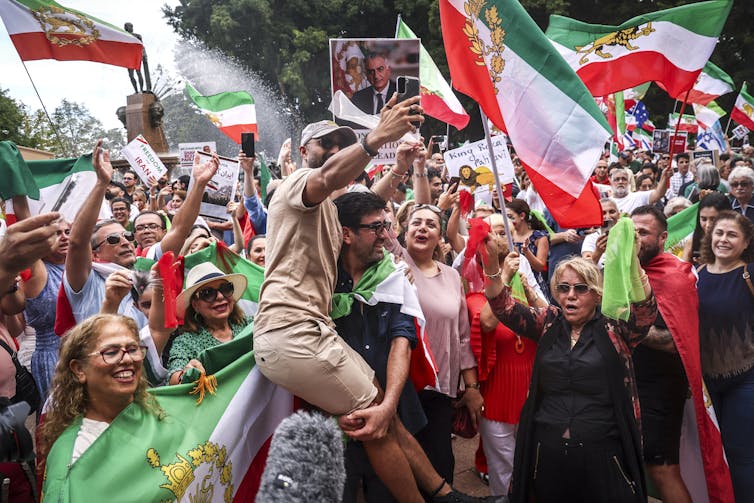
In some circles, it was openly celebrated as the end of an era associated with repression, theocracy and regional confrontation. In others, it was met with deep grief, prayers and public mourning.
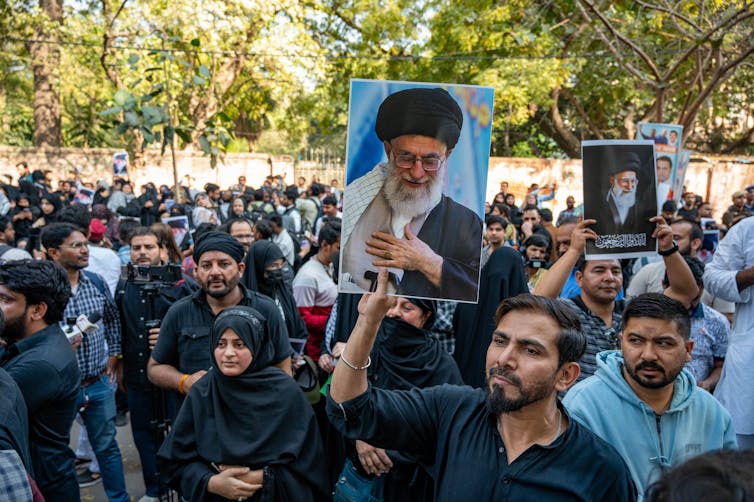
The division was visible far beyond Iran’s borders. In Sydney, Melbourne and New Zealand cities, some diaspora Iranians were celebrating in the streets. But several Shiite mosques and Islamic institutions organised public memorials and prayer sessions to mark his death.
The response quickly became political. New South Wales Premier Chris Minns condemned what he described[1] as the “lionising of this tyrant,” stating:
I think we can call the mourning of this tyrant atrocious […] By any objective measure the ayatollah was evil.
Others, including media commentators such as Amanda Rose, argued[2] that holding a funeral or prayer gathering falls within the bounds of religious freedom, regardless of political disagreement with the figure being mourned.
Inside Iran, the picture was similarly complex. Some citizens expressed relief or celebrated[3], particularly those who had experienced repression or economic hardship. Many others publicly mourned[4] Khamenei, attending ceremonies or sharing messages of grief.
This raises a deeper question: why does one political and religious figure provoke such radically different emotional responses, not only across societies, but within the same communities?
The legacy of resilience
Khamenei’s legacy cannot be understood through a single lens. For some, he embodied political resistance and religious values. For others, he symbolised authoritarian rule, curtailed freedoms and missed democratic opportunities.
Any serious assessment must begin by recognising that both readings coexist – and that his impact on the Muslim world and the Middle East will remain deeply contested.
For his supporters, Khamenei was not merely an Iranian leader. He was a pillar of regional resistance politics and a religious authority. He transformed political Islam into a force capable of confronting what he framed as global hegemony and modern forms of colonial domination.
Through the formation of the so-called “axis of resistance[6]” and his consistent call for Islamic opposition to the United States and Israel, he became a leading figure for Shiite movements and segments of Sunni political Islam.
Sunni groups such as Hamas[7] and the Muslim Brotherhood[8] were not created by Iran. Yet they voluntarily aligned themselves with Tehran’s resistance framework, forming close strategic ties.
Israel’s withdrawal[9] from southern Lebanon in 2000, and the US withdrawal from Iraq[10] in 2011 as a result of Iranian-backed resistance, significantly elevated Khamenei’s standing among many Muslims. This reinforced the perception that resistance could produce tangible results.
Read more: Ayatollah Ali Khamenei’s killing plays into Shiite Islam’s reverence for martyrs, but not for all Iranians[11]
For Shiites, his legacy carries additional weight. His support for Shiite communities living in Sunni-ruled states – many of whom had experienced long periods of marginalisation – was seen as a historic political shift.
For many Shiite communities in Iraq, Lebanon, Yemen and beyond, Khameinei’s leadership symbolised political empowerment, the building of political and military institutions, and the creation of a new balance of power.
As guardian of the Islamic Republic, his ability to steer the regime through sanctions, protests, war and internal crises – while expanding Iran’s regional influence – also earned him domestic support.
Some Iranians viewed him as a stabilising, patriotic figure. After eight years of war with Iraq shattered the country, he rebuilt the political, economic and military systems. He also shaped Iran’s doctrine of defiance[12] against pressure from Israel and the West.
As a result, his death viewed by supporters as martyrdom may inspire them for long.
The legacy of authoritarianism
On the other hand, Khamenei’s rule was marked by severe restrictions on political freedoms inside Iran and support for dictators[14] such as Syria’s Bashar al-Assad. This cost him popularity among other Sunni Muslims in the Arab world.
His regime forcefully suppressed reformist movements and successive waves of protest – including the most recent nationwide demonstrations[15]. Journalists, civil society activists and opposition figures faced arrests, bans and systematic pressure.
The central tension of his legacy remains clear: the same system that empowered certain communities beyond Iran’s borders simultaneously constrained political freedoms at home.
Khamenei will remain one of the most consequential Middle Eastern figures of the late 20th and early 21st centuries. His death does not end the debate over political Islam, state sovereignty or resistance politics. If anything, it intensifies it.
Reactions to his death mirror the deeper fault lines within the Muslim world between secularism and religiosity, sovereignty and global integration, resistance and reform.
History will remember him as a defining figure whose impact reshaped the region – for better or worse.
References
- ^ described (www.abc.net.au)
- ^ argued (x.com)
- ^ celebrated (www.youtube.com)
- ^ publicly mourned (www.youtube.com)
- ^ David Gray/AFP via Getty Images (www.gettyimages.co.nz)
- ^ axis of resistance (www.abc.net.au)
- ^ Hamas (english.aawsat.com)
- ^ Muslim Brotherhood (www.middleeasteye.net)
- ^ Israel’s withdrawal (www.theguardian.com)
- ^ US withdrawal from Iraq (www.theguardian.com)
- ^ Ayatollah Ali Khamenei’s killing plays into Shiite Islam’s reverence for martyrs, but not for all Iranians (theconversation.com)
- ^ shaped Iran’s doctrine of defiance (www.aljazeera.com)
- ^ Pradeep Gaur/SOPA Images/LightRocket via Getty Images (www.gettyimages.co.nz)
- ^ support for dictators (mei.edu)
- ^ most recent nationwide demonstrations (www.amnesty.org.au)
Authors: Ali Mamouri, Research Fellow, Middle East Studies, Deakin University