Iran’s exiled crown prince is touting himself as a future leader. Is this what’s best for the country?
- Written by: Simon Theobald, Research Fellow, University of Oxford; University of Notre Dame Australia
As Iranian and US diplomats meet in Geneva for crucial negotiations[1] to avoid a potential war, opposition groups in exile are sniffing an opportunity.
The Islamic Republic faces its greatest political crisis since its inception. US President Donald Trump is threatening an imminent attack[2] if Iran doesn’t capitulate on its nuclear program. And anti-regime protesters continue to gather, despite a brutal government crackdown that has killed upwards of 20,000[3] people, and possibly more[4].
Talk of a future Iran after the fall of the Islamic regime has grown increasingly fervent[5]. And buoyed by cries[6] heard during some of the protests in Iran of “long live the shah” (the former monarch of Iran), the voices of royalists in the Iranian diaspora are everywhere.
But is a return of the shah really what Iranians want, and what would be best for the country?

What are the monarchists promising?
Iran’s monarchy was ancient, but the Pahlavi dynasty that last ruled the country only came to power in 1925 when Reza Khan, a soldier in the army, overthrew the previous dynasty.
Khan adopted the name Pahlavi, and attempted to bring Iran closer to Western social and economic norms. He was also an authoritarian leader, famous for banning the hijab[7], and was ultimately forced into exile by the British following the Anglo-Soviet invasion[8] of Iran in 1941.
His son, Mohammad Reza Pahlavi[9], attempted to continue his father’s reforms, but was similarly authoritarian. Presiding over a government that tolerated little dissent, he was ultimately forced out by the huge tide of opposition during the Islamic Revolution[10] of 1979.
Read more: How Iran’s current unrest can be traced back to the 1979 revolution[11]
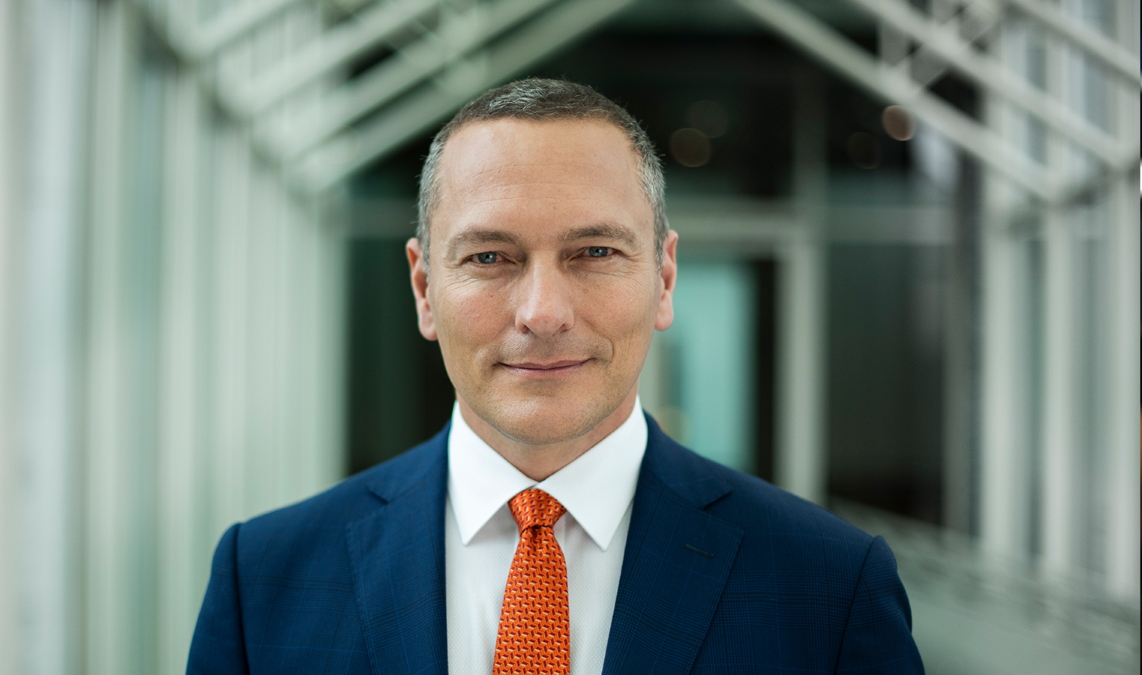
Now, the exiled crown prince, 65-year-old Reza Pahlavi[12], is being touted by many in the diaspora as the most credible and visible opposition figure to be able to lead the country if and when the Islamic Republic collapses.
Pro-monarchy groups such as the US-based National Union for Democracy in Iran[13] (NUFDI) have become vocal supporters of Pahlavi.
In early 2025, the NUFDI launched a well-coordinated and media savvy “Iran Prosperity Project[14]”, offering what the group claimed was a roadmap for economic recovery in a post-Islamic Republic Iran. Pahlavi himself penned the foreword.
Then, in July, the group released its “Emergency Phase Booklet[15]”, with a vision for a new political system in Iran.
Although the document is mostly written in the language of international democratic norms, it envisions bestowing the crown prince with enormous powers. He’s called the “leader of the national uprising[16]” and given the right to veto the institutions and selection processes in a transitional government.
One thing the document is missing is a response to the demands of Iran’s many ethnic minority groups for a federalist model[17] of government in Iran.
Instead, under the plan, the government would remain highly centralised under the leadership of Pahlavi, at least until a referendum that the authors claim would determine a transition to either a constitutional monarchy or democratic republic.
But students of Iranian history cannot help but note echoes of the 1979 Islamic Revolution. Ayatollah Ruhollah Khomeini had promised[18] a more democratic Iran with a new constitution, and without himself or other clerics in power.
After the revolution, though, Khomeini quickly grasped the reigns of power.
Online attacks against opponents
Pahlavi and his supporters have also struggled to stick to the principles of respectful debate and tolerance of different viewpoints.
When interviewed, Pahlavi has avoided discussing[19] the autocratic nature of his father’s rule and the human rights abuses that occurred under it[20].
But if Pahlavi tends to avoid hard questions, his supporters can be aggressive. At the Munich Security Conference in February, British-Iranian journalist Christiane Amanpour interviewed[21] the crown prince.
Christiane Amanpour’s interview with Reza Pahlavi.After the interview, Amanpour’s tough questions resulted in an explosion of anger from his supporters. In a video[22] that has been widely shared on X, royalists can be seen heckling Amanpour, saying she “insulted” the crown prince.
In online forums, the language can be even more intimidating. Amanpour asked Pahlavi point-blank if he would tell his supporters to stop their “terrifying” attacks on ordinary Iranians.
While saying he doesn’t tolerate online attacks, he added, “I cannot control millions of people, whatever they say on social media, and who knows if they are real people or not.”
Read more: The rise of Reza Pahlavi: Iranian opposition leader or opportunist?[23]
Do Iranians want a monarchy?
As I’ve noted previously[24], the monarchist movement also talks as though it is speaking for the whole nation.
But during the recent protests, some students could be heard shouting[25]: “No to monarchy, no to the leadership of the clerics, yes to an egalitarian democracy”.
The level of support for the shah within Iran is unclear, in part because polling is notoriously difficult.
A 2024 poll by the GAMAAN group, an organisation set up by two Iranian academics working in the Netherlands, attempted to gauge[26] political sentiment in Iran. Just over 30% of those polled indicated Pahlavi would be their first choice if a free and fair election were held.
But the poll doesn’t indicate why people said they wanted to vote for him. It also showed just how fragmented the opposition is, with dozens of names getting lower levels of support.
The future of Iran is very unclear at the moment. Even if the Islamic Republic were to be dislodged – a very big “if” – the transition could very well be chaotic and violent[27].
Would Pahlavi make a good leader? For many critics[28], his behaviour, and that of his supporters, call into question the royalists’ promises of a more liberal and tolerant Iran.
References
- ^ crucial negotiations (apnews.com)
- ^ threatening an imminent attack (www.abc.net.au)
- ^ 20,000 (www.amnesty.org)
- ^ more (time.com)
- ^ fervent (www.abc.net.au)
- ^ cries (www.youtube.com)
- ^ hijab (www.newarab.com)
- ^ Anglo-Soviet invasion (www.rferl.org)
- ^ Mohammad Reza Pahlavi (doi.org)
- ^ Islamic Revolution (www.brookings.edu)
- ^ How Iran’s current unrest can be traced back to the 1979 revolution (theconversation.com)
- ^ Reza Pahlavi (rezapahlavi.org)
- ^ National Union for Democracy in Iran (nufdiran.org)
- ^ Iran Prosperity Project (fund.nufdiran.org)
- ^ Emergency Phase Booklet (fund.nufdiran.org)
- ^ leader of the national uprising (fund.nufdiran.org)
- ^ federalist model (www.atlanticcouncil.org)
- ^ had promised (en.radiofarda.com)
- ^ discussing (www.nytimes.com)
- ^ occurred under it (www.nytimes.com)
- ^ interviewed (www.youtube.com)
- ^ video (x.com)
- ^ The rise of Reza Pahlavi: Iranian opposition leader or opportunist? (theconversation.com)
- ^ noted previously (theconversation.com)
- ^ shouting (www.bbc.com)
- ^ gauge (gamaan.org)
- ^ transition could very well be chaotic and violent (theconversation.com)
- ^ For many critics (www.aljazeera.com)
Authors: Simon Theobald, Research Fellow, University of Oxford; University of Notre Dame Australia