Who has most access to the top? What 5 years of transport ministers’ diaries reveal
- Written by: Caroline Shaw, Associate Professor in Public Health, University of Otago
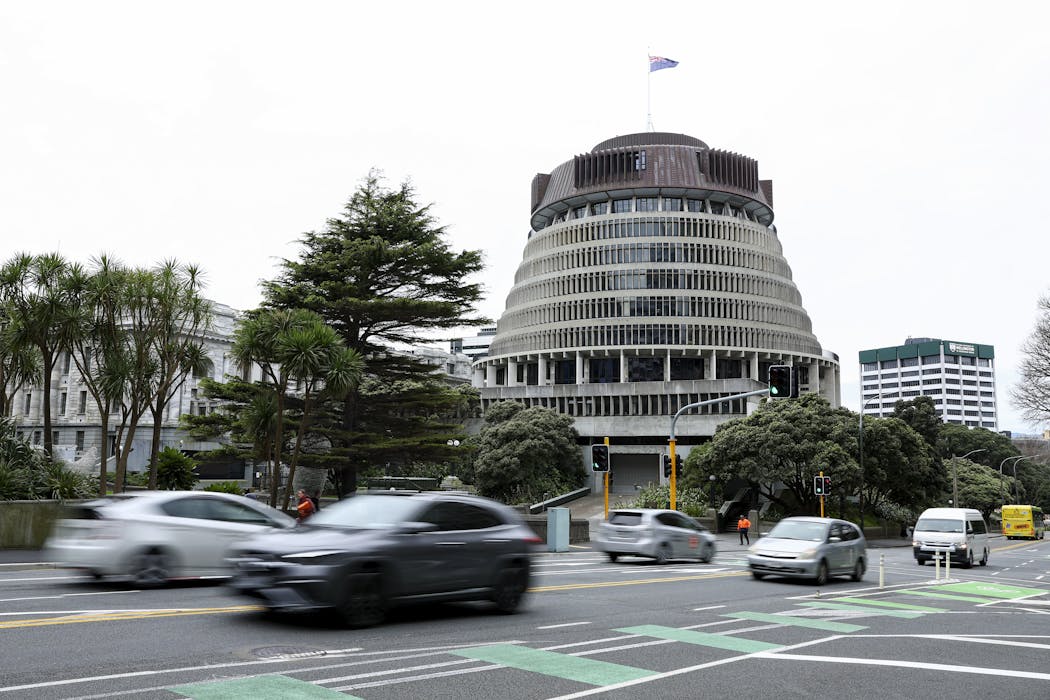
For interest groups and lobbyists, face-to-face time with political decision-makers is the most valuable kind of access[1] there is.
As one New Zealand politician once put it (speaking anonymously to lobbying researchers[2]), “politics is so much about relationships”. In-person meetings help build trust, develop shared priorities and identify where influence is possible.
These meetings are also highly valued by policy-makers[3]. Over time, the relationships formed between interest groups and people in power can shape decisions at every stage of the policy process[4].
This form of influence can often be hidden from view. In New Zealand, however, ministers’ diaries have been published[5] since 2017, offering a window into who is meeting with whom.
Because transport policy has far-reaching consequences for climate, health and everyday life, we wanted to see what political access in this sector looks like in practice.
Our newly-published research[6] analysed the diaries of transport and associate transport ministers under the two most recent governments – the Labour-Green-New Zealand First coalition (2017-2020) and the subsequent Labour government (2020-2022).
It offers a useful snapshot with some clear patterns – but one that needs to be interpreted with care.
What the diaries tell us
For meetings with interest groups related to the transport portfolios (880 out of a total of 11,079 meetings) we categorised the interest groups two ways: the type of interest group and the group’s focus – that is, the specific area of transport it seemed concerned with.
The first classification was adapted from a European approach[7] to categorising interest groups. The second was developed by examining the groups’ websites and coding their main areas of focus, such as air travel, freight or consultancy.
Of the 974 groups we identified, 74% were commercial (56% firms and 18% business associations). Among non-commercial groups, citizen groups (9%) and trade unions (7%) were the most common.
Overall, commercial groups met with transport ministers about three times as often as non-commercial groups.
Looking at what these groups focused on, air travel (such as airlines and airports) had the highest level of access, accounting for 16% of meetings. Maritime (11%), rail (9%), automobiles (8%) and consultancy – including economic, trade and policy consultancies, law firms, and PR and lobbying firms (6%) – rounded out the top five.
Some groups were notable by their absence. Iwi and hapū and their organisations accounted for just 1% of encounters, despite the transport system’s well-documented failures for Māori, including lower access to transport[8] and higher levels of harm[9].
Health groups were also rarely present, with just six encounters (0.7%) over the six years studied, even though the transport system causes at least as much health harm as tobacco[10].
An incomplete picture
Importantly, there are limits to what this analysis can show.
While the diaries provide a trove of information, they don’t record who asked for meetings but was turned away. That means we can’t tell whether groups absent from the records never sought access, or sought it and didn’t get it.
The diaries don’t capture more informal forms of access[11], such as conversations in social settings.
We also have to assume the records are complete and accurate, even though that may not always be the case[12]. And because they don’t record the purpose of each meeting, we can only infer what was discussed.
There is clearly some discretion in who gets these meetings. Looking across the diaries of two ministers and three associate ministers, we found differences in both the overall number of meetings and the balance between commercial and non-commercial groups.
While all ministers met with more commercial than non-commercial groups, the ratio varied widely – from 1.6:1 to as high as 10:1.
Categorising interest groups is also challenging, and broad categories inevitably hide important differences. For example, some of the firms classed as commercial are partially owned by local or central government. Likewise, some commercial groups focus primarily on sustainable transport.
All of this means the diaries can show us who gets access, but not how that access translates into policy outcomes.
That question remains important, because part of the period covered by this analysis coincided with substantial – and now largely reversed – efforts to reshape the transport system around low-carbon goals. Yet groups supporting that agenda were a minority in these diaries.
In other words, major policy change happened without those groups dominating face-to-face access to ministers. This suggests that access is only part of what shapes policy and that the flow of influence between ministers and interest groups may be two-way; ministers and interest groups may both be using these meetings to promote their policy agenda.
Despite the challenges and limitations of the diary data, it suggests a clear pattern: commercial interest groups had much greater access to ministers than non-commercial groups. This is consistent with the small number of similar studies internationally[13] – and highlights structured differences in who gets this most valued form of political access.
This analysis was based on work undertaken by a larger group of authors, including Alex Macmillan, Ryan Gage and Alice Miller.
References
- ^ most valuable kind of access (link.springer.com)
- ^ speaking anonymously to lobbying researchers (researchspace.auckland.ac.nz)
- ^ highly valued by policy-makers (link.springer.com)
- ^ at every stage of the policy process (onlinelibrary.wiley.com)
- ^ ministers’ diaries have been published (www.dia.govt.nz)
- ^ newly-published research (onlinelibrary.wiley.com)
- ^ European approach (link.springer.com)
- ^ lower access to transport (linkinghub.elsevier.com)
- ^ higher levels of harm (www.sciencedirect.com)
- ^ at least as much health harm as tobacco (www.mdpi.com)
- ^ informal forms of access (researchspace.auckland.ac.nz)
- ^ that may not always be the case (www.rnz.co.nz)
- ^ small number of similar studies internationally (journals.sagepub.com)
Authors: Caroline Shaw, Associate Professor in Public Health, University of Otago