The Voice campaign entrenched immature politics. We must do better for First Nations people
- Written by: Geoff Scott, Department of Pro Vice Chancellor (Society), UNSW Sydney; Indigenous Knowledge
The defeat of the Voice referendum was not simply a political loss. It was a political and cultural failure. It exposed, yet again, the profound immaturity of Australia’s political life when it comes to First Nations people. It’s an immaturity that’s shared, in different ways, by governments, by sections of the Australian public and by parts of the Indigenous body politic itself.
For more than a century, Aboriginal and Torres Strait Islander peoples have said the same thing in different ways: we need political voice. Not symbolism. Not better programs designed for us by others. Not endless reviews that gather dust.
We need a recognised, authoritative place within Australia’s democratic system where our voices can be heard, argued over, refined and carried forward. That was the core insight of the Uluru Statement from the Heart[1].
The referendum failed. But what followed has been worse. Rather than a period of reflection, listening and recalibration, we have seen a rapid return to the habits that produced failure in the first place: coercion, denial, performative outrage and a retreat into slogans.
The politics of denial
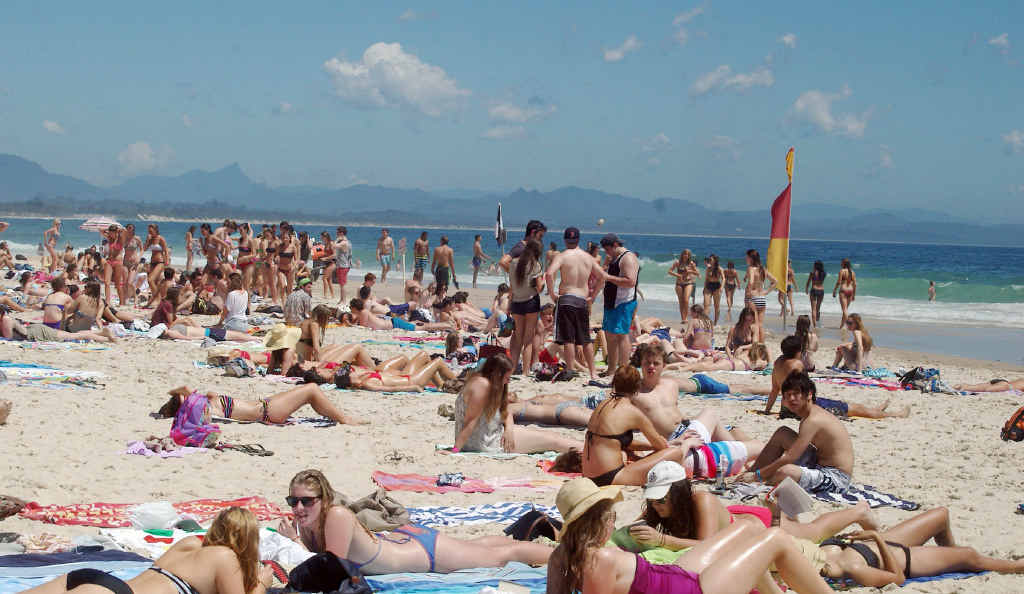
Nowhere is this clearer than in the annual ritual that follows Australia Day.
Every January, Australia re-enacts the same argument. On one side, barely veiled racism and contempt toward Aboriginal people who ask for a respectful acknowledgement of the violence and dispossession that began on 26 January 1788.
On the other, calls for sovereignty and treaty that are often detached from any serious engagement with history, constitutional reality or political strategy.
Neither side is helping.
This article is an edited extract from our chapter in the new book The Failure of the Voice Referendum and the Future of Australian Democracy[2], edited by professors Gabrielle Appleby[3] and Megan Davis[4].
Australia Day has become a symbol not of unity, but of political immaturity. Governments insist on a one-size-fits-all celebration in a country that is culturally, historically and politically diverse.
Aboriginal leaders are expected to absorb the pain quietly, while local councils are threatened[5] if they make any changes to celebrations.

Unity also cannot be achieved through symbolic gestures alone. Changing the date, by itself, will not empower our people. Without constitutional reform – without structures that allow Aboriginal and Torres Strait Islander people to participate meaningfully in decisions that affect us – we are left arguing over symbols while the underlying power imbalance remains untouched.
That is the tragedy of the post-referendum moment. The failure of the Voice has not produced humility or learning. It has produced entrenchment.
A failed political culture
Non-Indigenous Australia continues to demand unanimity from Aboriginal people — a standard applied to no other group in the country. Disagreement among First Nations people is treated[7] as evidence of illegitimacy rather than as a normal feature[8] of democratic life.
At the same time, parts of Indigenous politics have absorbed the worst habits of the dominant culture. Calls for sovereignty and Treaty are made[9] without articulating what these concepts mean in practice, how they would be achieved, or how they would materially improve the lives of our children.
Culture is invoked rhetorically but not practised — elders ignored, process dismissed, deliberation replaced by performance.

The Regional Dialogues[11] that produced the Uluru Statement were powerful precisely because they involved the crucial work of listening, patience and collaboration. For the first time in more than a decade, Aboriginal and Torres Strait Islander people had the time, resources and authority to debate our political future on our own terms.
People disagreed — strongly — but they did so within a shared commitment to process.
The Voice was meant to formalise that space for debate. Its loss has returned us to political fragmentation.
Victoria and the long work of maturity
Against this bleak national picture, Victoria offers a partial — but important — counter example.
Victoria’s treaty and truth-telling processes did not emerge overnight. They followed years of groundwork[12]: community consultation, institutional development, and sustained political commitment. The First Peoples’ Assembly was not imposed; it was built, slowly and imperfectly, through engagement and consent.
Read more: Victoria’s groundbreaking treaty could reshape Australia’s relationship with First Peoples[13]
This process has not been easy. There are disagreements[14] within Indigenous communities and tensions[15] with government.
But that is precisely the point. Political maturity is not the absence of conflict; it is the capacity to work through conflict without tearing institutions down at the first sign of strain.
Victoria has created political space where Aboriginal people can argue among ourselves, negotiate with government, and begin to develop a more stable relationship between Indigenous and non-Indigenous authority. It’s not a model that can simply be copied nationally. But it demonstrates what is possible when process is taken seriously.
Nationally, we have done the opposite[16]. We rushed a referendum without adequate civic education, without genuine engagement of non-Indigenous Australians, and without listening to Aboriginal leadership when concerns were raised about timing and design.
So, what now?
The temptation after defeat is to retreat into anger, into denial, into purity politics. That temptation must be resisted.
 Anthem Press[17]
The Voice is still needed. The underlying problem has not changed[18]. Aboriginal and Torres Strait Islander people remain locked out of meaningful participation in the decisions that shape our lives. Governments continue to manage symptoms rather than address structural causes. Closing the Gap reports record failure[19] with increasing precision, but with diminishing impact.
We need to rebuild political space. That will take time. It will require discipline, humility and a willingness to stay in difficult conversations. It will require non-Indigenous Australians to accept that listening is not weakness, and Indigenous leaders to accept responsibility for process, not just protest.
It will require a political maturity that’s long alluded us. Growing up is the only way to meaningfully improve the lives of First Nations people.
References^ Uluru Statement from the Heart (ulurustatement.org)^ The Failure of the Voice Referendum and the Future of Australian Democracy (anthempress.com)^ Gabrielle Appleby (theconversation.com)^ Megan Davis (theconversation.com)^ are threatened (www.abc.net.au)^ Jay Kogler/AAP (photos.aap.com.au)^ is treated (www.afr.com)^ normal feature (www.abc.net.au)^ are made (newint.org)^ Steven Markham/AAP (photos.aap.com.au)^ Regional Dialogues (ulurustatement.org)^ years of groundwork (www.treatyvictoria.vic.gov.au)^ Victoria’s groundbreaking treaty could reshape Australia’s relationship with First Peoples (theconversation.com)^ disagreements (www.theage.com.au)^ tensions (www.thesaturdaypaper.com.au)^ the opposite (theconversation.com)^ Anthem Press (anthempress.com)^ has not changed (theconversation.com)^ record failure (theconversation.com)Authors: Geoff Scott, Department of Pro Vice Chancellor (Society), UNSW Sydney; Indigenous Knowledge
Anthem Press[17]
The Voice is still needed. The underlying problem has not changed[18]. Aboriginal and Torres Strait Islander people remain locked out of meaningful participation in the decisions that shape our lives. Governments continue to manage symptoms rather than address structural causes. Closing the Gap reports record failure[19] with increasing precision, but with diminishing impact.
We need to rebuild political space. That will take time. It will require discipline, humility and a willingness to stay in difficult conversations. It will require non-Indigenous Australians to accept that listening is not weakness, and Indigenous leaders to accept responsibility for process, not just protest.
It will require a political maturity that’s long alluded us. Growing up is the only way to meaningfully improve the lives of First Nations people.
References^ Uluru Statement from the Heart (ulurustatement.org)^ The Failure of the Voice Referendum and the Future of Australian Democracy (anthempress.com)^ Gabrielle Appleby (theconversation.com)^ Megan Davis (theconversation.com)^ are threatened (www.abc.net.au)^ Jay Kogler/AAP (photos.aap.com.au)^ is treated (www.afr.com)^ normal feature (www.abc.net.au)^ are made (newint.org)^ Steven Markham/AAP (photos.aap.com.au)^ Regional Dialogues (ulurustatement.org)^ years of groundwork (www.treatyvictoria.vic.gov.au)^ Victoria’s groundbreaking treaty could reshape Australia’s relationship with First Peoples (theconversation.com)^ disagreements (www.theage.com.au)^ tensions (www.thesaturdaypaper.com.au)^ the opposite (theconversation.com)^ Anthem Press (anthempress.com)^ has not changed (theconversation.com)^ record failure (theconversation.com)Authors: Geoff Scott, Department of Pro Vice Chancellor (Society), UNSW Sydney; Indigenous Knowledge