How baseball helped shape Japanese migrants’ experiences during the White Australia policy
- Written by: Ray Nickson, Senior Lecturer in Criminology, Newcastle Law School, University of Newcastle
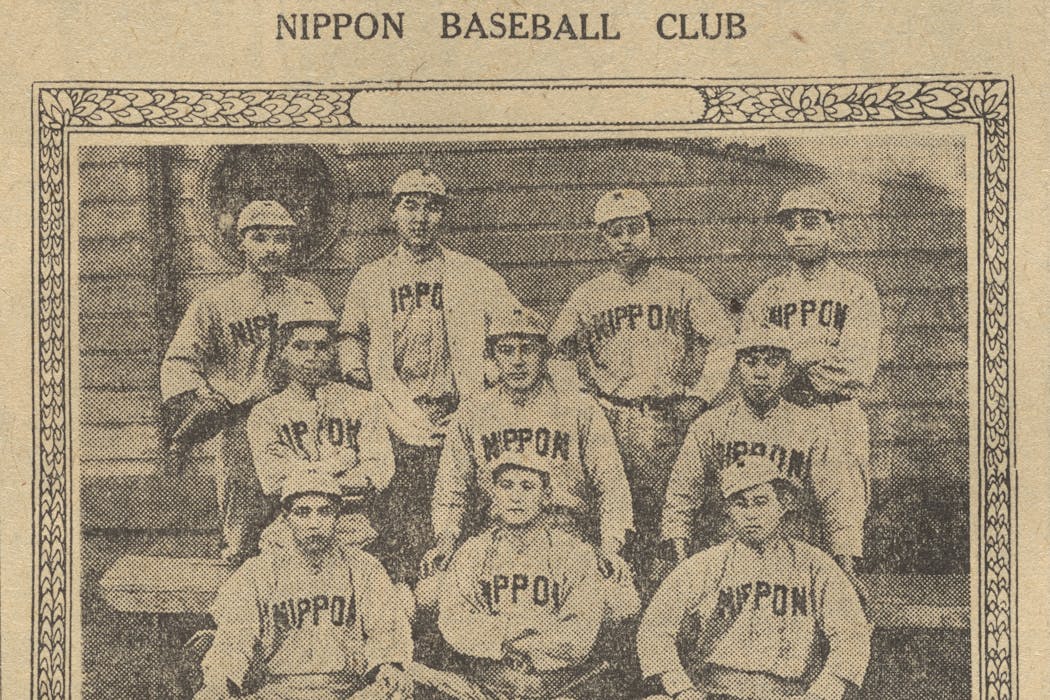
In 1919, Japanese migrants in Sydney gifted a silver cup[1] to the New South Wales Baseball Association.
The cup was “in appreciation of the friendship and good feeling accorded to the Nippon (Baseball) Club since it joined the association”.
The Nippon Baseball Club was a team of Japanese migrants who played in the NSW Baseball Association from 1917-1919.
My new research[2] published late in 2025 reveals how sport helped them overcome prejudice and discrimination.
The power of sport
Previous Australian research on sport’s ability to foster inclusion[3] has typically focused on migration after the second world war[4].
It has also emphasised the experiences of European migrants playing sports such as soccer[5].
The forgotten history of the Nippon Baseball Club provides a much earlier example of integration during a hostile era.
By 1917, Australia’s discriminatory White Australia policy[6] was in its second decade.
The federal government passed the Immigration Restriction Act (later nicknamed the White Australia policy) in 1901, mainly over concerns about Japanese and Chinese migration[7] to Australia in the 1800s, coupled with beliefs of racial superiority from Australia’s European colonists.
Asians in Australia encountered discrimination and prejudice[8] at this time.
The birth of the Nippon Baseball Club
Previous research[9] shows Australians were more welcoming when they saw values they recognised in the lives of Japanese migrants. Nowhere were these values more obvious than on the sports field.
In 1917 the NSW Baseball Association had tried to arrange a game[10] against visiting Japanese Navy sailors to raise money for the war effort. When this fell through, Japanese businessmen in Sydney offered to play.
Only four of the Japanese people had played baseball before. In pouring rain, an enormous crowd turned up, so play went ahead despite the conditions.
From this game, the Nippon Baseball Club emerged.
Throughout the 1917 season, the club played in front of large and enthusiastic crowds[11]. Their games were frequently used to raise money for Australia’s war efforts.
During the next two seasons, the club was warmly received. Newspapers in Sydney and beyond discussed the team affectionately.
Australian Test cricketer Monty Noble, president of the NSW Baseball Association, formally thanked the club[12] that season.
The next year, the team was presented with a “handsomely framed illuminated address[13]”: a hand-decorated, ornate manuscript[14] popular in the late 1800s and early 1900s to formally express gratitude and thanks.
The text of the address read:
The New South Wales Baseball Association, on behalf of all interested in the sport, desire to express the appreciation of the part taken by the representatives of the Japanese Empire residents in Sydney, in the baseball games played during the season 1917, also of the chivalrous manner in which the operations generally of the Nippon team were conducted. Japan and Australia have many common interests which are enhanced by association of this description.
In 1919, the club gave NSW Baseball the Nippon Cup. It became the competition’s most prized trophy[15] for 20 years. It would be awarded to the champion of the top tier of NSW’s most senior and competitive baseball league.
When the association noted its appreciation of the gift, the official minutes noted:
Your Association feels it is on the right track in thus helping to build up a firm friendship with the Sydney representatives of the ‘little brown people’ who are surely destined to become a great nation.
The racism in those remarks reflected a wider cultural attitude in Sydney.
While coverage of the team was largely positive, references to racial stereotypes about height and skin colour appeared. The offensive slur “Jap” was used, even when journalists meant it to be complimentary.
In 1919, the Nippon Baseball Club stopped playing. The club never had many players and absences for work and migration caused difficulties in consistently fielding a team.
Then the impact of the influenza pandemic of 1918 and 1919[16] caused more disruption.
The club’s gift of the Nippon Cup was a lasting, positive memory for the next two decades.
Controversies during a volatile era
In 1941, after Japan’s attack on Pearl Harbour[17], the Nippon Cup became controversial.
There was talk of melting it down[18] and selling it for its metal value.
One member of the NSW Baseball Association suggested a new inscription[19] be added to the cup, which would read:
this trophy was presented by the Japs when they had a little appreciation of sportsmanship left.
It is unclear what happened to the Nippon Cup. The contributions of the Nippon Baseball Club and the Japanese immigrant community that supported it, however, were effectively erased.
Now, more than 100 years later, their story has been rediscovered in the archives as part of a larger study of how sport has mediated Australia’s relationship with Japan.
It offers new insights into the lives of Asian migrants to Australia before the second world war.
It also emphasises sport’s power for inclusion in otherwise hostile spaces.
References
- ^ gifted a silver cup (trove.nla.gov.au)
- ^ new research (hdl.handle.net)
- ^ on sport’s ability to foster inclusion (www.adelaide.edu.au)
- ^ migration after the second world war (www.ames.net.au)
- ^ playing sports such as soccer (www.adelaide.edu.au)
- ^ White Australia policy (www.nma.gov.au)
- ^ Japanese and Chinese migration (www.naa.gov.au)
- ^ discrimination and prejudice (humanrights.gov.au)
- ^ Previous research (doi.org)
- ^ arrange a game (trove.nla.gov.au)
- ^ large and enthusiastic crowds (trove.nla.gov.au)
- ^ thanked the club (trove.nla.gov.au)
- ^ handsomely framed illuminated address (trove.nla.gov.au)
- ^ ornate manuscript (canadabayheritage.asn.au)
- ^ most prized trophy (trove.nla.gov.au)
- ^ influenza pandemic of 1918 and 1919 (www.nma.gov.au)
- ^ attack on Pearl Harbour (www.awm.gov.au)
- ^ melting it down (trove.nla.gov.au)
- ^ new inscription (trove.nla.gov.au)
Authors: Ray Nickson, Senior Lecturer in Criminology, Newcastle Law School, University of Newcastle