Australia’s new frigate deal with Japan plugs a few critical holes, but doesn’t come without risks
- Written by: Jennifer Parker, Adjunct Fellow, Naval Studies at UNSW Canberra, and Expert Associate, National Security College, Australian National University
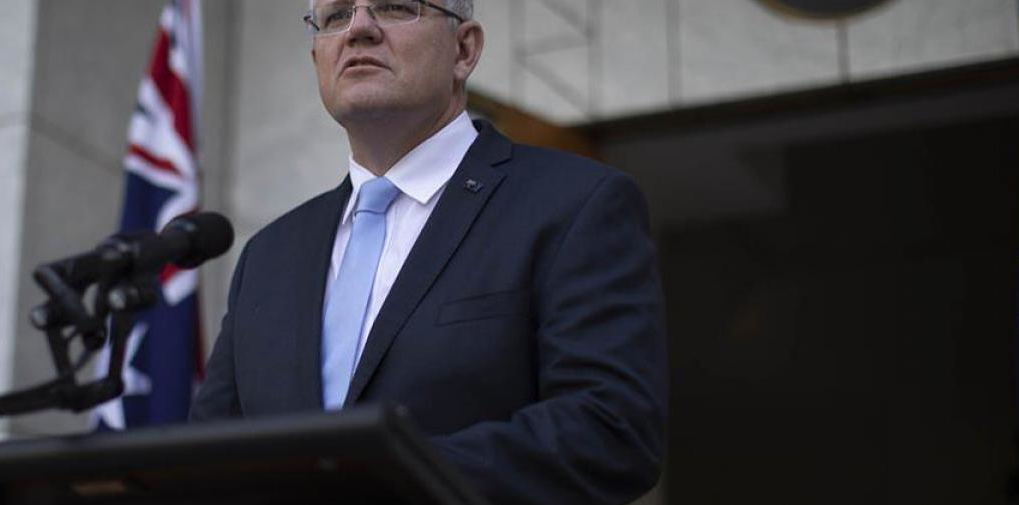
Defence Minister Richard Marles has announced that Japanese shipbuilder Mitsubishi Heavy Industries has been awarded[1] a massive contract to build three new frigates for Australia’s navy. The deal is worth a reported A$10 billion[2].
There are two reasons this deal is so significant.
The first is it enhances our naval capabilities. This is the first government in at least the past 50 years to push through such a significant expansion of Australia’s surface combatant fleet (meaning frigates and destroyers).
Under the government’s plans, we will be operating[3] at least 20 surface combatants by the 2040s.
The second reason it’s so significant is because of what it says about our relationship with Japan.
Our strategic relationship has clearly evolved over the past ten years. In 2022, our two nations signed a joint declaration on security cooperation[4], which can be read as a quasi-alliance.
Now, this decision to purchase the new Mogami-class frigates really shows how much we trust Japan in terms of its industrial capability and its ability to support our shipbuilding needs.
Our troubled surface combatant fleet
The current state of our surface combatant fleet is parlous. We only have ten surface combatants, which is half as many as analysts have said we need[5]. That is meant to decrease to nine next year, when HMAS Arunta is decommissioned.
The Australian National Audit Office did an audit[6] of the sustainment of our ANZAC-class frigates in 2019, which found the ships were not in a good state. The hulls had been degraded because they had been run so hard. And the reason they’d been run so hard is because we didn’t have enough ships.
So, this deal with Mitsubishi Heavy Industries means we have a concrete plan to replace some of them.
There’s still an issue with the time frame, though. We’re expecting to receive the first ship from the Japanese in 2029, with two more by 2034.
That’s asking a lot of the current ANZAC-class ships. There’s a real question about whether they can actually make it that long, or if we will need to decommission even more in the latter part of this decade.
The reason we have this time frame gap is because you can’t build ships overnight.
In 2009, we identified a need to replace the ANZACs, and we didn’t make a decision on a new ship until 2018 when we selected the Hunter-class frigates. These new ships are being designed and built by BAE[7], a UK company.
The first Hunter frigate is expected to be operational in 2034. That’s a huge time gap between the decision to go with BAE in 2018 and actually having our first ship.
We were initially meant to get nine Hunter-class ships, but that number was reduced to six last year when an independent analysis team[8] recommended[9] acquiring a number of new multipurpose frigates instead (the Mogami frigates now coming from Japan).
We don’t know exactly when the Hunter frigates will all be delivered. But even once we have them, it will also be difficult to integrate two different types of frigates (the Hunters and Mogamis) into service at the same time. There won’t be a lot of commonality between the two types of ship.
The government should be pushing Japan to see if we can possibly get the Mogami frigates any earlier. And we should be talking to BAE about doing the same.
The one major flaw in this whole process is the failure of successive governments to take a broader look at Australia’s naval capability needs. The independent analysis led by[10] retired US Navy Vice Admiral William Hilarides last year should have been directed to do this.
We’ve solved one problem now with the surface combatants, but other issues remain. We’re playing a game of whack-a-mole.
Risks with the Japan deal
There are also a range of risks with the new deal. One is that the new Mogami ship doesn’t actually exist yet. We’ve ordered an upgraded Mogami, based on a new design. Japan has even said Australia could get one of the upgraded ships ahead of its own navy[11].
This risk is mitigated, however, by Japan’s fantastic track record in building ships.
The second risk, which is significant and should not be underestimated, is that Japan does not have experience in exporting complex military equipment overseas. Japan has never exported a new warship[12] to another country.
And what complicates this further is that Australia has historically been quite a demanding shipbuilding customer. Some believe a reason for the challenges we’ve experienced with the Hunter-class frigates is partially because we’ve made a lot of changes[13].
Lastly, the strategic relationship between Australia and Japan is bigger than shipbuilding. It has rapidly evolved because our national security interests are aligned. The danger with this frigate deal is that it could damage our relationship if something doesn’t go right. So, we need to proceed carefully to make sure this doesn’t happen.
References
- ^ awarded (www.minister.defence.gov.au)
- ^ A$10 billion (www.abc.net.au)
- ^ operating (www.aspistrategist.org.au)
- ^ joint declaration on security cooperation (www.dfat.gov.au)
- ^ said we need (www.aspi.org.au)
- ^ audit (www.anao.gov.au)
- ^ designed and built by BAE (www.australiandefence.com.au)
- ^ independent analysis team (www.defence.gov.au)
- ^ recommended (www.afr.com)
- ^ led by (www.minister.defence.gov.au)
- ^ ahead of its own navy (www.abc.net.au)
- ^ exported a new warship (www.businessinsider.com)
- ^ made a lot of changes (www.anao.gov.au)
Authors: Jennifer Parker, Adjunct Fellow, Naval Studies at UNSW Canberra, and Expert Associate, National Security College, Australian National University