The Family Court could better protect Indigenous women and children, but there are barriers in the way
- Written by: Heather Douglas, Professor of Law and Deputy Director of the Centre of Excellence for the Elimination of Violence Against Women (CEVAW), The University of Melbourne
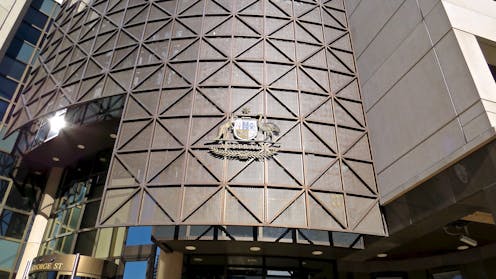
The family law system is crucial for protecting women and children nationwide. With its combination[1] of judicial oversight, counselling and alternative dispute resolution, the family court can offer meaningful support to parents in complex situations. But First Nations families may be missing out.
We partnered with Women’s Legal Services Australia[2] to prepare a new review[3]. The review highlights that First Nations women may face barriers to accessing the family law system, especially when they have experienced family violence.
Our research
Family law courts[4] in Australia handle matters such as where children live and who has contact with them. They also deal with finance and property disputes within families, and family violence.
In our research, we reviewed the existing literature and family court cases to see how First Nations people have interacted with the family law system.
While 7%[5] of family court final order applications in 2023–2024 included a First Nations litigant, we suggest the family law system may be underutilised by Indigenous women. There are several factors that point to this.
One is the rate of out-of-home care. First Nations children make up 44.5%[6] of children in out-of-home care nationally. Engaging with the family law system may reduce these rates.
Another is the prevalence of Indigenous families with a single parent. Nearly 45%[7] of First Nations children under 15-years-old live in single-parent households.
People in these households may need to negotiate safe contact arrangements for their children with other family members. The family law system can play an important role for these families.
And we know family violence is present in 83%[8] of parenting proceedings in the family courts. First Nations women are at a higher risk of family violence than non-First Nations women[9], often perpetrated by a non-First Nations partner. The family law system must take account of family violence when making orders.
It therefore may be reasonable to expect a higher proportion of First Nations people to use the family law system. So what’s stopping them?
Prior bad experiences
Previous studies have focused on First Nations women’s experiences of child protection[10], criminal law[11] and family violence protections orders[12].
First Nations women may fear the family law system because of negative experiences with these other processes, including genuine fears about child removal.
Research shows parts of the legal system often fail First Nations women who have experienced family violence[13].
The family law system relies on people making their own application to enter the system. Prior bad experiences of other legal systems are likely to affect people’s willingness to use family law.
Family law is different from other parts of the legal system. In criminal law and family violence protection orders, for instance, the state brings First Nations people into the legal system. This happens through police charging people, or police applying for family violence protection orders on behalf of a victim-survivor.
We know in some civil law processes where the person must make the application, like debt recovery, First Nations people are less likely[14] than non-First Nations people to report or make an application.
Structural issues
Child protection matters often overlap with family law matters. The law has changed[15] to require child protection authorities to share information when the family courts request it.
Agencies that support First Nations women are also required to report particular concerns to child protection authorities. These factors may contribute to First Nations women being reluctant to apply to the family law system for fear their children will be removed.
In some research, interview participants referred to an “erosion of trust and disengagement of victims” from services as a result of mandatory reporting[16].
Systemic racism, biases and discrimination identified in other legal systems[17] may also affect First Nations women’s experiences in family law. This may lead them to disengage, or not engage the next time they have concerns about their children’s safety.
When First Nations women who have experienced family violence do engage with the family law system, this is sometimes because their non-First Nations partner makes an application. When this happens, research suggests the family law system may give more weight to the non-First Nations[18] party’s version of events.
Improving the system
The family law system is making efforts to improve access for First Nations people.
There is now a requirement[19] for family courts to consider how parenting arrangements will help Aboriginal children to remain in contact with culture, community, family, language and Country.
Indigenous Family Liaison Officers[20] are employed by family courts to support First Nations people in court.
Indigenous Lists[21] also exist in specific courts where cases involving First Nations parties are heard on a particular day and specialised support is available.
We need to find out more about how effective these measures are and what else needs to change so the family law system can best support First Nations women.
We also need to know more about how to support First Nations women in the family courts when the other party is a non-First Nations person. For most[22] couples across Australia that include an Indigenous person, the other person is non-First Nations.
The family law system holds real potential to be a proactive and protective pathway for more First Nations women concerned about their own safety and their children’s safety[23]. Our continuing research hopes to show how this potential may be realised.
13YARN is a free and confidential 24/7 national crisis support line for Aboriginal and Torres Strait Islander people who are feeling overwhelmed or having difficulty coping. Call 13 92 76.
References
- ^ combination (www.abc.net.au)
- ^ Women’s Legal Services Australia (www.wlsa.org.au)
- ^ review (cevaw.org)
- ^ Family law courts (www.fcfcoa.gov.au)
- ^ 7% (www.fcfcoa.gov.au)
- ^ 44.5% (www.pc.gov.au)
- ^ 45% (jcdi.org.au)
- ^ 83% (www.fcfcoa.gov.au)
- ^ non-First Nations women (djirra.org.au)
- ^ child protection (classic.austlii.edu.au)
- ^ criminal law (www.tandfonline.com)
- ^ family violence protections orders (www.crimejusticejournal.com)
- ^ family violence (www.anrows.org.au)
- ^ less likely (lawfoundation.net.au)
- ^ changed (www.ag.gov.au)
- ^ reporting (anrows-2019.s3.ap-southeast-2.amazonaws.com)
- ^ legal systems (yoorrookforjustice.org.au)
- ^ give more weight to the non-First Nations (classic.austlii.edu.au)
- ^ requirement (www.austlii.edu.au)
- ^ Indigenous Family Liaison Officers (www.fcfcoa.gov.au)
- ^ Indigenous Lists (www.fcfcoa.gov.au)
- ^ most (www.abs.gov.au)
- ^ children’s safety (www.abc.net.au)
Authors: Heather Douglas, Professor of Law and Deputy Director of the Centre of Excellence for the Elimination of Violence Against Women (CEVAW), The University of Melbourne