Australia stands firm behind its foreign aid in the budget, but the future remains precarious
- Written by: Melissa Conley Tyler, Honorary Fellow, Asia Institute, The University of Melbourne
This week’s budget will come as a relief to Australia’s neighbours in the Indo-Pacific that rely on development assistance. The Albanese government did not follow the lead of US President Donald Trump[1] and UK Prime Minister Keir Starmer[2] in cutting its foreign aid.
The Trump administration froze[3] foreign assistance and dismantled the US Agency for International Development (USAID) when it came into office. Meanwhile, the UK announced 40% aid cuts[4] of its own.
It is to Australia’s credit this has not happened here. Australia’s development budget remains intact this year and in forward estimates.
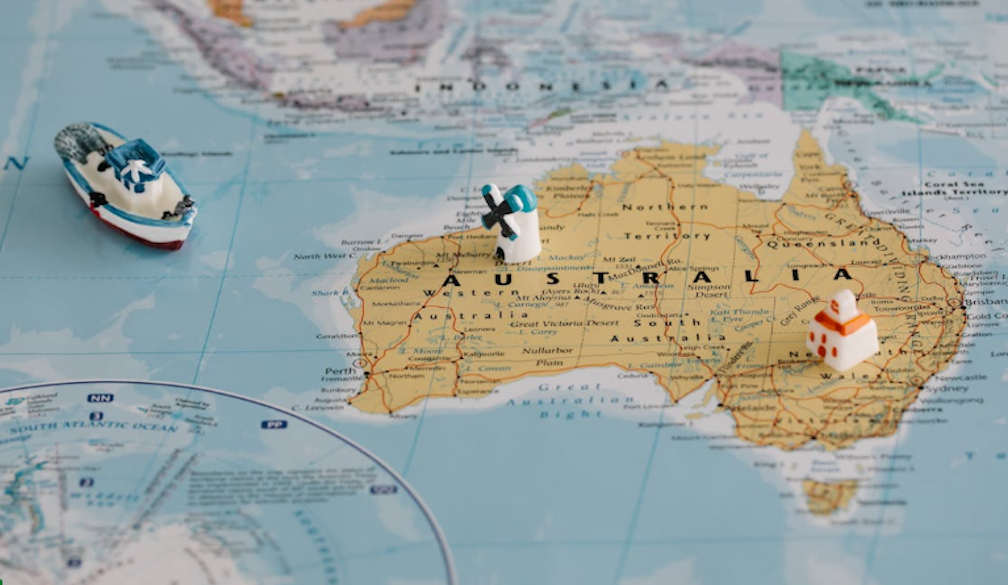
Sensible policymakers seem to recognise that Australia’s strategic circumstances are different. As a nation surrounded[5] by low- and middle-income countries, Australia cannot vacate the field on development issues without enormous reputational, diplomatic and strategic damage.
This budget shows Australia is committed to its region[6] – with 75% of the foreign assistance budget flowing to the Indo-Pacific[7] – and sees development partnerships as a way to solve shared problems.
What’s in the budget for aid and development
The details of the development budget show Australia has been listening to its partners to identify critical gaps and reprioritise funds.
In the Pacific, funding has risen to a historic high, with no country receiving less aid. There have been changes in focus to respond to the US funding cuts, including programs on HIV/AIDS in Papua New Guinea and Fiji and gender-based violence in the Pacific.
This fits with Australia’s desire to be a partner of choice – and to prevent an increased Chinese presence[8] in the region.
In Southeast Asia, Australia has increased its aid to all countries and has shifted funding, particularly in health[9] where the US was a major donor.
This is in Australia’s interest. A new program on Indonesian human and animal health, for example, will help prevent health system failures[10] in areas such as tuberculosis and polio elimination[11] on Australia’s doorstep.
Funds have also been reallocated to support civil society organisations working in vital areas like media freedom and human rights[12], which would have been a casualty in the US cuts[13].
There was also a shift in humanitarian funding[14] to Myanmar and Bangladesh, where the US aid withdrawal has left Rohingya refugees in a desperate state[15].
Importantly, the Department of Foreign Affairs and Trade is helping local organisations survive US cuts by allowing temporary flexibility in the use of grant funding to help them continue to deliver essential services.
Beyond these reprioritisations, the other heartening thing about the budget[16] is its normality.
It maintains funding for assistive technology for people with disabilities and an Inclusion and Equality Fund[17] to support LGBTQIA+ civil society organisations and human rights defenders. There are programs on maternal health, including reproductive rights.
The future is still precarious
However, it would be wrong to think this budget will fill the gaps left by the US withdrawal.
The ANU Development Policy Centre estimates that traditional OECD donors will cut at least 25% of their aid[18] by 2027. It said, “when that much of a thing goes missing, it’s clearly at risk of collapse”.
Some development organisations will close[19] their doors, potentially including household names that Australians have donated to for years. This is a time of huge transformation for the sector.
Another future problem will be maintaining multilateral institutions[20] that rely on US funding[21] – including the World Health Organization, World Food Programme, World Bank and Asian Development Bank. This will require a concerted effort with other countries.
So, while the Australian budget shows a government deploying current funding as intelligently as possible, there will eventually be limits to this approach.
In the “new world of uncertainty[22]” described in the treasurer’s budget speech, it simply won’t be possible to meet Australia’s strategic aims and keep development spending at its current rate. It is still far away from 1% of the federal budget[23].
At some point, Australia must rethink the trajectory[24] of its international commitments.
Analysis by the Development Intelligence Lab, a think tank working on development cooperation in the Indo-Pacific, has shown that over the last 25 years, the international parts of the federal budget – defence, intelligence, diplomacy and development – have held steady at around 10%[25].
In a time of disruption, this might need to change. In 1949, for example, Australia invested almost 9% of the federal budget on development and diplomacy[26] alone – not including defence.
Those in the foreign aid sector can celebrate Australia has not pulled back on its commitments like the US and UK. At the same time, we should expect the next government will inevitably be called on to do more[27].
References
- ^ US President Donald Trump (theconversation.com)
- ^ UK Prime Minister Keir Starmer (www.theguardian.com)
- ^ froze (theconversation.com)
- ^ announced 40% aid cuts (theconversation.com)
- ^ surrounded (theconversation.com)
- ^ committed to its region (acfid.asn.au)
- ^ 75% of the foreign assistance budget flowing to the Indo-Pacific (www.dfat.gov.au)
- ^ Chinese presence (www.lowyinstitute.org)
- ^ health (www.lowyinstitute.org)
- ^ prevent health system failures (www.devintelligencelab.com)
- ^ tuberculosis and polio elimination (www.devintelligencelab.com)
- ^ human rights (www.aspistrategist.org.au)
- ^ US cuts (www.context.news)
- ^ humanitarian funding (www.dfat.gov.au)
- ^ desperate state (www.abc.net.au)
- ^ budget (www.dfat.gov.au)
- ^ Inclusion and Equality Fund (www.foreignminister.gov.au)
- ^ at least 25% of their aid (devpolicy.org)
- ^ close (www.lowyinstitute.org)
- ^ multilateral institutions (devpolicy.org)
- ^ rely on US funding (www.lowyinstitute.org)
- ^ new world of uncertainty (ministers.treasury.gov.au)
- ^ 1% of the federal budget (saferworld.org.au)
- ^ trajectory (devpolicy.org)
- ^ 10% (www.devintelligencelab.com)
- ^ almost 9% of the federal budget on development and diplomacy (www.australianforeignaffairs.com)
- ^ do more (theconversation.com)
Authors: Melissa Conley Tyler, Honorary Fellow, Asia Institute, The University of Melbourne