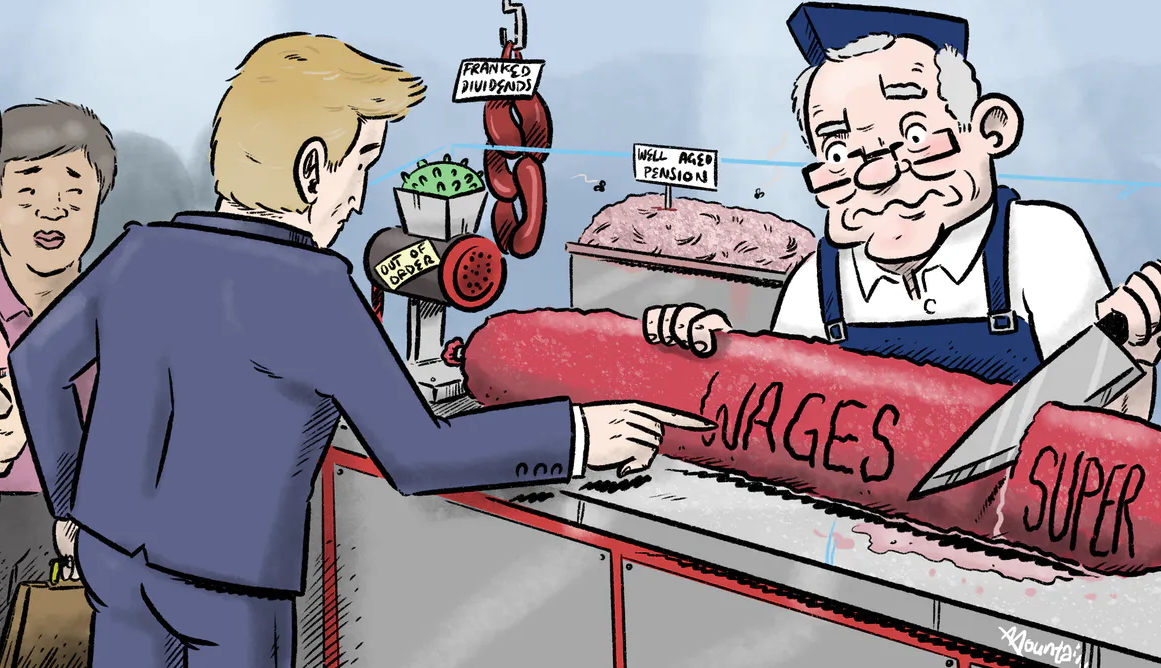


Independent MPs are elected for a reason – hung parliaments may be precisely what voters want
- Written by: Mark Kenny, Professor, Australian Studies Institute, Australian National University
Signing off his 26-year parliamentary career three years ago, the retiring Labor MP Joel Fitzgibbon lamented a power imbalance[1] that allowed the majority party routinely to railroad the national legislature.
In a refreshingly frank valedictory speech, the former minister claimed the House of Representatives had become nothing more than a rubber stamp for executive government.
And he criticised the practice of compelling MPs to vote in blocs, irrespective of their own judgement:
not only do governments typically hold the numbers; they are using them more ruthlessly within their party structures […] party discipline is strangling our democracy in an era when the world is changing so dramatically.
Voters apparently share his unease. The combined primary vote share of the Labor-Coalition duopoly has been declining[2] since the 1980s from around 90%, to around 68%. The remainder is going to minor parties and independents.

Now, successive opinion polls suggest both major parties are likely to fall short[4] of the 76 seats required for a simple majority. And Fitzgibbon has fretted[5] in The Australian that the primary threat to national politics and governance may come from voters themselves. That is, if they should have the temerity to install crossbench MPs beyond the discipline of the two major parties.
Labor and Coalition supporters alike are now shaking in their boots, as are the parties of government. Of course, the minor parties have the champagne on ice, relishing the chance to hold the country to ransom. The Greens are salivating.
Holding the country to ransom? Salivating? It’s as if the voters have no deliberative intent.
What’s changed for Fitzgibbon? Perhaps this is nothing more than the familiar slouch into conservative chauvinism to which so many ex-parliamentary Labor men succumb.
The rightward drift of progressively-striped former legislators is a well-worn path, with names like Graham Richardson, Stephen Loosely, Gary Johns and John Black springing to mind.
Teal threat
Less openly canvassed are the unconscious gender biases, and the major party self-interests that are driving them.
One answer to “what’s changed?” is the electoral embrace of the Teals[6] – seven conspicuously competent professional women defiantly occupying once blue-ribbon Liberal seats. These new MPs (six of whom came in at the last election) were successful because voters wanted to break free of the suited duopoly and the limited solutions it proffers.
While hardly radical, they have been outspoken on climate change[7] policy, corruption[8] in public administration, and the absence of serious structural taxation[9] reform. To old-guard politicos for whom traditional binaries dominate, their needling from the crossbenches may seem almost insolent.
Their presence, which involved circumnavigation of the established party “meritocracies”, is viewed by many in the major parties as an existential threat to the two-party system. Yet it is the widely perceived mediocrity of the two-party dominance that is their very attraction to voters.
Denying people power
Fitzgibbon is hardly the first to hyperventilate about the perils of a hung parliament where crossbench MPs may have a role in assuring confidence and supply numbers to one side or the other. But his solution to this alleged problem is novel to the point of bizarre.
Despite calling Australia’s system “hyper-partisan”, he proposes that Anthony Albanese and Peter Dutton might collude ahead of the election in order to agree
that whoever has the most seats post-election will be guaranteed supply and confidence for 18 months hence.
Leaving aside that the independent MPs are in fact, independent, Fitzgibbon’s fix flies in the face of the very chamber whose dwindling primacy he formerly eulogised. That is, he proposes an arrangement between two opposing blocs that would pre-emptively close out non-major party MPs, despite their authority deriving from the people.
This is not to say the question of any crossbench intentions in a hung parliament situation are beyond the limits of public conjecture. But a preventative neutering of their participation in the construction of a parliamentary majority (should it come to that) is a drastic and potentially counter-representative act.
Hung parliaments can work
Unlike many democracies, Australia has limited experience of minority governments at the national level.
The only recent example was the aforementioned Gillard-Rudd term (2010–2013). Notwithstanding leadership turbulence, a record[10] number of bills were passed, despite the sense of numerical precarity and the need for clause-by-clause negotiation with cross bench MPs.
Legislating 561 bills – much higher than the previous[11] Labor term – it also encountered higher resistance from the Coalition opposition, with 22% of bills opposed outright. Important legislative reforms included
And many more.

That parliament’s reputation proved the old adage that history is written by the winners. By repealing[13] the carbon price and hobbling other priorities, the subsequent Abbott government and its media enablers were able to depict the 44th parliament as extreme and dysfunctional.
It was neither.
Two-party cartel
In the current parliament, Teals like Allegra Spender have shown more interest in bold tax reform[14], while others like Zali Steggall have pushed harder on climate change and truth in political advertising[15].
It cannot be known which of the current crop of crossbench MPs will be re-elected or whether there will be more. But the trend in successive elections suggests Australians are tiring of the old parties and are looking for other options.
Suggesting clever tricks to freeze out these voters smacks of desperation and worse, cartelism. It is likely to hasten the demise of blocs which only recently combined to write new election campaign finance laws that give them the edge.
Voters are awake to this.
References
- ^ power imbalance (www.theaustralian.com.au)
- ^ declining (australiainstitute.org.au)
- ^ Mick Tsikas/AAP (photos.aap.com.au)
- ^ fall short (www.news.com.au)
- ^ fretted (www.theaustralian.com.au)
- ^ the Teals (www.theguardian.com)
- ^ climate change (www.smh.com.au)
- ^ corruption (www.canberratimes.com.au)
- ^ taxation (www.afr.com)
- ^ record (theconversation.com)
- ^ previous (www.theguardian.com)
- ^ Lukas Coch/AAP (photos.aap.com.au)
- ^ repealing (www.abc.net.au)
- ^ bold tax reform (www.allegraspender.com.au)
- ^ truth in political advertising (www.zalisteggall.com.au)
Authors: Mark Kenny, Professor, Australian Studies Institute, Australian National University