A stark choice between Russia and the West
- Written by: Adam Simpson, Senior Lecturer, International Studies, University of South Australia
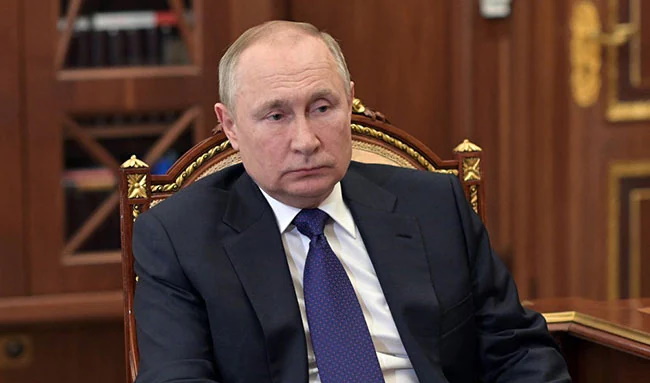
Two former Soviet republics have important elections this week that will likely be pivotal in their respective journeys toward tighter integration with the West against the backdrop of rising Russian influence and the Ukraine war.
What happens in Georgia and Moldova is being closely watched across the European Union and Moscow. Russia has invested heavily in trying to influence the outcomes of both elections. If it succeeds, this will be a cause of significant concern in other ex-Soviet states, as well as the West.
Moldova takes a tentative step towards the EU
On Sunday, Moldovans voted[1] in the first round of their presidential election. A referendum was also on the ballot to amend the country’s Constitution to include an aspiration to join the EU.
Pre-election polls[2] had suggested the referendum would easily pass and the popular pro-EU president, Maia Sandu, would be re-elected.
However, Russia[3] launched a significant “propaganda blitz[4]” ahead of the vote, including credible allegations of widespread vote buying[5], to undermine[6] the electoral process.
Sandu won the first round comfortably, with over 42%[7] of the vote, though not by enough to avoid a run-off on November 3. The country’s pro-Russia parties are now likely to coalesce behind the second-place candidate in an attempt to oust her.
The referendum, however, teetered on the edge of failure[8] before narrowly passing[9] by the tightest[10] of margins.
Though Moldova’s negotiations with the EU were certain to continue under Sandu regardless of the outcome, the result was nonetheless concerning. It demonstrates the strength of Russia’s influence operations to destabilise a nation seen as key to security on the eastern boundaries of the EU and NATO.
Moldova has a 1,200-kilometre border with Ukraine in the east and borders Romania, an EU and NATO member, in the west.
Polling suggests a majority[11] of Moldovans condemned Russia’s invasion of Ukraine, but a significant minority retain pro-Russian views.
Russia also has a history of interference in Moldova’s sovereignty.
Moldova declared independence in 1991 during the dissolution of the Soviet Union but Transnistria[12], a small part of the country along the border with Ukraine, was taken over by separatists in a military operation backed by Russian troops.
Following Russia’s full-scale invasion of Ukraine in 2022, the Parliamentary Assembly of the Council of Europe formally recognised[13] Transnistria as Moldovan territory still occupied by Russia.
What’s at stake in Georgia?
On the day of Moldova’s vote, tens of thousands of pro-EU supporters staged a demonstration[14] in Tblisi, Georgia’s capital, calling for their country to choose a pro-EU path in their own election
The Georgian Dream[15] party has been in power since 2012 and while it remains nominally pro-EU, it has gradually shifted towards a more pro-Russia stance.
The Georgian Dream-dominated legislature recently passed[16] an antidemocratic, Putinesque law that requires groups receiving at least 20% of their funding from overseas to register as “agents of foreign influence”. And earlier this month, it passed a sweeping anti-LGBTQ+ bill[17] that bans same-sex marriages, adoption by same-sex couples and changing one’s gender on identity documents.
The EU suspended Georgia’s accession process after the foreign agents law was passed and has recently cancelled €121 million (A$196 million) in funding due to “democratic backsliding[18]”. This month, the European Parliament also overwhelmingly adopted a resolution[19] calling for a freeze on EU funding to Georgia until its undemocratic laws are repealed.
The opposition parties are now working together[20] to try to remove Georgian Dream from power, support the re-election of the current pro-EU president and return the country to the road of rapid integration with the EU.
Polls show support[21] for joining the EU remains very high at nearly 80%. However, as the Moldovan election demonstrates, this may not necessarily be reflected in the vote on election day.
Read more: 'We do not want to be like Russia': a first-hand account of Georgia's fight for democracy[22]
Russian interference
Russia has long meddled in its southern neighbour. After an invasion of Georgia in 2008, Russian troops supported[23] two pro-Russian breakaway republics, South Ossetia and Abkhazia, as they had done in Transnistria.
Russia has now established military bases in both regions, as well as a new naval base[24] in Abkhazia to serve as a permanent base for parts of Russia’s Black Sea fleet.
These incursions set the stage for Russia’s invasion of Crimea and eastern Ukraine in 2014. As the post-Soviet[25] Baltic states have argued, the lack of an adequate response from the West to these invasions[26] set the stage for Russia’s full-scale invasion of Ukraine.
Georgians are understandably concerned that Russia may invade their country again. Polls suggest two-thirds of people support[27] joining NATO.
There are concerns that Saturday’s election could also be tainted. The Parliamentary Assembly of the Council of Europe issued a declaration[28] earlier this month, saying there are “alarming reports” indicating the Russian-backed[29] Georgian Dream party might be “preparing to steal” the election.
The report accused the ruling party of a “massive intimidation campaign” against opposition candidates and their supporters, including physical attacks. It also said the Central Election Commission has apparently been brought under the control of Georgian Dream.
The opposition and civil society groups claimed electoral fraud after the 2020 elections, which resulted in mass protests and a political crisis[30] when the opposition boycotted parliament.
Why these elections matter
These elections in Georgia and Moldova are crucial for reinforcing democratic rights in vulnerable former Soviet states. Any outcome that shifts their trajectory towards Russia will likely result in increased repression of both minorities, including the LGTBQ+ community, and the political opposition.
Wins by pro-Russian candidates and parties – legitimate or otherwise – will also drive greater military and economic integration with Russia. Despite popular support in both countries for joining NATO, wins by Russian-backed candidates will likewise undermine support for Ukraine in its war with Russia.
While it looks like pro-EU results might have squeaked through in Moldova, the elections in Georgia are potentially more hazardous for European relations.
The stakes in both elections could not be higher.
References
- ^ Moldovans voted (euobserver.com)
- ^ polls (www.aljazeera.com)
- ^ Russia (www.understandingwar.org)
- ^ propaganda blitz (euromaidanpress.com)
- ^ vote buying (www.bbc.com)
- ^ undermine (www.politico.eu)
- ^ 42% (pv.cec.md)
- ^ teetered on the edge of failure (www.politico.eu)
- ^ passing (www.bbc.com)
- ^ tightest (pv.cec.md)
- ^ majority (carnegieendowment.org)
- ^ Transnistria (www.bbc.com)
- ^ recognised (pace.coe.int)
- ^ demonstration (www.france24.com)
- ^ Georgian Dream (oc-media.org)
- ^ recently passed (www.reuters.com)
- ^ anti-LGBTQ+ bill (www.politico.eu)
- ^ democratic backsliding (www.politico.eu)
- ^ resolution (civil.ge)
- ^ working together (www.politico.eu)
- ^ support (www.ndi.org)
- ^ 'We do not want to be like Russia': a first-hand account of Georgia's fight for democracy (theconversation.com)
- ^ supported (pace.coe.int)
- ^ naval base (www.bellingcat.com)
- ^ post-Soviet (www.lowyinstitute.org)
- ^ invasions (theconversation.com)
- ^ support (www.ndi.org)
- ^ declaration (pace.coe.int)
- ^ Russian-backed (www.chathamhouse.org)
- ^ political crisis (www.politico.eu)
Authors: Adam Simpson, Senior Lecturer, International Studies, University of South Australia