No savings? No plans? No Great Australian Dream. How housing is reshaping young people’s lives
- Written by: Wendy Stone, Professor of Housing & Social Policy, Centre for Urban Transitions, Swinburne University of Technology
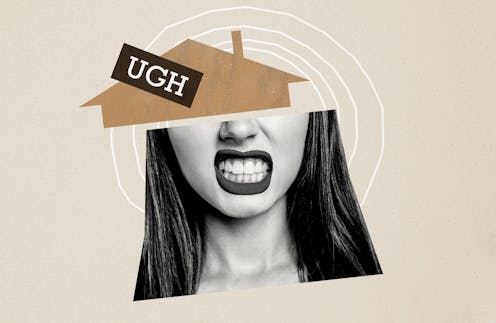
Australia’s housing crisis is dramatically reshaping the lives and hopes of young people, highlighted in a new report[1] launched today in Canberra as part of World Homeless Day[2].
The research, developed by Swinburne University of Technology and funded by YWCA Australia[3], provided a platform for young women and gender diverse people from around Australia to share their housing experiences and aspirations.
Our research found many young people are frustrated about the affordability, quality and security of housing in Australia.
These housing barriers are changing the traditional life course that many of these young people expected to follow, undermining their sense of what it means to be an “adult”.
Louise, 26, told us, as part of our research:
I don’t feel like an adult sometimes because of my living circumstances … I thought I’d be like ‘Sex and the City’, having my own apartment and going out for drinks with my friends. But none of us have time to do that.
The report[4] highlights how such housing barriers and frustrations are severely impacting young people’s relationships, health and wellbeing, education, employment, and ability to plan for the future.
Housing dreams are ratcheted down
Home ownership is still “the great Australian dream[5]” for many. However, numerous young people feel buying a home is out of reach or impossible.
Erin, a young woman in her late 20s, states:
It feels like you have to buy a house to be in the game, but to get there it just feels completely out of our grasp. And that’s quite scary.
For many, buying or even renting is seen as unattainable without a partner. This has gendered implications where young women need to depend financially on a partner, potentially leading to disadvantage[6] in the future.
Amy, 30, articulates:
It’s very hard to get a rental as a single female […] the uncertainty of not getting another place keeps me here.
Participants with hopes of having children express anxiety when their housing circumstances are unpredictable and/or unaffordable.
Jamie, a non-binary person in their mid-20s, says:
The biggest negative impact of being stuck on the lowest end of the rental market is that it severely limits my ability to plan to start a family. My partner and I both want a child but are terrified of the idea of not being able to afford rent with a new baby and limited family support.
Health and wellbeing are undermined
Young people describe feeling overwhelmed, hopeless, trapped and crushed by their housing situations. For some, this stems from the daily challenge of simply making ends meet.
Celia, a woman in her late 20s, describes:
The constant cycle of living in a place for a year, getting a massive rent increase, having to find a new place and move again is exhausting, financially unsustainable and demoralising. It feels pretty hopeless because I’m stuck in this cycle and I’ll never save for a house deposit because I’m losing it all on exorbitant rent.
For other participants, the health and wellbeing impact stems from their less-than-ideal dynamics at home, with many living with family as adults to save on rent.
As Zoe, a woman in her late 20s, describes:
It’s like you don’t pay with money to live with family […] but you pay with your mental health.
Relationships and safety are affected
Compromised safety is a concern among young women and gender diverse people we spoke with – whether it be escaping family and domestic violence, living in housing that is physically safe (such as with working locks on doors and windows), or sharing with others comfortably.
Our research found gender has a material impact on housing experiences, and shaped young women’s and gender diverse people’s perceptions of safety.
Julia, a woman in her early 20s, highlighted safety concerns:
My family home was filled with a lot of domestic violence. And so when I left and now I have my own place, I feel very, very safe there in comparison. And also no one in my family knows where I live. So that makes me feel very safe.
Some of the challenges of living with family were summarised by Ryde, a non-binary person in their early 20s:
Even now I’m like learning how to like be my own person while still being under my parents’ roof […] like still living at home is a bit emotionally kind of weird.
So what needs to change?
Participants involved in the research provide a number of solutions for addressing their housing barriers, including:
Beth told us:
I feel like our education totally failed us. I always think there needs to be some kind of unit in Year 11 or 12, like a compulsory unit where it’s like just life skills. So taxes, superannuation, getting your first job, buying your first house, getting into the rental market. If we have the skills or knowledge from that education, we might be able to make more informed choices.
Finally, young people urgently need a seat at the table when it comes to decisions about housing. They know what is needed and what politicians need to hear.
In the words of Taylor, a 24-year-old woman:
I think one thing that the politicians struggle to understand is that we’re not asking for, you know, four bedroom, three bathrooms at $400.00 a week. We’re asking for houses with working locks. No mould. And you know, we’re asking for very basic secure housing at affordable prices, it’s not a matter of us being picky. It’s a matter of health and safety.
(All participants’ names have been changed).
References
- ^ new report (doi.org)
- ^ World Homeless Day (www.ywca.org.au)
- ^ YWCA Australia (www.ywca.org.au)
- ^ The report (doi.org)
- ^ the great Australian dream (www.abc.net.au)
- ^ potentially leading to disadvantage (theconversation.com)
Authors: Wendy Stone, Professor of Housing & Social Policy, Centre for Urban Transitions, Swinburne University of Technology