We need to talk about what a possible war with China could look like
- Written by: William A. Stoltz, Lecturer and expert Associate, National Security College, Australian National University
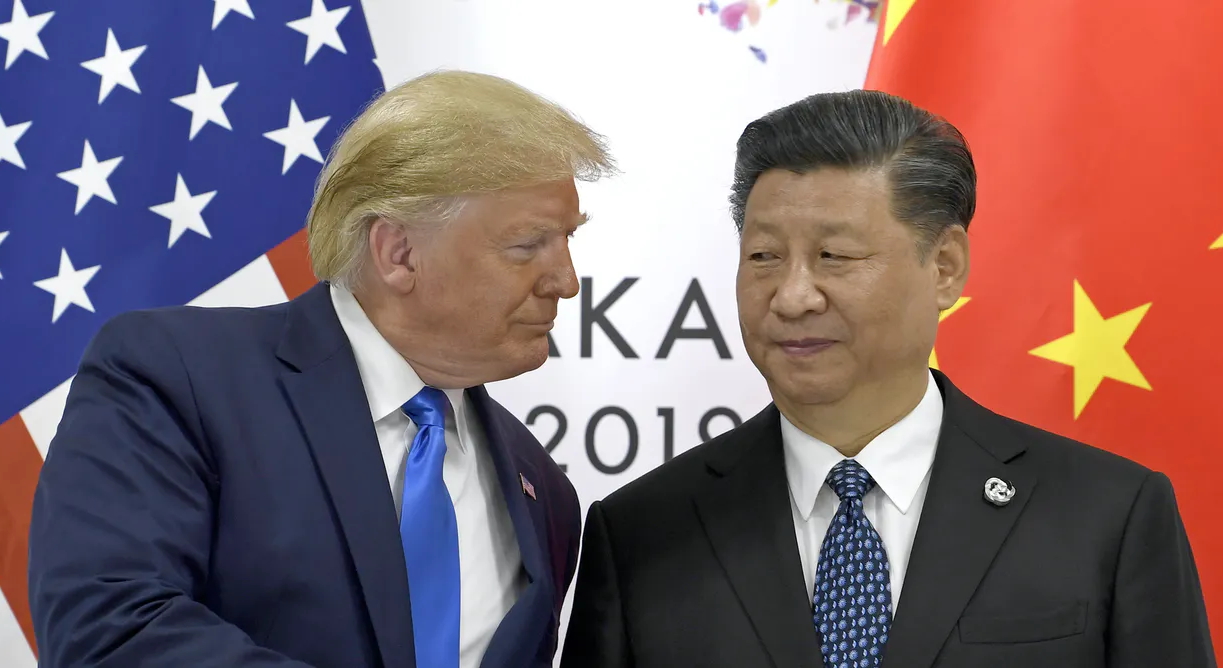
The intensifying great power competition between the People’s Republic of China and the United States has meant the possibility of future war in the Indo-Pacific region has become a regular feature of Australia’s national discourse.
It is surprising, then, how little attention has been given to what day-to-day life could look like if a war actually did break out.
While such a war is not inevitable, scrutinising what it might look like should be an urgent priority so we can take the necessary steps to improve Australia’s preparedness and ultimately our deterrence.
I previously worked in the Department of Defence analysing what would be required to mobilise Australia’s privately held industrial base and civil society to support various wartime scenarios. From this experience, I believe the government has a detailed understanding of how war could impact domestic supplies of critical goods and international freight transporting supplies to Australia.
What is missing, however, is a frank engagement with industry and the public about the hardships that may arise during a crisis and how our industrial base needs to be recalibrated to address these vulnerabilities.
Shortage of critical goods
There are three categories of goods that would be most impacted by war:
- energy and fuel
- pharmaceuticals and raw materials
- smart devices and their components.
These are utterly indispensable to the our daily lives and the continuity of our society. Yet, Australia currently lacks the ability to produce enough of these goods domestically to endure the supply disruptions that a conflict would bring.
For example, as a member of the International Energy Agency, Australia has an obligation to maintain sufficient reserves of refined fuel to meet its needs for 90 days[1]. In practice, however, Australia has arguably never met this requirement[2].
Indeed, our domestic capacity for refining fuel has gone backwards and sufficient storage facilities have yet to be established. Recent unpublished estimates from the energy sector I’ve seen suggest if supply lines were cut today, Australia would only have enough fuel to meet just days or weeks of demand.
Once road freight is impacted by a lack of fuel, supermarkets would start experiencing shortages of basic goods. Air travel would collapse. Non-essential retail businesses and most personal vehicle travel would likely cease, as fuel would be need to be rationed for freight, emergency services and the military.
It’s important to emphasise that Australia’s low onshore capacity to refine and store fuel would mean these dire impacts could be expected from even a relatively short-lived crisis disrupting our maritime supply lines.
When it comes to pharmaceutical products, the vast majority (90%) are also imported[3]. China is an essential source of many of Australia’s medicines, which means they’d be inaccessible if a war erupted between Beijing and Washington.
Australia has the facilities and expertise to produce a wide range of pharmaceuticals, but scaling up capacity would take time. Disruption to the availability of medicines could therefore have catastrophic impacts on the welfare of Australians and potentially spark a panic.
Australia’s access to digital devices and components is also highly reliant on foreign imports, especially from China. While shortages of this kind would not be as immediately life threatening, there would still be a significant change to how Australians live.
More worryingly, smart devices have been embedded in the operational technology of most Australian industrial systems, such as food processing, waste management, water treatment, freight management, transport or pharmaceutical manufacturing.
A prolonged disruption to our technology supply chain could have devastating effects on our economy and essential services, as we would be unable to replace or upgrade key components. This problem would be exacerbated by our nascent capacity to disassemble and recycle the salvageable components of electronics, such as semi-conductors[4]. Currently, we largely ship discarded devices overseas.
A ‘first 90-day’ crisis plan
While these scenarios are indeed alarming, we can take heart from the fact that Australia’s maritime supply lines are highly adaptable.
A war over Taiwan or in the South China Sea would have a far greater impact to global shipping than the COVID pandemic. However, the pandemic demonstrated the capacity of international shipping and air freight to recalibrate and adjust as key markets were disrupted by lockdowns and other response measures.
The result was that after a period of shortages, the arteries of international trade to Australia were restored.
Given these complexities, Australia needs to focus its national preparedness and mobilisation planning around the uncertain period between a crisis occurring and international shipping being re-established.
From my examination, such planning is not taking place to a sufficient degree.
The former secretary of Home Affairs, Michael Pezzullo, has similarly suggested[5] such planning is overdue.
I believe the government should adopt a “first 90 days” national mobilisation plan designed with industry partners. The aim: to ensure Australia’s survival during the first 90 days of a war or similar catastrophe in our region.
Such a plan should be centred on increasing the domestic stockpiles and manufacturing capacity of the three most essential categories of goods mentioned earlier – fuel, pharmaceuticals and smart devices (and components). This would give us the capacity to sustain Australia through the initial period of a conflict as we wait for international supply lines to adjust.
Australia must also look for ways to diversify sources of these goods away from China because of the high likelihood of disrupted maritime routes through Southeast Asia. This diversification would ensure critical supply chains are more resilient in those first 90 days and beyond.
Why talking about preparedness is important
There is a critical need to include industry in such preparedness and mobilisation planning. Yet, from my experience, many business leaders are in the dark about what security interventions the Commonwealth may initiate in wartime to keep Australia ticking. There appear to be two reasons for this.
First, there’s a view in government this kind of talk would cause alarm. The opposite is true. Clarity about our nation’s contingency planning in a crisis can only improve market confidence.
And second, policymakers may fear that any discussion about diversifying our key supplies away from China would harm our relationship with Beijing. It may also signal Australia is preparing for aggression.
Again, I believe the opposite is true. For many years, China itself has been on-shoring its key supplies to make its economy more resilient to stormier weather. Australia could simply point to China’s example as demonstrating prudence – hoping for the best, but preparing for the worst.
Ultimately, strengthening our preparedness through a “first 90 day” policy would make our deterrence more credible by showing we take the prospect of war seriously.
This would complicate the planning of would-be adversaries by ensuring Australia could not be easily isolated and neutralised. It would also show to our people, allies and adversaries alike that while Australia does not want war, we intend to endure it should one arise.
References
- ^ needs for 90 days (www.iea.org)
- ^ never met this requirement (www.aspistrategist.org.au)
- ^ are also imported (www.internationalaffairs.org.au)
- ^ such as semi-conductors (www.aspi.org.au)
- ^ has similarly suggested (www.aspistrategist.org.au)
Authors: William A. Stoltz, Lecturer and expert Associate, National Security College, Australian National University