If we truly want our Paralympic athletes to shine, their coaches need more support
- Written by: Andrew Bennie, Associate Professor, Health and Physical Education/Sport Development, Western Sydney University
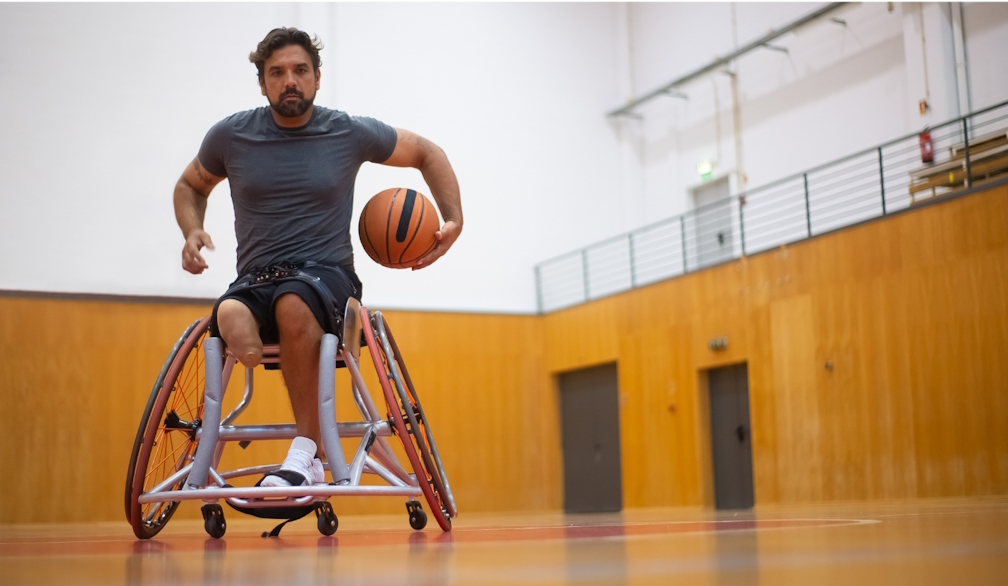
The 2024 Paris Paralympics delivered heightened attention and awareness of a pinnacle sporting event for para athletes.
Australia has often set the standard for para sport, consistently achieving top ten medal tally results at the Paralympic games.
However, other nations have begun to invest more seriously in para sport, which may be a sign we need to devote more time and energy towards non-playing roles to keep up with this increased professionalism.
From rehabilitation to professionalism to advocacy
The Paralympic Games evolved from an event to rehabilitate war veterans and foster social integration[1] to a global phenomenon with mass media attention[2], heightened levels of professionalism[3], and increasing expectations[4].
Much of this exposure serves to challenge deeply ingrained[5] and often negative or tragic societal views of people with disabilities, by showcasing the incredible athletic performances of para athletes.
Indeed, many countries now fund Paralympic athlete pathways, champion the image of the Paralympic games and athletes as a platform for human rights advocacy[6] and pay them equally[7] for winning medals.
Paralympic athletes are painted as role models for people with disabilities while also being admired for their “positive” life stories[8] and celebrated for their “superhuman” abilities.
However, while Paralympians are the face of this evolution, behind the scenes are a variety of others whose roles and pathways are less clear.
So what is the coach’s role in all of this?
Accompanying Paralympic sport’s rise in profile, professionalism and popularity has been a critical focus on developing high quality coaches in these contexts.
However, the growing attention given to Paralympians has not extended to the support given to coaches.
This is an important oversight, as the delivery and success of para sport revolves around a coaching workforce with the knowledge and understanding of how to create the necessary conditions for inclusion, as well as for supporting high performance.
Coaches often provide future Paralympians with their first taste of sport, guide them through crucial milestones[9] such as classification, support them through often turbulent or accelerated performance trajectories and through major career hurdles[10] such as retirement or declassification.
However, the importance of coaches and performance staff cannot be overestimated.
Becoming a Paralympic coach
The journey to becoming a coach in para sport is not as systematic as you might think.
Most coaches tend to migrate through to para sport after coaching non-disabled athletes[11], despite evidence suggesting coaching para athletes places demands on the skills and knowledge of coaches beyond that usually required in non-disabled contexts[12].
Further, the number of para athletes transitioning into leadership opportunities in para sport is often limited, with a recent EU workforce audit outlining the dominance of non-disabled coaches[13] in this context.
This is symptomatic of a broader issue in which people with disabilities are underrepresented in sports leadership.
There are however many para athletes who’ve successfully transitioned from elite athlete to coach.
Wotjobaluk Elder Kevin Coombes[14] was Australia’s first Indigenous Paralympian.
He played wheelchair basketball at five successive Paralympics and made his transition to coaching while still playing – as captain-coach during the 1972 Paralympics.
Louise Sauvage[15], who dominated wheelchair racing for decades, planned to become a para athletics coach following her retirement from the sport in 2004.
While she had doubts about her potential as a coach, she undertook postgraduate studies[16] in applied science and drew upon good mentors and her own personal coaches to develop her coaching expertise.
Swimmer Roly Crichton[17] competed at two Paralympics for New Zealand before dedicating three further Paralympic cycles to coaching para swimmers.
Crichton was instrumental in supporting fellow Kiwi Sophie Pascoe on her way to a record 11 Paralympic gold medals.
Together, these examples provide a clear need to mobilise the power of lived experience of former para athletes to support future Paralympic ambitions.
Looking to the future
An infusion approach to coach education has been signalled[18] as a potential movement for sport organisations.
It places disability content, topics and issues throughout coach education curricula.
This plays a crucial role in shifting coach education away from positioning people with disabilities as “problems to be fixed” towards a more human understanding of disability.
Our research has highlighted the need for visible and accessible pathways for people with disabilities to transition into coaching.
Recently, Athletics Australia released an expression of interest[19] to attract “recently retired international/national level para athletes interested in high performance coaching”.
Such initiatives are crucial to redress the lack of disability representation in para sport coaching.
Furthermore, clearer coach certification pathways in which disability is a central focus[20] are required because many coaches never receive formalised training or education specific to disability.
This means those who do make the jump into para sport are “thrown in at the deep end[21]”, and left to learn through trial and error[22].
Understandably, for coaches who have limited exposure to disability, this can be quite daunting and limits the transition of coaches into para sport due to a fear of the unknown.
With record numbers of delegations at Paris 2024, national Paralympic committees will naturally look to the future as they seek to advance the Paralympic movement and their own para sport development pathways.
It is crucial coaches are prepared for the complexity of para sport.
Coach education reform and targeted programs for para athlete transitions remain an area of considerable opportunity for national Paralympic committees and sport organisations wishing to leverage the legacy of Paris 2024.
References
- ^ rehabilitate war veterans and foster social integration (content.iospress.com)
- ^ mass media attention (journals.sagepub.com)
- ^ heightened levels of professionalism (www.tandfonline.com)
- ^ expectations (www.abc.net.au)
- ^ challenge deeply ingrained (paralympics.org.nz)
- ^ human rights advocacy (www.un.org)
- ^ equally (www.paralympic.org.au)
- ^ life stories (theconversation.com)
- ^ crucial milestones (olympics.com)
- ^ career hurdles (www.abc.net.au)
- ^ after coaching non-disabled athletes (www.tandfonline.com)
- ^ non-disabled contexts (www.taylorfrancis.com)
- ^ outlining the dominance of non-disabled coaches (www.paracoach.eu)
- ^ Kevin Coombes (deadlyvibe.com.au)
- ^ Louise Sauvage (www.paralympic.org.au)
- ^ postgraduate studies (www.athletics.com.au)
- ^ Roly Crichton (paralympics.org.nz)
- ^ signalled (www.taylorfrancis.com)
- ^ expression of interest (coachathletics.com.au)
- ^ central focus (www.tandfonline.com)
- ^ thrown in at the deep end (www.tandfonline.com)
- ^ trial and error (www.tandfonline.com)
Authors: Andrew Bennie, Associate Professor, Health and Physical Education/Sport Development, Western Sydney University