9-step guide for returning your people to work safely
- Written by: The Ideas Suite
From implementing extra cleaning of frequently touched surfaces to appointing a COVID-19 ‘champion,’ a national anti-viral sanitisation company has developed a return-to-work applicable to all businesses who want to keep their workplaces safe in the new physical distancing environment.
Lisa Macqueen, Co-Founder and Director at Australian anti-viral cleaning company Cleancorp (cleancorp.com), says: “At Cleancorp, we have had more than 1500 inquiries for our anti-viral cleaning services since the start of the pandemic, with one overwhelming question in recent weeks: ‘How do I get my people back to the office, so they feel safe?’
“With many employees anxious about heading back to the office – and some too afraid to even return to work – the next few weeks will be crucial for many organisations, as they begin a slow and staggered return to the workplace. If businesses haven’t taken appropriate steps to minimise virus-related risks on-site, it could open them up to the risk of infections, Work Cover claims and negative publicity. That’s why we have created a step-by-step guide to help businesses transition back to work and manage this ‘new normal.’”
Cleancorp’s 9-step transition plan to minimise COVID-19 risks for employees, customers, and visitors as they return to the workplace:
- Manage employee expectations. To ensure a successful transition back to the office, employees need to feel their employer has done everything to maximise their safety at work. Before you re-open, organise a full disinfection coronavirus precautionary clean, which includes a precautionary cleaning of all personal spaces in addition to shared touchpoints, such as door handles, remotes, kitchen taps, microwaves, fridges, and coffee machines.
- Plan your space using the four-square metre rule. The existing seating or working plan of your workplace may no longer be viable for the distancing rule of four-square metres per person. To determine how many staff you can have on the premises at once, calculate the area of the workspace in square metres and divide it by four. To allow for objects, such as desks and boardrooms, divide the space by eight. For example, if your office is 160 square metres, you could only have up to 40 people in the room, to allow each person to have four square metres of space.[1]
- Initiate a rotational working system. Once you have calculated how many employees you can have on site, create a roster system that includes all relevant employees. For example, if you employ 100 people, divide that by five working days, and you’ll find yourself with a 20 person ‘team’ that can come into the office on a set day per week. However, don’t forget the four-square metre rule, which can be achieved by re-configuring furniture to increase physically distancing or getting staff to ‘own’ a different desk to what they are used to. Lisa says: “Whether your employees are rostered on weekly, fortnightly, on a ‘team’ basis, or an every-other-day basis, once you have your roster in place, I strongly recommend that each person uses the same desk or workspace each time they are at work. Hot-desking and shared workspaces present too much of a risk.”
- Appoint an on-site COVID-19 champion. Select an appropriate person in your organisation to be the ‘champion’ of keeping employees’ hygiene levels on tracks. Someone with Workplace Health and Safety knowledge, such as a human resources team member, would be ideal. They would become the go-to person for other employees to ask questions about how they can navigate the ‘new normal’ working environment. For instance, the champion would check in with each team member to gauge what’s working, what’s not, and if they require any additional information or support. They would also manage the upgraded cleaning schedule for your office or workspace and ensure team members remember to wipe down and clean their equipment after use. Lisa says: “Choosing a champion that keeps everyone aware of best safety principles – from good respiratory hygiene to encouraging people to stay home if they show any flu-like symptoms – will reassure staff that their health and safety is the priority. It also has the benefit of making them feel like their organisation is ‘there’ for them, and that they have the emotional comradery they need in our new style of working environment.”
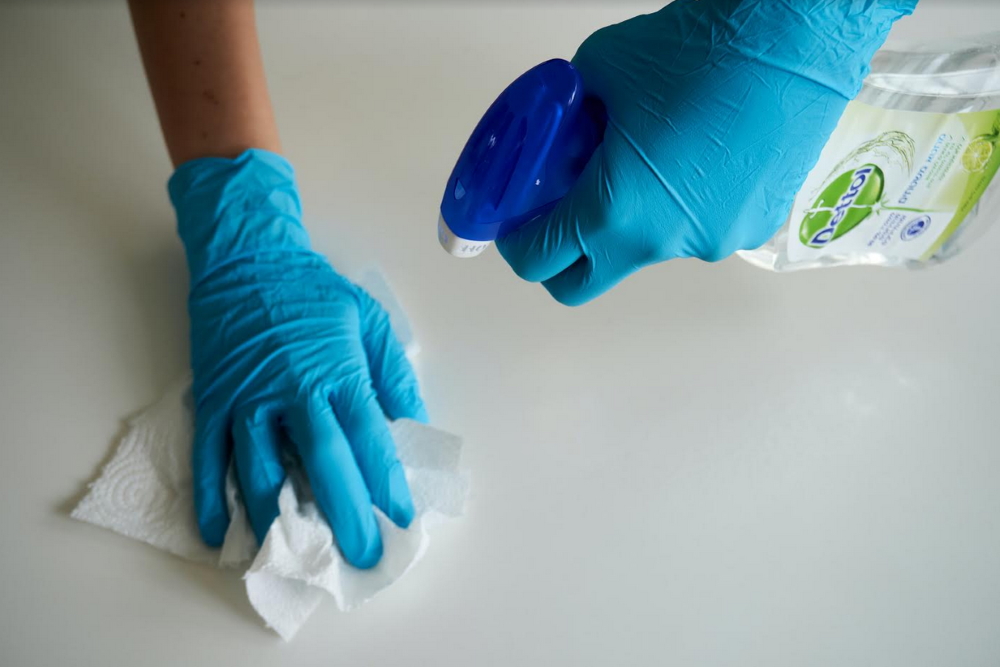
- Create a plan for ongoing sanitisation. Consider equipping each employee with their own bottle of hand sanitiser, hospital-grade anti-viral disinfectant, and cleaning cloth when they return to the workplace. Having individual sanitary equipment will also alleviate any worry that multiple people are handling the disinfectant.
- Assess and determine how to use shared meeting spaces. Up until the outbreak of COVID-19, open-plan offices with shared desks and ‘pod’ meeting areas were becoming the preferred way of working for many organisations. However, for the foreseeable future, these more casual meeting spaces with soft furnishings – surfaces that need to be steam-cleaned, often at a considerable expense – should be avoided, as a virus has the potential to last on these surfaces for up to 24 hours. If you can, choose a more traditional meeting room with hard surfaces. Although the virus can live on glass, plastic, and stainless steel for up to 72 hours, these surfaces are much easier to clean and disinfect.
- Incorporate company vehicles into your cleaning schedule. If you have company vehicles, forklifts, or trucks, these now also need to be included in your cleaning schedule – especially if multiple people use the vehicles. A minimum of one precautionary COVID-19 clean a week will ensure all surfaces within the vehicle’s interior are fully cleaned, and all external touchpoints are also cleaned, such as door handles and side-view mirrors.
- Consider a cleaning concierge service. Most organisations – especially larger ones – have high-risk shared touchpoints used by site visitors and staff. These are best managed by a fully trained day-cleaning team who are uniformed and equipped to sanitise and disinfect touchpoints all-day long – whether they be kitchens, bathrooms, or meeting rooms. Though some might regard it as extreme, having an on-demand cleaning service will restore stakeholder confidence in your organisation’s hygiene standards day-in and day-out.
- Hire a commercial cleaning specialist. Some cleaning companies have had to adapt quickly to the new COVID-19 risk environment, while others, especially professional commercial cleaning services, have been cleaning to a hospital standard for many years. Lisa says that organisations, especially those who have committed to additional safety standards, such as ISO 45001, should seek cleaners whose services are ISO certified. She says: “Even before the outbreak of COVID-19, Cleancorp – which is one of the few Australian cleaning companies to have achieved three ISO Certifications – was using vacuum pumps with HVAC power-operated scrubbers, and chemical foggers, to keep workplaces free from viruses.”
About Cleancorp
Cleancorp is a multi-award-winning company that provides cleaning and sanitisation for hundreds of organisations across Australia and New Zealand, including medical, dental, retail, strata, and diplomatic offices. A family-owned business with 25 years’ experience in the industry, Cleancorp has built a strong reputation for its people, processes, and consistent delivery of high-quality cleaning. Having achieved three ISO Certifications – Quality, Safety, and Environmental Management – and a safety AS certification, Cleancorp meets international best practice in maintaining consistency and quality and complies with multiple commercial legislative and policy requirements, including those around Workplace Health & Safety and hazardous materials. With a dedicated team trained in anti-viral cleaning, Cleancorp has seen a significant increase in demand for its services in the new COVID-19-risk environment. Visit cleancorp.com.
[1] Safe Work Australia, ‘Office – Physical distancing’: https://www.safeworkaustralia.gov.au/covid-19-information-workplaces/industry-information/office/physical-distancing#heading--3--tab-toc-how_do_i_make_sure_there_is_4_square_metres_of_space_per_person?