Does the AFL ban on skinfold testing avoid fat shaming – or has footy ‘gone soft’?
- Written by: Dominique Condo, Senior Lecturer in Sports Nutrition, Deakin University
There was, perhaps unsurprising, outcry from some sections of the sports media when it was revealed the AFL was removing body composition testing[1] (including skinfold testing) in its junior (under the age of 18) talent pathways system, coming soon after the league moved to stop publishing player weights[2].
“The world has gone mad,” said former Essendon champion Matthew Lloyd, while ex-playing and coaching great Paul Roos stated:[3] “This is just farcical … they [skinfold tests] are such a minor thing, to take them away seems ludicrous.”
So is this a sign AFL players have “gone soft”, or is there good reason for it?
Player weights – public or private?
Athletes, like anyone else, have the right to privacy regarding personal information such as their weight. By no longer publishing player weights, the AFL may be aiming to respect players’ privacy and promote a more confidential approach to sensitive information.
Publishing player weights can also contribute to a culture that emphasises body image, potentially placing pressure on some athletes to maintain a certain physique and possibly impacting mental health and self-esteem[4].
It’s vital to understand the underlying philosophy of AFL body composition policies is to “first, do no harm” – aiming to promote positive outcomes for all individuals. So if keeping player weights private helps some athletes who may have body image concerns, even if they are the minority, it is worth the change.
Some critics have argued knowing a player’s weight can help from a performance perspective – coaches, commentators and even fans can compare player match-ups to estimate performance outcomes and capabilities. But the impact of weight on football performance is not clear.
Also, most AFL players will tell you their published weight hasn’t been updated since they were drafted, and therefore is unlikely to be valid.
Read more: Spotting the signs of disordered eating in youth: Tips for parents and caregivers[5]
What about skinfold testing?
The AFL’s decision to stop skinfold testing in junior talent pathways is for the same reasons – to prioritise the health and wellbeing of athletes.
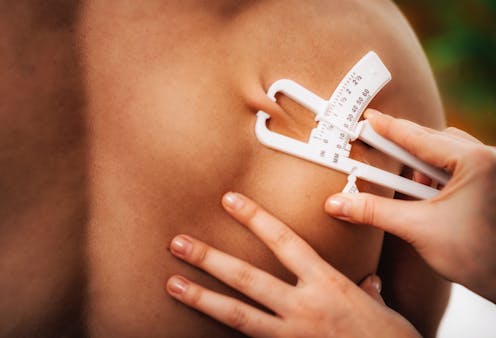
Skinfold testing [6]involves measuring the thickness of fat at various sites on the body with a caliper.
It has been a longheld part of football culture. Within an AFL club, these tests have historically been carried out semi-regularly by qualified staff to provide a quantitative measure of an athlete’s physical condition.
But while many athletes are unaffected by skinfold testing, there are some who can be significantly impacted, leading to a poor relationship with food and body image, and increasing the risk of eating disorders.
At the elite level, sports dietitians or qualified medical staff carry out the assessments and can recognise signs of disordered eating or body image issues in players and can therefore ensure appropriate support is put in place.
But at non-elite levels, this is more challenging as resources and expertise are often limited. As a result, there is likely a higher risk among these younger athletes, which is a big reason the AFL has changed its approach.
Is skinfold testing helpful when it comes to assessing fitness?
Body composition assessment, including skinfold testing, can be a helpful tool in fitness testing and optimising player performance, but it is important to recognise the limitations.
Although the evidence is clear that lean mass and body fat distribution can impact speed and endurance-based performance[7] (which are important elements of team sports such as AFL), the correlation to overall performance on a football field – requiring high skill execution, strength and decision-making – is unknown and primarily based on anecdotal evidence.
Skinfold testing can be helpful in an elite sport environment to track changes over time and monitor the effectiveness of training programs and nutritional interventions. For example, if a recruit starts a strength program for the first time, monitoring skinfolds and weight can help track progress and provide insight into modifications.
Skinfold testing can also help identify athletes who may be at risk of undereating or those with an eating disorder.
Skinfold tests are performed by some sports and teams as part of their fitness testing regimes.How widespread are body issues in sport?
Body image concerns and anxieties are prevalent in elite sport, although there is very limited published research with exact estimates, mainly due to the challenge in capturing this type of data (often due to athlete access and the sensitive nature of the topic).
However, we are starting to see more published research[8] emerge and athletes talking openly[9] about the topic.
There are several factors that can contribute to body image concerns in elite sport and at junior levels. These concerns often come from a pressure and desire to perform, which can lead to an unhealthy focus on an athlete’s physique to meet the demands of their sport and gain a competitive edge.
Media and public scrutiny can also contribute to these anxieties, in particular athletes who are in the spotlight or in high-profile sports and are compared to other athletes, and unrealistic standards of what an athlete “should look like”.
It is a common thought that athletes in weight-class or aesthetic sports, or endurance-based sports where there may be a power-to-weight ratio advantage, will be at higher risk of body image issues and eating disorders. However, a recent study reported athletes, regardless of sport or gender may be affected by eating disorders[10].
Other factors such as uniform expectations[11], injury and transition out of sport can also contribute to these concerns.
It is important to note body image issues and anxieties are not limited to a specific gender, age, background or athletic ability – athletes from the same sport can have different experiences for a variety of reasons that can impact their mental health, performance and overall wellbeing.
Read more: NZ gymnasts can now wear shorts over their leotards – why is this a big deal for female athletes?[12]
What are other sports doing?
Globally, there has been a broad shift in sports culture towards promoting positive body image, mental health, and holistic athlete development, which has led to changes in how body weight and body composition are assessed and discussed.
In recent years there has been an increased awareness of the potential negative impacts of emphasising body composition on athletes’ mental health and wellbeing. This was demonstrated in the independent panel reports on Swimming Australia[13] and Gymnastics Australia[14] that highlighted concerns regarding a potential over-emphasis of physique in sport environments.
In response, body positive campaigns, education and support programs have been a focus for many sports and organisations, such as the Australian Institute of Sport (AIS)‘s Eating Disorder and Body Composition Assessment considerations[15] and Eating Disorder in Sport program[16].
It’s evident there has been a big shift in sporting culture and while body weight and skinfold testing may still be used as part of fitness assessments, there are efforts to minimise the emphasis on these measures and prioritise a more holistic approach to athlete assessment.
References
- ^ removing body composition testing (www.foxsports.com.au)
- ^ stop publishing player weights (www.theage.com.au)
- ^ Paul Roos stated: (www.abc.net.au)
- ^ impacting mental health and self-esteem (pubmed.ncbi.nlm.nih.gov)
- ^ Spotting the signs of disordered eating in youth: Tips for parents and caregivers (theconversation.com)
- ^ Skinfold testing (www.verywellfit.com)
- ^ impact speed and endurance-based performance (pubmed.ncbi.nlm.nih.gov)
- ^ more published research (www.ncbi.nlm.nih.gov)
- ^ athletes talking openly (podcasts.apple.com)
- ^ may be affected by eating disorders (pubmed.ncbi.nlm.nih.gov)
- ^ uniform expectations (theconversation.com)
- ^ NZ gymnasts can now wear shorts over their leotards – why is this a big deal for female athletes? (theconversation.com)
- ^ Swimming Australia (www.swimming.org.au)
- ^ Gymnastics Australia (humanrights.gov.au)
- ^ Eating Disorder and Body Composition Assessment considerations (www.ais.gov.au)
- ^ Eating Disorder in Sport program (www.ais.gov.au)
Authors: Dominique Condo, Senior Lecturer in Sports Nutrition, Deakin University