Rugby stadiums are sold as an economic asset – but NZ needs to ask if they’re really worth it
- Written by: Robert Hamlin, Senior Lecturer in Marketing , University of Otago
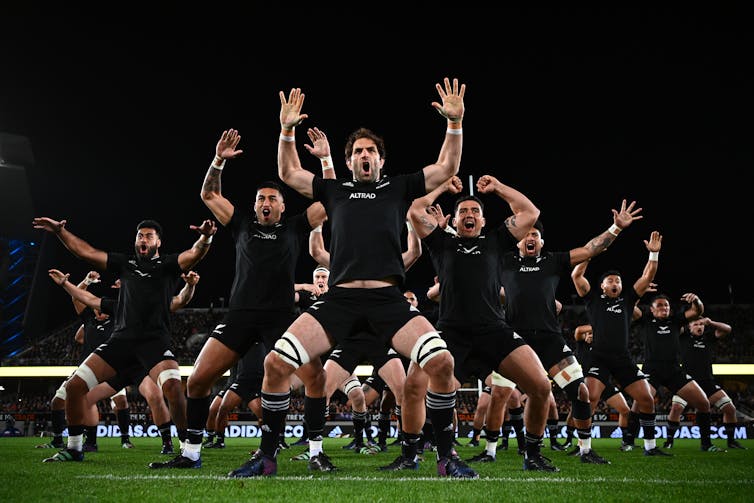
A multi-billion dollar stadium precinct[1] has been proposed for Auckland, one of three proposals[2] in front of Auckland Council for a new stadium in the city. The council is also considering revamping Eden Park. But is a new stadium really value for money for Auckland ratepayers?
Large stadiums are sold as an economic boon for cities. But the reality is these multimillion-dollar investments tend to require significant investment from local and regional councils.
These stadiums are often opposed[3] by sections of the communities[4] asked to pay for them. And once built, they stand empty most of the time.
Why then do local governments keep proposing them? The answer lies in the lofty promises from those supporting the projects – and the questionable calculations used to get them over the line.
For the love of the game
Rugby Union is the principal user of large stadiums in New Zealand. When the game was still amateur, it was expected to build and maintain its own stadiums. For example, Carisbrook in Dunedin was initially built by the Otago Rugby Football Union[5], while Eden Park was built by various Auckland sports associations[6].
But with the professionalisation of rugby in 1995[7] the expectation changed. Taxpayers and ratepayers started paying[8] significant amounts for construction of rugby and “multi-use” stadiums.
Two large (over 30,000 capacity) new stadiums have been built in New Zealand since 1999 (Wellington’s Sky Stadium and Dunedin’s Forsyth Barr Stadium), with one more currently under construction (Te Kaha in Christchurch). And there is the proposed Auckland stadium, currently in front of a council working group.
Read more: Note to governments: sports stadiums should benefit everyone, not just fans[9]
Out of the four, only Wellington’s Sky Stadium has been designed to be used for both rugby and cricket. The others have a fixed “natural grass” rugby pitch as their main arena.
According to information released under a Local Government Official Information and Meetings Act request, there have been just 30 major events at the Forsyth Barr rugby stadium in Dunedin since 2014 – three a year. And there are no major live music acts[10] set to perform there in the next 18 months.
The last major concert was Pink, who performed at the stadium last month. Ed Sheeran cited the shape of the stadium[11] – rectangular rather than oval – as a reason for skipping the city on his 2023 world tour.
Costs and benefits
While Christchurch’s Te Kaha has been ratepayer funded from the outset[12], the consortium behind one of the proposed stadiums in Auckland claims there will be zero cost to ratepayers[13].
But a feasibility report[14] commissioned by former Auckland mayor Phil Goff on the possibility of a new stadium raised questions about the cost for Auckland ratepayers, how much they would be expected to pay, and what sort of profit would be gained from a new stadium.
Whether it is there from the outset or creeps in later, the case for funding from the community is usually based on “economic impact analysis”. This argument is based on taking a large event and claiming everything the attendees do and spend in the town that day is as a direct outcome of the stadium being there.
This figure is then increased via what is known as an “economic impact multiplier[15]” to create a topline figure in support of the stadiums. The exact calculations behind this figure[16] are not always made clear.
However, this headline figure is flawed[17]. Any local attendee would normally have spent the money in the community anyway, for example. And events may have been held in the community at existing venues before the new stadium was built.
Borrowing and interest costs
The cost of the debt that is incurred to build these stadiums is also high.
Te Kaha, which cost NZ$683 million to build, was promoted as having an annual $50 million positive economic for the region once it opened. But at the same time, Christchurch ratepayers are expected to pay[19] the majority of the construction costs ($453m), while the crown invested $220m.
A significant part of the council investment was borrowed, meaning ratepayers will also be paying for the interest on this debt.
Read more: Offside: The secret deals involving public money for sports stadiums[20]
Rates increases have become a key source of funding for Te Kaha. The stadium was solely responsible for a 2% increase in Christchurch rates[21] this year – about $94 for an average ratepayer, increasing to $209 during the 2027-28 financial year.
As Auckland councillors consider the proposed waterfront stadium[22], the city’s leaders need to consider both the cost and the benefit of the development – not just the headline economic impact.
For ratepayers expected to foot some or all of the bill, rates increases and other infrastructure needs could outweigh the benefits of a place to watch sport.
References
- ^ multi-billion dollar stadium precinct (www.newshub.co.nz)
- ^ one of three proposals (www.rnz.co.nz)
- ^ These stadiums are often opposed (www.nzherald.co.nz)
- ^ sections of the communities (www.nzherald.co.nz)
- ^ built by the Otago Rugby Football Union (www.orfu.co.nz)
- ^ built by various Auckland sports associations (nzhistory.govt.nz)
- ^ professionalisation of rugby in 1995 (www.world.rugby)
- ^ Taxpayers and ratepayers started paying (www.stuff.co.nz)
- ^ Note to governments: sports stadiums should benefit everyone, not just fans (theconversation.com)
- ^ no major live music acts (www.nzherald.co.nz)
- ^ shape of the stadium (www.nzherald.co.nz)
- ^ ratepayer funded from the outset (www.nzherald.co.nz)
- ^ zero cost to ratepayers (www.1news.co.nz)
- ^ feasibility report (www.stuff.co.nz)
- ^ economic impact multiplier (www.sportseconomics.org)
- ^ exact calculations behind this figure (newsroom.co.nz)
- ^ this headline figure is flawed (www.brookings.edu)
- ^ Hannah Peters/Getty Images (www.gettyimages.com.au)
- ^ Christchurch ratepayers are expected to pay (newsroom.co.nz)
- ^ Offside: The secret deals involving public money for sports stadiums (theconversation.com)
- ^ 2% increase in Christchurch rates (www.thepress.co.nz)
- ^ proposed waterfront stadium (www.1news.co.nz)
Authors: Robert Hamlin, Senior Lecturer in Marketing , University of Otago