How much sport will you be able to watch for free under proposed new Australian broadcast rules?
- Written by: Hunter Fujak, Senior Lecturer in Sport Management, Deakin University
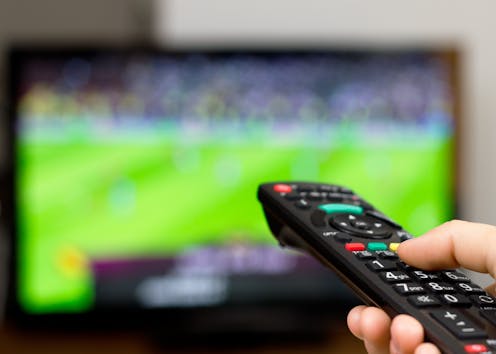
Watching sport on television and other screens is integral to the cultural lives of many Australians[1].
This is why, in 1995, the anti-siphoning scheme was introduced to ensure sport “events of national importance and cultural significance[2]” would not be captured exclusively by pay TV at the expense of free-to-air coverage.
There have been enormous changes in television[3] since and this analogue-era legislation is increasingly out of step with the modern digital media landscape.
Critically, under current definitions, streaming services such as Netflix and Amazon fall outside a scheme restricting subscription broadcasters like Foxtel.
The federal government promised[4] before its election in 2022 to review the anti-siphoning scheme. Its subsequent Communications Legislation Amendment (Prominence and Anti-siphoning) Bill 2023[5] is designed to close the “regulatory gap[6]” that has emerged within media law since Netflix’s launch in Australia in 2015.
The Senate referred the bill to its Environment and Communications Legislation Committee. Its report has just been released and will help shape Australians’ access to sport media content.
The importance of prominence
“Prominence” refers to the discoverability of individual media applications, such as Netflix or 9Now, on the user homepage of smart televisions.
The federal government is troubled by overseas services like YouTube and Amazon being immediately visible on smart televisions through commercial licensing agreements, effectively “burying” Australian free-to-air TV.
Public service broadcaster SBS, for example, claimed[7] during Senate hearings that one television manufacturer demanded both a placement fee and a 15% share of revenue to feature on the television’s homepage.
Prominence is crucial in sport because anti-siphoning legislation is based on the principle that, although in general decline[8], free-to-air TV is still the most effective, low-cost, readily-accessed[9] vehicle for delivering premium sport to a majority of Australian households.
Read more: Regardless of the rules, sport is fleeing free TV for pay, and it might be an avalanche[10]
Anti-siphoning
While often criticised by subscription media companies and many sports[11] as anti-competitive, anti-siphoning legislation is significantly responsible for the continued abundance of free major sport on our televisions.
In a portent of the risks ahead, International Cricket Council[12] World Cups will disappear from free-to-air television between 2024 and 2027, after the world governing body signed an exclusive four-year deal with streaming platform Amazon.
The AFL[13] also reportedly met Amazon in 2022 as part of its media rights negotiations.
Loopholes[14] in the scheme are also being increasingly exploited. This problem was exposed in 2018 when Australian one-day international cricket matches[15] went behind a paywall, despite being listed as free-to-air events.
As Foxtel[16] told the Senate hearing, both Nine (Stan) and Ten (Paramount+) are now hybrid networks, able to move acquired sports from free-to-air broadcast to behind a streaming paywall.
At present, free-to-air networks cannot be compelled to acquire the rights to any sport, broadcast them if they do, or refrain from on-selling them to a pay platform.
What are the implications for sport and other viewers?
The majority Senate report broadly supported the federal government’s existing exposure draft[17].
Regarding prominence, this means free-to-air channel “tiles” will be highly visible when you turn on a new smart TV. A 12-month phased implementation of a prominence framework was recommended by the committee – and would only apply to new televisions.
The committee also broadly accepted the draft bill’s anti-siphoning provisions, which will affect what and where sport is viewed by fans.
First, the listed events will be expanded by 30% and incorporate more women’s and parasports. They include the AFLW and NRLW finals, NRLW State of Origin, and the Summer Paralympic Games.
To provide counterbalancing benefits to subscription broadcasters, sport events not acquired by a free-to-air broadcaster will become more quickly available to subscription platforms (12 months before an event starts, rather than six months before). This provides subscription platforms with greater lead-in times to plan, organise and promote their content schedules.
The most controversial recommendation related to the scope of anti-siphoning laws, affecting how Australian viewers can access sport in the medium term.
It supported the government’s position, on grounds of excessive competitive advantage, that anti-siphoning should only apply to terrestrial broadcasting. This excludes digital rights for live streaming through broadcast video on demand apps such as 9Now, Seven+, iView and SBS On Demand.
Commercial free-to-air broadcasters called this a “nightmare scenario[18]”, as they estimate[19] 50% of households will be watching TV online by 2027.
For viewers without televisions connected to aerials, this could make major sport events on free-to-air TV unavailable. Although terrestrial TV is still the most universally available screen sport vehicle[20], aerials are no longer routinely installed in new housing developments.
Research by the Australian Communications and Media Authority[21], though, indicates that free-to-air network claims about disappearing TV aerials are somewhat exaggerated. Nonetheless, as modernisation was a central justification for the anti-siphoning reforms, the strategic compromise over broadcast video on demand apps will inevitably be scrutinised.
Notably, in a dissenting minority report, the Greens were unhappy the bill did not go far enough in either prominence or anti-siphoning. They reserved their right to reject it unless suitably amended to guarantee global corporations could not capture Australian sports rights.
Read more: The TV networks holding back the future[22]
What happens next?
The amended bill must pass through Parliament to become law, and its final shape and the fate of any amendments are as yet unknown.
While it is widely, though not universally, acknowledged action is needed to protect free screen sport viewing, intense disagreement remains among competing interest groups over what is to be done now and in the future.
To safeguard their viewing interests, Australian sport fans will need to watch these formidably technical debates as closely as their favourite sport contests.
References
- ^ cultural lives of many Australians (researchdirect.westernsydney.edu.au)
- ^ events of national importance and cultural significance (www.tandfebooks.com)
- ^ changes in television (www.taylorfrancis.com)
- ^ promised (anthonyalbanese.com.au)
- ^ Communications Legislation Amendment (Prominence and Anti-siphoning) Bill 2023 (www.aph.gov.au)
- ^ regulatory gap (theconversation.com)
- ^ claimed (www.9news.com.au)
- ^ general decline (www.thenewdaily.com.au)
- ^ low-cost, readily-accessed (accan.org.au)
- ^ Regardless of the rules, sport is fleeing free TV for pay, and it might be an avalanche (theconversation.com)
- ^ subscription media companies and many sports (www.infrastructure.gov.au)
- ^ International Cricket Council (www.cricket.com.au)
- ^ AFL (www.theage.com.au)
- ^ Loopholes (theconversation.com)
- ^ Australian one-day international cricket matches (www.cricket.com.au)
- ^ Foxtel (www.news.com.au)
- ^ exposure draft (minister.infrastructure.gov.au)
- ^ nightmare scenario (www.mediaweek.com.au)
- ^ estimate (www.freetv.com.au)
- ^ universally available screen sport vehicle (intellectdiscover.com)
- ^ Australian Communications and Media Authority (www.acma.gov.au)
- ^ The TV networks holding back the future (theconversation.com)
Authors: Hunter Fujak, Senior Lecturer in Sport Management, Deakin University