Indigenous fathers help build stronger communities. Here’s how we can better support them
- Written by: Jacob Prehn, Associate Dean Indigenous College of Arts, Law, and Education; Senior Lecturer, Social Work, University of Tasmania
When approaching how to support the needs of Aboriginal and Torres Strait Islander families, there is a tendency in favour of strengthening and empowering mothers[1], rather than fathers.
While this emphasis on maternal support is undoubtedly justified (in fact, there probably needs to be more supports that are culturally appropriate), it raises the question of why specialist assistance is not similarly prioritised for fathers.
For instance, within what is arguably the core Aboriginal and Torres Strait Islander policy in Australia, Closing the Gap[2], there is no mention of initiatives specifically for Indigenous fathers or men more broadly.
We analysed data from around 150 First Nations fathers about the support they needed. Here’s what they had to say.
Read more: 'Emu Men': a new way to recognise and celebrate Indigenous fathers[3]
Doing away with negative stereotypes
Western society can portray some groups of fathers in a less favourable light[4] and offer limited support.
In Australia, there has been a particularly cruel characterisation of Indigenous fathers as deviant, distant, and/or drunkards.
These harmful characterisations were reflected in a 2016 cartoon[5] by Bill Leak of an Aboriginal man unable to recall the name of his son.
These representations are not true of many Indigenous fathers. They are often disciplined, devoted and sober, and want to be positive role models for their children. A great example of this is in the social media movement[6] that sprung up in the wake of the cartoon, called #IndigenousDads.
Read more: We studied 100 years of Australian fatherhood. Here's how today's dads differ from their grandfathers[7]
In light of this social climate, we wanted to know what Indigenous fathers need in order to enhance their experience of fatherhood. We drew the responses from data of 149 Indigenous fathers from the Longitudinal Study of Indigenous Children (LSIC)[8], a large Australian dataset administered by the Commonwealth Department of Social Services. That study asked them “if you could have something to make it easier to raise your child, what would it be?”. We analysed the results.
More support needed
Our research[9] found more than 60% of Indigenous dads surveyed indicated needing further support.
There were several areas that came up most frequently. These were finances, social services, housing, and the ability to spend more time with their children.
Of the ten themes we observed across the comments from Indigenous fathers in response to this question, nearly all were related to socioeconomic and cultural factors. One of the fathers expressed frustration at the lack of available social services, wanting more support in general. Another father shared how finances affected his role, saying:
I would like to have a decent paying job; I had to stop working to help and care for my children and partner.
Other fathers mentioned wanting housing that was appropriately sized to accommodate a family, and not wanting to rent. Additionally, fathers wished they had the ability to invest more time in engaging in activities with their children.
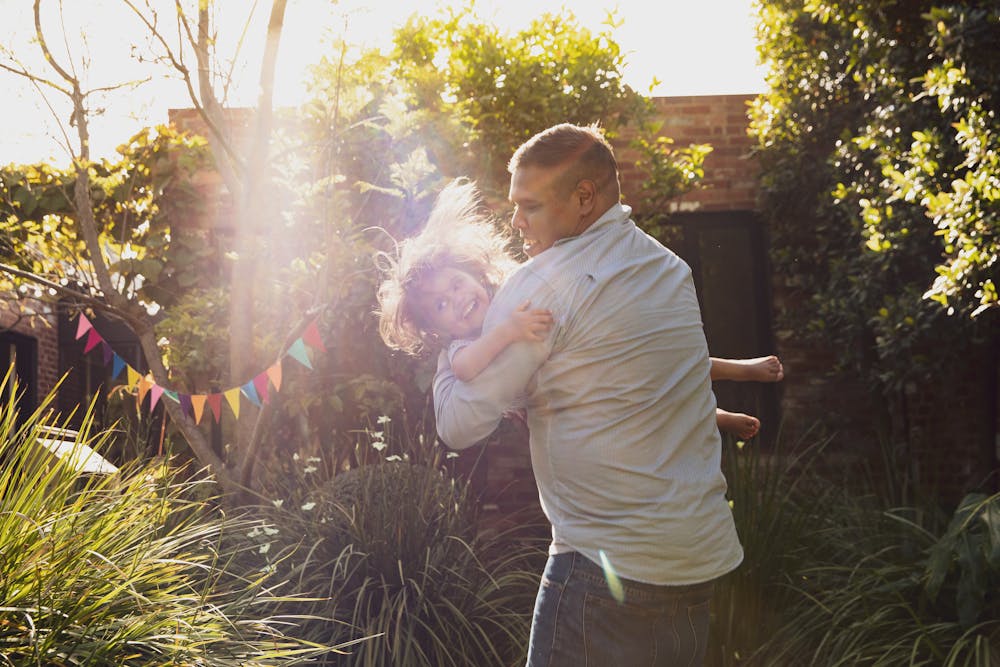
Collectively, these desires are reflective of men striving to be involved and nurturing fathers[10], not deviant or distant, as illustrated in harsh stereotypes. This is highlighted in their courage in openly asking for help.
What needs to be done?
Our research shows policies about and for Indigenous men and fathers need to directly address the areas in which they’ve expressed the most need. This includes looking at their social determinants of health[11]. This means examining the social and economic circumstances that can affect a person’s life, from their housing situation through to feeling included in society.
As we mentioned earlier, the Closing the Gap[12] strategy does not presently do this. It is important for this policy, and other relevant government strategies, to target these areas and concerns specifically.
Further, urgent attention is needed for greater research funding to support Indigenous dads and men more broadly. One study[13] shows the minimal amount of Indigenous-specific research funding awarded by Australia’s two central funding bodies. The Australian Research Council (ARC) has provided 1.46%, and the National Health and Medical Research Council (NHMRC) has given a concerning 0.29%. There is a pressing need for additional investigation into how best to support Indigenous fathers and Indigenous men.
Read more: Young dads are painted as feckless or absent – but they're working to change perceptions[14]
Giving Indigenous fathers the support they need is crucial in reducing the well-documented[15] challenges experienced by Aboriginal and Torres Strait Islander men. There are also positive flow-on effects to others, as found[16] by researchers Lyndon Reilly and Susan Rees:
If you have strong Indigenous fathers, you will have strong Indigenous families. By having strong Indigenous families, you will have strong Indigenous communities.
As of 2021, Indigenous children are more than ten times[17] more likely to be on a care or protection order than non-Indigenous children. Strengthening the role of Indigenous fathers not only makes financial sense for governments, but also contributes to Indigenous family and community wellbeing, reducing care and protection orders for Indigenous children.
We need to listen to First Nations fathers. If we do, we can deliver services that play to their strengths, rather than seeking to address perceived deficiencies.
References
- ^ empowering mothers (journals.sagepub.com)
- ^ Closing the Gap (www.closingthegap.gov.au)
- ^ 'Emu Men': a new way to recognise and celebrate Indigenous fathers (theconversation.com)
- ^ less favourable light (theconversation.com)
- ^ 2016 cartoon (www.abc.net.au)
- ^ social media movement (www.abc.net.au)
- ^ We studied 100 years of Australian fatherhood. Here's how today's dads differ from their grandfathers (theconversation.com)
- ^ Longitudinal Study of Indigenous Children (LSIC) (www.dss.gov.au)
- ^ Our research (onlinelibrary.wiley.com)
- ^ nurturing fathers (theconversation.com)
- ^ social determinants of health (www.aihw.gov.au)
- ^ Closing the Gap (www.closingthegap.gov.au)
- ^ One study (www.sciencedirect.com)
- ^ Young dads are painted as feckless or absent – but they're working to change perceptions (theconversation.com)
- ^ well-documented (link.springer.com)
- ^ as found (pubmed.ncbi.nlm.nih.gov)
- ^ ten times (www.indigenoushpf.gov.au)
Authors: Jacob Prehn, Associate Dean Indigenous College of Arts, Law, and Education; Senior Lecturer, Social Work, University of Tasmania