Cruel summer ahead – why is Australia so unprepared?
- Written by: Susan Harris Rimmer, Professor and Director of the Policy Innovation Hub, Griffith Business School, Griffith University
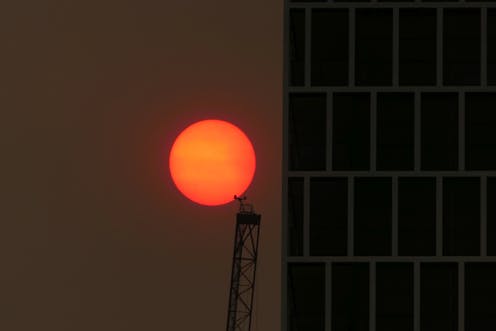
2023 has shattered climate records, accompanied by extreme weather that has left a trail of devastation and despair, according to the World Meteorological Organization[1] at COP 28. Some of the most significant extreme heat events were in southern Europe and North Africa, especially in the second half of July. Temperatures in Italy reached 48.2°C, and record-high temperatures were reported in Tunis (Tunisia) 49.0°C, Agadir (Morocco) 50.4°C and Algiers (Algeria) 49.2°C.
Heat-related deaths are on the rise globally. In 2019, a study in The Lancet[2] attributed 356,000 deaths to extreme heat. A recent study[3] puts the excess deaths due to last year’s heatwaves in Europe at more than 70,000. The death toll of this year’s heat waves is as yet unknown, but likely to be much worse.
Extreme heat events are without doubt the greatest risk to the right to life caused by climate change. And this has major implications for those providing key social services to lessen inequality.
An extreme heat event occurs[4] when temperatures sit at roughly 5°C above average for three days or more – and particularly when this is coupled with high levels of humidity. These conditions pose serious health risks for older people, outdoor workers, people with chronic conditions, pregnant women, children, people living in poorly insulated housing or remote communities, people with reduced mobility, culturally and linguistically diverse communities, refugees, and people experiencing energy poverty and/or social isolation.
Our Climate Justice Observatory[5] has modelled how many more such days vulnerable people in Queensland will face[6].
Australia finally has a national climate health strategy[7], launched on December 3, and not a moment too soon. It points to the development of a National Heat Health Action Plan that we needed in place at least five years ago. Some states also have strategies, the most comprehensive being South Australia, with its useful guide Healthy in the Heat[8]. Melbourne, too, now has two Chief Heat Officers, one of six cities globally that are participating in an international movement to improve how cities handle heat in a warming world.
But we still haven’t done the deep thinking and planning required to get communities ready – and the next El Nino driven southern summer is here. We need to take a human rights approach to assessing its potential impact.
How will access to health be affected?
In 2016, a Climate Council report[9] used existing data from the 2009 heatwaves in Australia to map increases in ambulance call outs, emergency department presentations as well as heat related deaths to indicate additional pressures on health system during hotter months.
This report found emergency call-outs jumped by 46%; cases involving heat-related illness jumped 34-fold; and cardiac arrests almost tripled in Victoria. In total, 374 excess deaths were recorded, a 62% increase on the previous year.
It also reported that
although many states have taken significant steps to upgrade their heat and health warning systems since the deadly heatwaves of 2009, strategies vary considerably from state to state and focus primarily on reactive rather than long-term planning.
However, there are things we can learn from various Western European countries that had “already taken significant strides in preparing their cities, industries and people for the threat of extreme heat”. There will be more lessons from this summer too.
What is the impact on homeless populations?
Homeless people need adequate shelter during a heatwave to avoid fatal consequences. Access to food is more difficult and food spoils more easily, plus there is additional need for increased amounts of water. Triggers for mental health and exposure to trauma increase as does the underlying issue that homeless people may have limited access to safe spaces during any extreme weather event.
In Australia, many air-conditioned spaces require people to undertake a commercial transaction to remain there. This begs an important question: do places like public libraries take on the role of “cool banks”, as they did in the UK during last year’s heatwaves there?
Read more: How do we save ageing Australians from the heat? Greening our cities is a good start[10]
Heatwaves are also implicated in increasing rates of homelessness among those at risk. And while there are exciting examples of strategies[11] from the City of Melbourne that could build resilience among homeless populations exposed to extreme weather events like free access to lockers and indoor pools, cinema tickets, maps of drinking fountains and support to homelessness support agencies for pop-up accommodations, more needs to be done – both on the ground, and in terms of modelling and planning.
Current strategies in Australia include:
Will heatwaves worsen mental health?
Increased heatwaves have implications for mental health in terms of social connectedness, particularly among vulnerable groups. But extreme heat also affects mental health more broadly: it is already known[12] to lead to increased aggression[13] and increased suicide rates[14].
And what about the mental health of those responding to these crises? Ongoing emergencies, placing ever-growing pressure on stretched social service responders, pushes people and systems to breaking point.
What will be the impact on decent work?
The idea of “decent work” is defined by the International Labour Organization (ILO), and is, in the description[15] of the UNHCR’s Committee on Economic, Social and Cultural Rights, employment that “respects the fundamental rights of the human person as well as the rights of workers in terms of conditions of work safety and remuneration” with “respect for the physical and mental integrity of the worker in the exercise of his/her employment”.
Some jobs will be far more affected by heat than others. A recent ILO report[16] had already targeted agricultural jobs, construction, sport and tourism as sectors affected by heat stress. The Treasurer’s latest Inter-generational Report[17] devotes a whole section to the productivity losses that will be caused by extreme heat.
So should the government provide JobKeeper-type payments to outdoor workers during heatwaves? What about those in the informal sector, such as workers who are delivering food by bicycle? Will companies accept the need for extreme heat labour safeguards? Should Centrelink suspend[18] mutual obligations during periods of extreme heat?
What about electricity bills?
Should utility companies be able to cut off power during an extreme heat event – even if all processes have been followed?
This has been hotly debated in the United States. While many US states have policies preventing power shutdown during the colder months, there are fewer clear policies[19] in place in terms of summer.
In Australia, there is no accurate picture of just what the lack of any coherent cooling strategy costs the public. Some low-income consumers have to choose[20] between turning on the air-conditioning or buying food. For some, it means utilities have cut off their power for falling behind on an unpaid bill, even in life-threatening heat.
Renters, who cannot easily install, upgrade or fix air-conditioning are also at threat. And should people be evicted during a heatwave?
Crucially, we need to have these debates now, not during a heatwave.
Is there a right to air-conditioning or cooler spaces?
On April 19 2022, the Queensland government reported[21] that air-conditioning had been delivered for “every single classroom, library and staffroom in every single state school”.
Should the state bear the cost of air-conditioning for early childcare centres, aged care homes, prisons and schools? Should swimming pools be free in towns without free air-conditioned spaces?
We know that green spaces can significantly reduce heat, especially in cities. Do we have a right to green space and shade in our streets and towns?
Read more: In a heatwave, the leafy suburbs are even more advantaged[22]
Finally, will there be parts of Australia that are already difficult places to live and work in the summer months that tip over to become uninhabitable on a seasonal basis? If so, what happens to summer sport or agricultural activities, or tourism?
Governments need to think carefully about all these issues now and – most importantly – take action.
References
- ^ World Meteorological Organization (wmo.int)
- ^ The Lancet (www.thelancet.com)
- ^ recent study (www.thelancet.com)
- ^ occurs (www.bom.gov.au)
- ^ Climate Justice Observatory (climatejusticeobservatory.com.au)
- ^ face (climatejusticeobservatory.com.au)
- ^ national climate health strategy (www.health.gov.au)
- ^ Healthy in the Heat (theconversation.com)
- ^ Climate Council report (www.climatecouncil.org.au)
- ^ How do we save ageing Australians from the heat? Greening our cities is a good start (theconversation.com)
- ^ strategies (www.melbourne.vic.gov.au)
- ^ already known (www.thelancet.com)
- ^ increased aggression (www.psychiatry.org)
- ^ increased suicide rates (theconversation.com)
- ^ description (docstore.ohchr.org)
- ^ report (www.ilo.org)
- ^ Inter-generational Report (treasury.gov.au)
- ^ suspend (www.theguardian.com)
- ^ fewer clear policies (www.vox.com)
- ^ choose (powertogether.org.au)
- ^ reported (statements.qld.gov.au)
- ^ In a heatwave, the leafy suburbs are even more advantaged (theconversation.com)
Authors: Susan Harris Rimmer, Professor and Director of the Policy Innovation Hub, Griffith Business School, Griffith University
Read more https://theconversation.com/cruel-summer-ahead-why-is-australia-so-unprepared-219015