how an inquiry fought for LGBTIQ recognition
- Written by: Justin Ellis, Senior Lecturer in Criminology at the University of Newcastle, University of Newcastle
The New South Wales Special Commission of Inquiry[1] into LGBTIQ hate crimes has held its final public sitting in Sydney today.
The special commission investigated unsolved suspected hate crime deaths of LGBTIQ people (or people who were presumed to be LGBTIQ) in NSW between 1970 and 2010.
In his closing remarks, Justice John Sackar reiterated that the objective was “to provide some recognition of the truth” for LGBTIQ victims in cases where “the response of the community, of society, [and] of its institutions to these deaths was sadly lacking”.
The inquiry has revealed new leads in decades-old cold cases, and importantly, been dogged in its pursuit of justice for victims and their families.
Read more: Gender, sexual orientation and ethnic identity: Australians could be asked new questions in the 2026 Census[2]
Months of hearings, piles of evidence
Launched by the NSW government in April 2022, the special commission had extensive powers to compel witnesses to give evidence and to compel the production of more than 150,000 documents.
The deaths of 32 people have been examined in 17 public, and 48 private hearings.
The special commission was driven by a need to clarify aspects of previous investigations by the NSW Police Force, including Strike Forces Parrabell[3], Macnamir, and Neiwand.
This was recommended by a NSW parliamentary inquiry[4] into gay and transgender hate crimes between 1970 and 2010.
Research[5] published by ACON, a community health organisation, was integral in the inquiry.
Breakthroughs in decades-old cases
The special commission has uncovered a range of issues with some of the initial investigations. These included lack of investigation[6], forensic testing issues, and problems with the Strike Force inquiries[7] undertaken by NSW Police Force.
But it has also made several breakthroughs. Justice Sackar noted two of these in his closing remarks.
One is in relation to the death of Crispin Dye, who died on Christmas Day in 1993 after being assaulted two days earlier.
In the 30 years since 1993, almost none of the exhibits collected by the NSW Police Force at that time had been subjected to forensic testing. This included his bloodstained clothing[8].
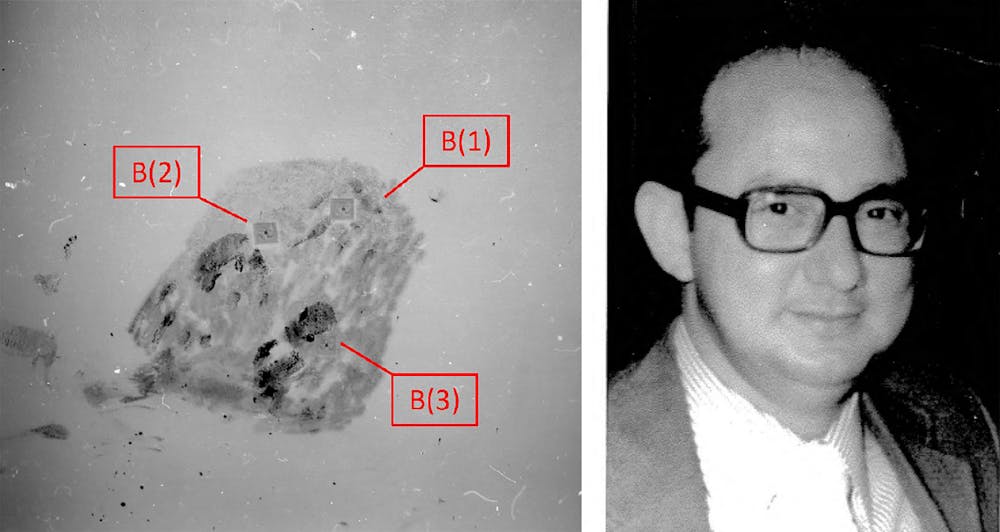
The special commission arranged for such testing to occur, and which led to two major developments.
It unearthed a match to a DNA profile taken from a 2002 crime scene. This resulted in the identification of an unknown (but now deceased) man and revealed possible avenues of inquiry into him and his associates.
The second case mentioned was that of Ernest Head, who was murdered in his home in Summer Hill in 1976. His body was found naked, having been stabbed 35 times.
The Special Commission arranged for re-analysis of palmprints and certain other exhibits in relation to Head’s case, which resulted in the identification of a known (but now deceased) man, thought to be involved in Head’s death.
The man in question had never previously been identified as a possible person of interest in relation to this unsolved homicide.
Read more: The Chinese government claims LGBTQ+ people are protected from discrimination. Our interviews with 26 activists tell another story[9]
Victims front and centre
The special commission received and reviewed information provided by more than 130 members of the public and has clarified ambiguities over unsolved suspected hate crime deaths of LGBTIQ people in NSW.
In addition to the cases noted above, it has generated new leads in cold cases that may provide comfort to family and friends who continue to seek answers about what happened to their loved ones.
In shining a light on everything that is known or could be found out about what happened in these cases, Justice Sackar stated in his closing remarks:
Many voiceless people have been given a voice. Recommendations will be made. Improvements in processes and procedures should follow. There is scope for people of goodwill – of whom there are many in this arena – to come together, if they so choose, and work towards a better future.
As such, the special commission has emphasised the importance of the pursuit of justice, even decades after crimes have been committed.
Read more: 'Don't say anything about it': why so many LGBTQIA+ Buddhists feel pressure to hide their identities[10]
State commission, national significance
At a time when LGBTIQ individuals and communities in Australia and globally are experiencing a resurgence[11] of online and in-person hate, the Commission’s findings are likely to have national ramifications.
Given the indifference towards violence and hostility directed at LGBTIQ people in NSW over the 40 year period examined by the special commission, it is timely that other Australian jurisdictions consider whether they also need to address these issues.
The special commission is a timely reminder of the necessity for LGBTIQ individuals and communities to remain vigilant, for police to better respond and listen to victims’ and witnesses’ experiences, and for governments to actively prioritise inclusion.
The final report from the special commission will be handed to the NSW Governor by 15 December 2023.
References
- ^ Commission of Inquiry (lgbtiq.specialcommission.nsw.gov.au)
- ^ Gender, sexual orientation and ethnic identity: Australians could be asked new questions in the 2026 Census (theconversation.com)
- ^ Parrabell (www.police.nsw.gov.au)
- ^ parliamentary inquiry (www.parliament.nsw.gov.au)
- ^ Research (www.aconhealth.org.au)
- ^ lack of investigation (www.abc.net.au)
- ^ Strike Force inquiries (www.abc.net.au)
- ^ bloodstained clothing (www.abc.net.au)
- ^ The Chinese government claims LGBTQ+ people are protected from discrimination. Our interviews with 26 activists tell another story (theconversation.com)
- ^ 'Don't say anything about it': why so many LGBTQIA+ Buddhists feel pressure to hide their identities (theconversation.com)
- ^ a resurgence (theconversation.com)
Authors: Justin Ellis, Senior Lecturer in Criminology at the University of Newcastle, University of Newcastle