The 'drums of war' are receding, but Anthony Albanese still faces many uncertainties on his trip to China
- Written by: David S G Goodman, Director, China Studies Centre, Professor of Chinese Politics, University of Sydney
Fifty years ago this week, Prime Minister Gough Whitlam visited the People’s Republic of China, establishing a relationship that has become mutually beneficial in terms of economic growth and development to both China and Australia.
It was in many ways a bold step into the unknown. While the two economies are clearly complementary, their political systems are very different, as today’s prime minister, Anthony Albanese, repeatedly points out.
Prior to Labor’s election victory in 2022, the Coalition government struggled to manage the necessary ambiguity in Australia-China relations, determining that politics (and in some cases ideology) had to be more important than economics.
Albanese’s visit to Beijing, starting this weekend, should be welcomed as it signals an alternative approach to the outright hostility that characterised much of Australia-China relations after 2017.
Read more: Ping-pong diplomacy: Australian table tennis players return to China, five decades after historic tour[1]
From ‘drums of war’ to ‘stable relations’
In an Anzac Day 2021 message to his staff, later published to some fanfare in The Australian, the then-Home Affairs secretary, Mike Pezzullo, warned[2] the “drums of war” were beating. It was a clear reference to Australia’s tensions with China.
Peter Dutton, the minister of defence, agreed[3] that war with China over Taiwan “should not be discounted”. In an interview days later[4], he said the Australian Defence Force was “prepared for action”:
[…] protection for our borders and our waters to the north and west remains a clear priority.
Echoing the spirit of Winston Churchill’s 1954 comments[5] at the White House that “jaw-jaw is always better than war-war”, the Albanese government has rejected this perspective of the Morrison government.
The new government’s formula[6] is to “work towards productive and stable relations with China based on mutual benefit and respect”. Albanese and Foreign Minister Penny Wong have both emphasised that Australia will cooperate where it can and differ where it must.
Given the government’s commitment to the US alliance, this difference with its predecessor may seem little more than rhetorical. But rhetoric in international political relations can carry substantial weight. This is especially true during periods of geopolitical instability, such as the world is experiencing now.
Room for cooperation
This wider context puts necessary limits around what the government might hope to achieve – and what Australia should expect – from Albanese’s trip to Beijing.
The emergence of an explicit “strategic competition” between the US and China, and the role of Australia in that competition through AUKUS, means the days of a more open and easy-going relationship are unlikely to return soon.
But the Australia-US alliance is only one part of the Australia-China relationship, even if it has dominated headlines of late.
Read more: View from The Hill: China-Australia relations head back to room temperature, with Albanese's November visit[7]
Australia and China also have differing priorities and ambitions in the Pacific. And both countries continue to have very complementary economies. These links require a more nuanced management of the relationship, and could certainly be the subject of discussion during Albanese’s visit.
Australian governments have long regarded the Pacific islands as holding great geopolitical and economic importance. Until recently, however, this has not been matched by attention to the concerns and development priorities of these nations, namely the consequences of climate change and the need for basic infrastructure.
This gap has been filled by China through its Belt and Road Initiative. When the Chinese government attempted to reach[8] security agreements with some of the Pacific islands, the Australian government reacted with a series of official visits, additional economic assistance and the promise of initiatives to develop economic and cultural relationships.
There is certainly room for cooperation between China and Australia in this area. Despite its continued use of fossil fuels, China has developed a sizeable renewable energy industry, far greater than Australia as a proportion of energy production.
The two countries could also cooperate in the provision of development assistance to the Pacific.
Why the trade relationship matters to both sides
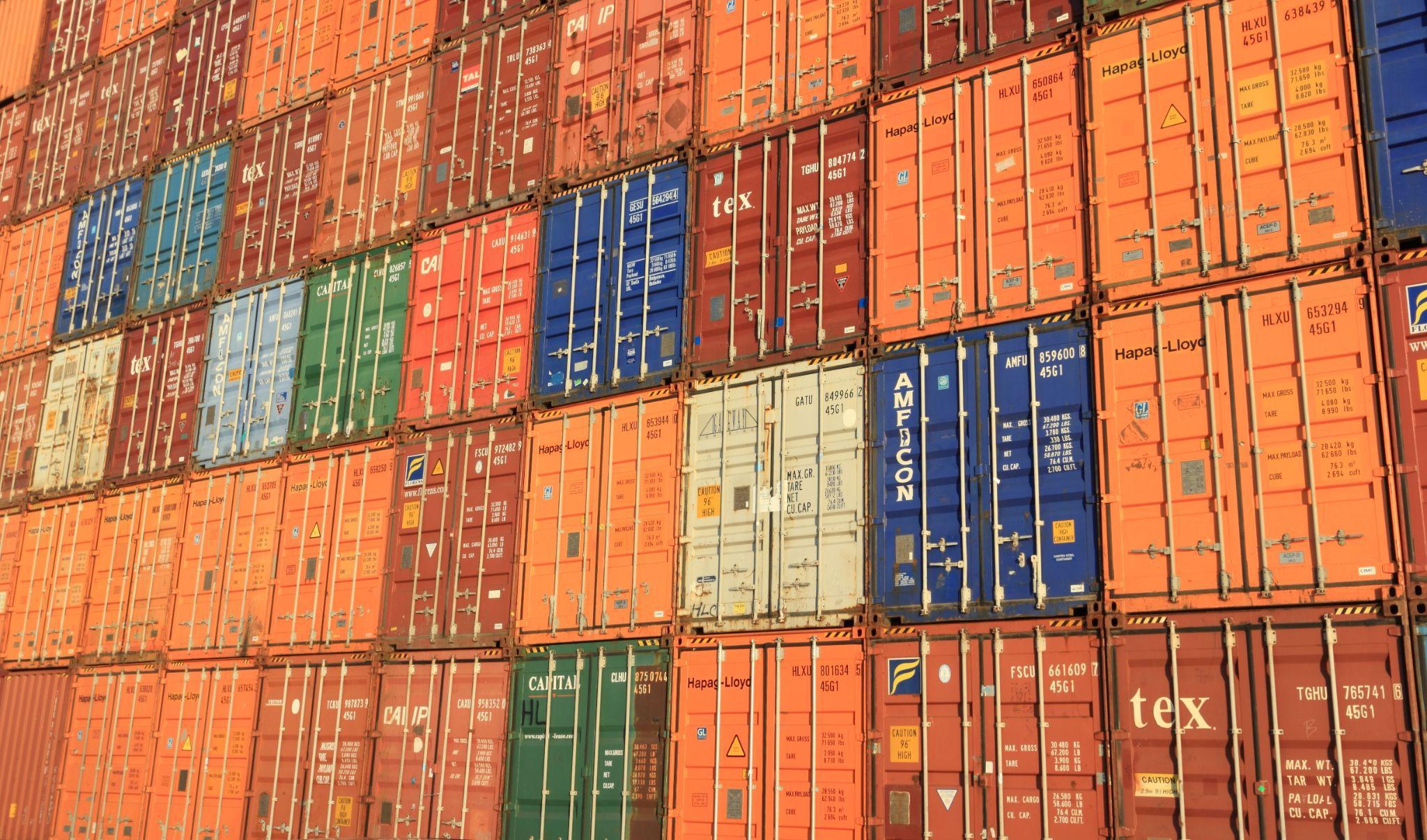
The bilateral trade relationship will definitely be on the table for discussion in Beijing. China is Australia’s largest trading partner, accounting for[9] 34% of all exports and 28% of imports.
More importantly, Australia is one of few countries that has a major trade surplus[10] with China. In 2022-23, Australia’s surplus on the trade of goods with China was around A$87 billion[11].
Read more: Bring on the Year of the Rabbit: why there's new hope and prosperity tipped for Australia-China relations[12]
Despite the rhetoric of the Morrison government portraying China as a threat to Australia, the disappearance of this economic relationship would pose an equally significant challenge. This has only been reinforced by the collapse of talks[13] to establish a free-trade agreement between Australia and the European Union in recent days.
For the moment, trade is one aspect of the relationship that is equally important for the Chinese leadership, despite the imbalance in the size of the two economies. While the import of Australian resources is clearly significant – and there is some evidence the tariffs China imposed proved harmful to its own economy – the reason for China’s attention on trade lies elsewhere.
The Chinese government is currently seeking to join the Comprehensive and Progressive Trans-Pacific Partnership Agreement[14]. This is the successor free trade association to the Trans-Pacific Partnership, which then-US President Donald Trump withdrew from in 2017. To that end, China needs the support of member states, including Australia.
In a series of meetings between Australian and Chinese officials this year, which led to the first high-level dialogue[15] between the countries since 2020, there’s been hope that a bilateral basis for renewed stability is now emerging.
Without these indications, Albanese would presumably not be visiting Beijing now. It may not be as dramatic a move as Whitlam’s visit in 1973, but inevitably there is an element of a step into the unknown.
References
- ^ Ping-pong diplomacy: Australian table tennis players return to China, five decades after historic tour (theconversation.com)
- ^ warned (www.theaustralian.com.au)
- ^ agreed (www.theguardian.com)
- ^ interview days later (www.smh.com.au)
- ^ 1954 comments (www.oxfordreference.com)
- ^ formula (www.smh.com.au)
- ^ View from The Hill: China-Australia relations head back to room temperature, with Albanese's November visit (theconversation.com)
- ^ attempted to reach (www.afr.com)
- ^ accounting for (wits.worldbank.org)
- ^ trade surplus (www.cnbc.com)
- ^ A$87 billion (www.abs.gov.au)
- ^ Bring on the Year of the Rabbit: why there's new hope and prosperity tipped for Australia-China relations (theconversation.com)
- ^ collapse of talks (www.theguardian.com)
- ^ Comprehensive and Progressive Trans-Pacific Partnership Agreement (www.dfat.gov.au)
- ^ high-level dialogue (apnews.com)
Authors: David S G Goodman, Director, China Studies Centre, Professor of Chinese Politics, University of Sydney