What are your rights as an Airbnb renter in Australia? A law expert answers 6 common questions
- Written by: Mark Giancaspro, Senior Lecturer in Law, University of Adelaide
Airbnb has revolutionised the short-stay industry. Launched in 2008, it now eclipses the world’s biggest hotel chains. In Australia alone there are about 100,000 listed properties[1].
But in dealing with both a digital platform and a private owner (or “host”, in Airbnb-speak), your legal rights as a renter (or “guest”) can be unclear – at least without reading lengthy terms and conditions.
This article answers six very common questions about using Airbnb in Australia. Please note that your legal rights may differ in other countries. Even if Airbnb’s terms and conditions are near identical – and they generally are – there may be differences in consumer laws.
Read more: Ever wondered how many Airbnbs Australia has and where they all are? We have the answers[2]
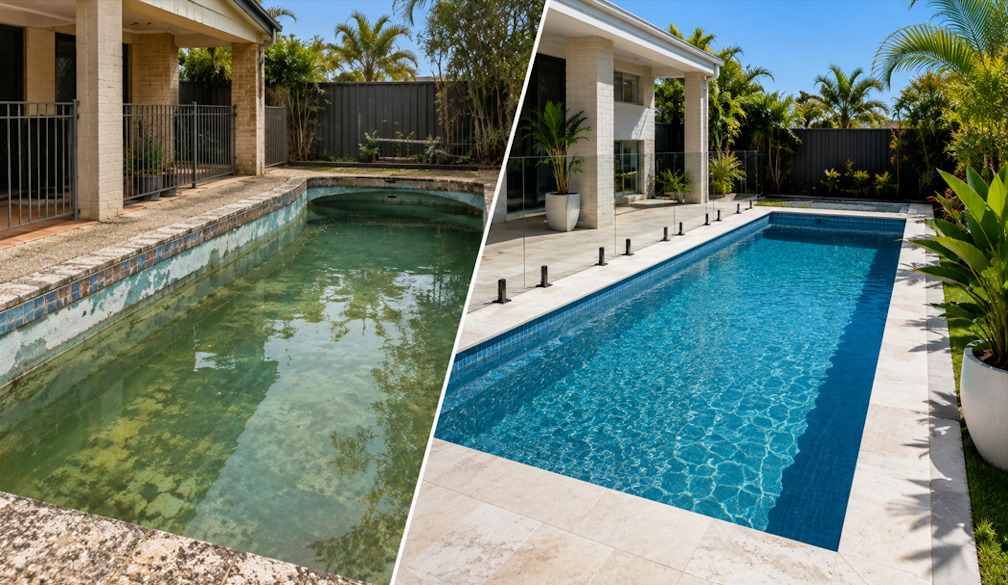
What if an Airbnb property doesn’t match its description?
Airbnb’s terms and conditions[3] require the host to provide “complete and accurate information” about their property. Content, including photos, must be “up-to-date and accurate at all times”. Airbnb’s Host Ground Rules[4] state that listings “should accurately describe the home and reflect the features and amenities that will be available”.
If a property does not match its description or photos, report this to Airbnb[5].
False advertising will also likely breach the Australian Consumer Law, which prohibits (Section 18) commercial conduct that is misleading or deceptive or is likely to mislead or deceive. Report to the Australian Competition and Consumer Commission[6] here.
There are no specific provisions to claim a refund or a discount for misleading listings. Your only recourse would seem be to initiate the cancellation policy that applies to your booking.
So when can I get a refund?
If you cancel your booking or leave the property early, your refund rights are determined by your cancellation policy[7] (see “show trip details”).
There are various policies[8] (from which a host selects when listing). Most allow full refunds if you cancel one to five days prior to check-in, while others require up to 30 days’ notice or only provide partial refunds.
If the host cancels on you, they may be penalised[9] by Airbnb.
Read more: The carbon footprint of Airbnb is likely bigger than you think[10]
Can an Airbnb host impose harsh and unreasonable ‘house rules’?
If an owner wants to make rules against visitors without their permission or how many times you can use the washing machine, they generally can.
When you rent a property through Airbnb, you are entering into a private agreement with the owner. Under contract law, they can stipulate whatever terms they like, so long as those rules aren’t illegal.
What Australian Consumer Law does prohibit are unfair terms[11] in standard form “consumer contracts” – which an Airbnb contract likely qualifies as. An unfair term is one that:
- causes a significant imbalance in your rights and obligations
- is not reasonably necessary to protect the host’s interests
- would cause you detriment (financial or otherwise) if it was enforced.
The problem is that you will need to sue the host (that is, initiate civil litigation) to prove this.
Your best option is to carefully review the rules before you confirm your reservation. Once you confirm, you are legally agreeing to all of the host’s terms whether you’ve read and understood them or not.
If you disagree with a rule, ask the host to waive or amend it. If they won’t budge, your choice is to book or not.
What are the boundaries for an Airbnb host/owner?
Hosts are required[12] to ensure every property is secure and safe. Airbnb’s Community Policy states properties must be properly lockable and free of hazards, and hosts must be responsive and willing to answer guest queries within a reasonable time.
According to Airbnb[13], a host cannot physically intrude or interfere with your stay. They can only re-enter their property (or a guest’s room in a shared stay) if there is an emergency or with express permission.
In a shared stay, the host must not enter the bathrooms or guest bedrooms when the guests are inside. The host is also forbidden from sharing private details, photos, or videos of you without consent.
Where your safety is threatened, you should contact law enforcement and notify Airbnb. If you decide to leave, you may be entitled to a partial refund. Your rights depend on the cancellation policy applying to your booking (discussed further below).
If I am injured in or get sick because of an Airbnb property, can I claim compensation?
Clause 4.2[14] of Airbnb’s terms and conditions states that, by staying at a listed property, you acknowledge and “freely and willfully” accept the risk of “illness, bodily injury, disability, or death”.
Further, clause 19 contains a broad disclaimer absolving Airbnb of any liability for “personal or bodily injury or emotional distress” incurred in using its services. Clause 20 also contains an indemnity preventing you from making any claim against Airbnb in relation to your stay.
This gives Airbnb legal protection. But you may make a claim against the host.
The first step would be to formally write to the host outlining your claim. Airbnb may also assist with any disputes. If this fails, you can sue the host but whether the cost and effort is worth it will depend on the extent of your injury or illness.
If you do make any claim against the host, they will likely rely on Airbnb’s insurance. Every Airbnb host is insured up to US$1 million (about A$1.5 million) through Airbnb’s Host Liability Insurance Programme[15]. This covers any bodily injuries incurred by guests (or others) and damage to or theft of any property belonging to a guest (or others).
There are some exceptions to what Airbnb’s insurance will cover, such as intentional violence, mould and communicable disease. If you want compensation for something the host is personally liable for, you are more likely to have to take legal action, using a lawyer. Consider the costs carefully.
What’s the maximum cleaning/damages fee an Airbnb host can charge?
Cleaning fees are set by the host[16]. Airbnb provides a pricing tool[17] to help them calculate a reasonable fee – generally based on size and facilities[18] – but there is no maximum, presumably on the rationale that market forces (and reviews) will deter hosts from charging too much.
Nor is there a maximum damages fee. You can formally dispute the amount[19] with Airbnb, which will determine if it is reasonable, relying on information provided by both parties.
Charging exorbitant prices is not illegal though Australian Consumer Law does prohibit “unconscionable conduct[20]”. But, again, you need to initiate legal proceedings and have a court agree you deserve compensation.
Where to go for help and advice
You can contact Airbnb[21] for any account, listing, or reservation-related questions. Online forums can also be useful for advice and support.
You can report consumer complaints to the Australian Competition and Consumer Commission[22] but the federal regulator does not resolve individual complaints or provide legal advice on your rights and obligations. For preliminary advice go to the following state and territory consumer advice agencies:
References
- ^ 100,000 listed properties (www.abc.net.au)
- ^ Ever wondered how many Airbnbs Australia has and where they all are? We have the answers (theconversation.com)
- ^ terms and conditions (www.airbnb.com.au)
- ^ Host Ground Rules (www.airbnb.com.au)
- ^ report this to Airbnb (www.airbnb.com.au)
- ^ Australian Competition and Consumer Commission (www.accc.gov.au)
- ^ cancellation policy (www.airbnb.com.au)
- ^ policies (www.airbnb.com.au)
- ^ may be penalised (www.airbnb.com.au)
- ^ The carbon footprint of Airbnb is likely bigger than you think (theconversation.com)
- ^ unfair terms (www.accc.gov.au)
- ^ required (www.airbnb.com.au)
- ^ According to Airbnb (www.airbnb.com.au)
- ^ Clause 4.2 (www.airbnb.com.au)
- ^ Host Liability Insurance Programme (www.airbnb.com.au)
- ^ set by the host (www.airbnb.com.au)
- ^ pricing tool (www.airbnb.com.au)
- ^ based on size and facilities (www.igms.com)
- ^ dispute the amount (www.airbnb.com.au)
- ^ unconscionable conduct (www.accc.gov.au)
- ^ contact Airbnb (www.airbnb.com.au)
- ^ Australian Competition and Consumer Commission (www.accc.gov.au)
- ^ CC BY (creativecommons.org)
Authors: Mark Giancaspro, Senior Lecturer in Law, University of Adelaide