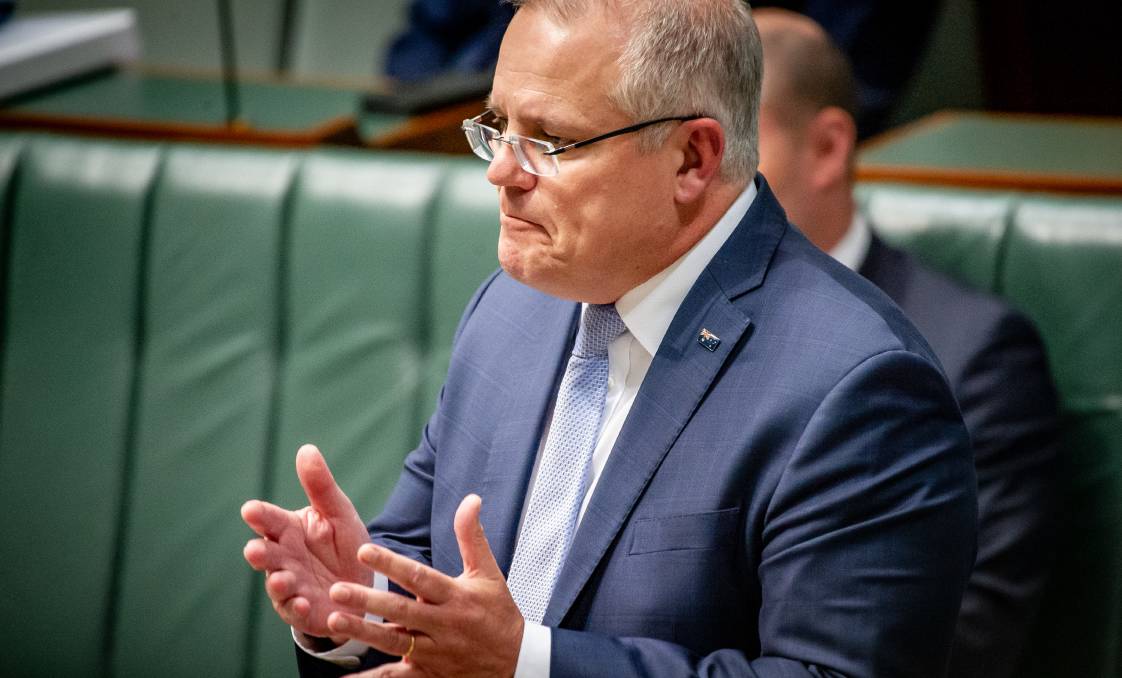
here's what I think Australia should do
- Written by: Stephen King, Professor, Monash University

Australia is a living testament to the benefits of productivity growth.
An average worker today puts in 14 fewer hours per week and takes home a real wage six times that of the average worker in 1901 – all because we are producing more per hour worked.
And yet in the past decade that rate of improvement has slowed.
Over the 60 years to 2019-20, labour productivity (production per hour worked) grew at an average of 1.8% per year, which sounds small but compounds each year.
In the most recent of those decades, the decade to 2020, growth fell to just 1.1% – a drop of one-third.
If it remains that low we will be much worse off in decades to come than we would be if we could get back to the kind of growth we had.

 Videoconferencing took off with the pandemic and is here to stay.
Shutterstock
Digital services need a strong and ubiquitous internet, covering all of the population, including the population in regional Australia. But Infrastructure Australia has found 23 of the 48 regions in Australia have broadband and mobile connectivity gaps.
In health, better connections can save lives. We need to fill the gaps using the mix of technology that will best allow all Australians to benefit from the digital connectivity revolution.
Data is also crucial. We need better linking of data to improve government-funded services and better rules around cybersecurity to protect that data.
Focus on outcomes rather than inputs
Too often, government funding rules for health, education, public housing and other services focus on inputs (the funding delivered) rather than outcomes (the service delivered).
These rules limit innovations in service delivery that would boost productivity and benefit consumers. The rules need to be more flexible to allow increased innovation, working out what works and spreading best practice to all providers, while ensuring consumer safety.
A more productive economy will increasingly need a more adaptable and better-trained workforce. Most of the new jobs created in the next five years will require tertiary qualifications, particularly university qualifications.
To meet this demand we will need to both better “educate our own” and target our migration system to fill skills gaps.
A road map for reform
This is the Productivity Commission’s second five-yearly productivity report.
The first[3] made explicit that productivity was not about extracting more sweat from the brow of an already hard-working Australian, but was instead about
promoting better investment in workplaces
supporting the research and trialling of new ideas
removing outmoded regulations that prevent consumers and businesses obtaining better services
This report builds on the first to provide a road map, focusing first on the high-impact low-cost reforms. Some are quick and others will take time and planning.
All will face opposition. Vested interests benefit by exploiting economic inefficiencies for their own gain. Without reform, we will all be poorer.
Read more:
Memo Productivity Commission: fixing inequality will boost productivity[4]
References^ Productivity Commission (www.pc.gov.au)^ productivity report (www.pc.gov.au)^ first (www.pc.gov.au)^ Memo Productivity Commission: fixing inequality will boost productivity (theconversation.com)Authors: Stephen King, Professor, Monash University
Videoconferencing took off with the pandemic and is here to stay.
Shutterstock
Digital services need a strong and ubiquitous internet, covering all of the population, including the population in regional Australia. But Infrastructure Australia has found 23 of the 48 regions in Australia have broadband and mobile connectivity gaps.
In health, better connections can save lives. We need to fill the gaps using the mix of technology that will best allow all Australians to benefit from the digital connectivity revolution.
Data is also crucial. We need better linking of data to improve government-funded services and better rules around cybersecurity to protect that data.
Focus on outcomes rather than inputs
Too often, government funding rules for health, education, public housing and other services focus on inputs (the funding delivered) rather than outcomes (the service delivered).
These rules limit innovations in service delivery that would boost productivity and benefit consumers. The rules need to be more flexible to allow increased innovation, working out what works and spreading best practice to all providers, while ensuring consumer safety.
A more productive economy will increasingly need a more adaptable and better-trained workforce. Most of the new jobs created in the next five years will require tertiary qualifications, particularly university qualifications.
To meet this demand we will need to both better “educate our own” and target our migration system to fill skills gaps.
A road map for reform
This is the Productivity Commission’s second five-yearly productivity report.
The first[3] made explicit that productivity was not about extracting more sweat from the brow of an already hard-working Australian, but was instead about
promoting better investment in workplaces
supporting the research and trialling of new ideas
removing outmoded regulations that prevent consumers and businesses obtaining better services
This report builds on the first to provide a road map, focusing first on the high-impact low-cost reforms. Some are quick and others will take time and planning.
All will face opposition. Vested interests benefit by exploiting economic inefficiencies for their own gain. Without reform, we will all be poorer.
Read more:
Memo Productivity Commission: fixing inequality will boost productivity[4]
References^ Productivity Commission (www.pc.gov.au)^ productivity report (www.pc.gov.au)^ first (www.pc.gov.au)^ Memo Productivity Commission: fixing inequality will boost productivity (theconversation.com)Authors: Stephen King, Professor, Monash University