Weekend Times


Google Workspace

Business News

What is petrol excise, and why does Australia have it anyway?

  • Written by John Freebairn, Professor, Department of Economics, The University of Melbourne
What is petrol excise, and why does Australia have it anyway?

One government, in New Zealand[1], has already cut its fuel excise, by 25 cents per litre for the three months it hopes will be the worst of the oil price crisis, and in the United States[2] and Australia[3] there’s talk of the same sort of thing.

Before considering whether it should be cut, temporally waived, or removed in this month’s budget, it’s worth reacquainting ourselves with what it is.

As is the case with the goods and services tax, it isn’t explicitly quoted when we buy petrol or other fuels; it is rolled into the advertised price.

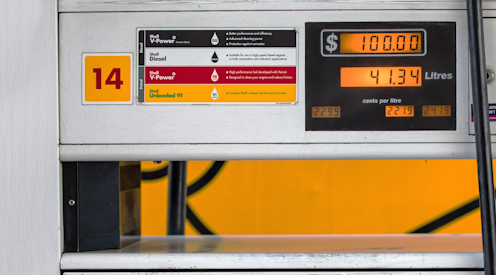
At the moment the excise on standard unleaded petrol is 43.3 cents per litre[4], an impost which itself is subject to the goods and services tax. This brings the total to 47.6 cents per litre, something that would have been significant a year ago when the price of petrol was lower, accounting for one third of the price.

It is now less important, accounting for 22% of the price of petrol.

The fuel excise is imposed by the Commonwealth government. As a matter of law and as required by the Constitution[5], all revenue raised by the Commonwealth goes into “one consolidated revenue fund”. But from 1926 to 1959 all or part of the fuel excise was earmarked[6] for spending on roads.

Since then, it has generally been available for any sort of spending – although the impression remains that it is a crude form of user fee for roads and associated government-funded infrastructure, and for maintenance of that infrastructure.

Effectively a road user charge

The excise is collected at the points of distribution from local refineries and importers rather than at the petrol pump, making it easy to administer.

Making it much more difficult to administer are the substantial rebates[7] offered to off-road users of petrol and diesel, which have the effect of making it a charge for using roads. They cut the total takings from about A$20 billion[8] to A$11 billion[9].

State and territory governments impose another set of taxes on the use of motor vehicles. These include stamp duty on the registration, annual registration fees, the charge for drivers licenses, and taxes on vehicle insurance. State taxes on the use of motor vehicles amounted to A$11.3 billion[10] in 2019-20.

Read more: It's hard to find a case for a cut in petrol tax – there are other things the budget can do[11]

These taxes also go into general revenue, and with no specific link to state government decisions on road infrastructure and maintenance or the provision of services such as traffic police and hospitals.

Taken together, the Commonwealth’s takings from fuel excise and the states’ takings from special motor vehicle taxes appear to roughly equal[12] their spending on roads and associated infrastructure and fall short of the total costs imposed by road users on others including the costs of noise, pollution and policing.

There are better ways to do it

In an ideal world we would charge explicitly for road use, pollution and congestion in the cities during peak hours.

Fuel excise is an increasingly inappropriate way of charging for road use because more and more cars (including hybrids) are using less fuel per kilometre, and some (including all-electric vehicles) are using none.

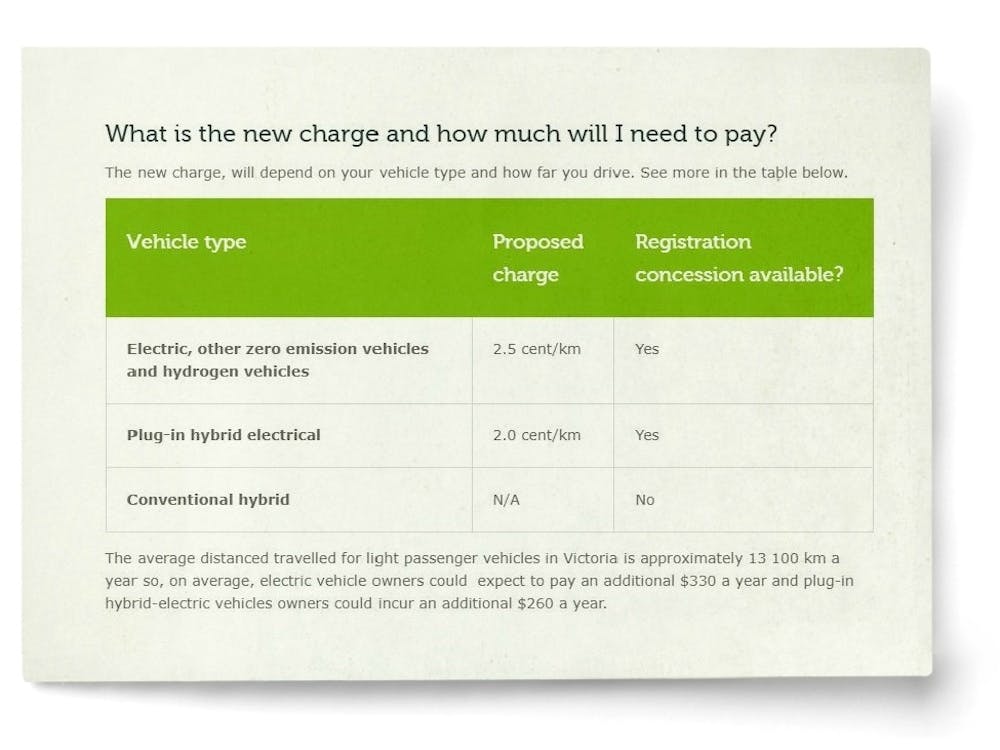
Some states, including Victoria, charge electric vehicles per kilometre travelled. Owners are required to provide a photo of their odometer and the fee is added to the cost of their registration[13].

While in the spirit of user charging, what Victoria and other states are doing is a limited first step.
Ideally, and subject to considerations of simplicity and operating costs, the user charge would vary by weight per axle, aggregate weight and distance travelled, and perhaps by road type. Given the fixed cost of much road investment and maintenance, a modified version of current annual registration fees should continue. The combustion of petrol and diesel generates external pollution costs not considered by businesses and individuals in their use of motor vehicles. Read more: High petrol prices hurt, but cutting excise would harm energy security[14] External pollution costs include particulates with adverse effects on health and smog, and emissions of carbon dioxide that contribute to climate change. A pollution fee that is much smaller than the current 43.3 cents per litre excise should be imposed on fuel used for both off-road and on-road purposes as part of a comprehensive price on greenhouse gas emissions associated with the combustion of fossil fuels. Congestion causes costs estimated to be in the tens of billions in terms of lost time, uncertainty, and extra fuel use, with only a small portion borne by the road user concerned. An important part of the reform package should be a congestion charge for peak hours along the lines suggested by the Grattan Institute[15]. This ideal set of changes would be imposed independent of the price of oil. References^ New Zealand (www.beehive.govt.nz)^ United States (www.businessinsider.com.au)^ Australia (www.smh.com.au)^ 43.3 cents per litre (www.ato.gov.au)^ Constitution (www.aph.gov.au)^ earmarked (www.aph.gov.au)^ rebates (www.ato.gov.au)^ A$20 billion (budget.gov.au)^ A$11 billion (budget.gov.au)^ A$11.3 billion (www.abs.gov.au)^ It's hard to find a case for a cut in petrol tax – there are other things the budget can do (theconversation.com)^ roughly equal (www.pc.gov.au)^ cost of their registration (www.vicroads.vic.gov.au)^ High petrol prices hurt, but cutting excise would harm energy security (theconversation.com)^ Grattan Institute (grattan.edu.au)Authors: John Freebairn, Professor, Department of Economics, The University of Melbourne

Read more https://theconversation.com/what-is-petrol-excise-and-why-does-australia-have-it-anyway-179373

The Weekend Times Magazine

Brisbane Compensation Lawyers for Work Injury Damages

Suffering a work-related injury can turn your life upside down. The physical pain, emotional stress, and financial uncertainty can feel overwhelming. If you’re in Brisbane and facing this situation, finding...

Finding the Perfect Wedding Suit in Adelaide: Your Ultimate Guide

Your wedding day is one of the most important days of your life, and every detail matters. From the venue to the vows, everything should be perfect, especially your attire...

Could You Furnish and Equip a Whole House with IKEA Products?

IKEA has long been known as the global giant of affordable, ready-to-assemble furniture. From minimalist Scandinavian sofas to clever kitchen gadgets, the Swedish retailer has built its reputation on making...

Aussie Rules Football History

One of the things that make Australia truly unique is its own version of football. Called Australia rules football, this sport precedes other contemporary football games in generating an official...

Heating and Cooling Services That Keep Your Home Comfortable Year-Round

Australia’s climate is unpredictable. Sweltering summers and chilly winters can make indoor life uncomfortable without the right temperature control. That’s why professional heating and cooling services are no longer a luxury...

When AEC IT breaks, It Rarely Looks Like IT

AEC businesses rarely lose time to one dramatic outage. What hurts more are the small, repeat delays that show up right when pressure is highest. The drawing set stalls, the...

Let's talk about nits!

My daughter struggled with nits for 8 years until I found this miracle cure Nits. The one-word granted to strike fear into mums everywhere … and have them immediately scratching their...

Unique and Trendy Christmas Gift Ideas for 2025 - Best Holiday Gifts Guide

🎄🎁 Discover unique and trendy Christmas gift ideas for 2025! Your ultimate guide to the best holiday gifts is here! 🌟🎅 The Importance of the Holiday Season The holiday season is a...

Meet Untamed Natural Beauty! Breathtaking Journeys Await You in Komodo Island

Designed by Freepik Komodo Island, part of Indonesia’s Komodo National Park, offers a truly remarkable escape into nature. Known for its rugged beauty, pristine beaches, crystal-clear waters, and unique wildlife, it...