Dissatisfied plastic surgery clients show the downsides of online research
- Written by: Aphrodite Vlahos, Adjunct Lecturer, The University of Melbourne
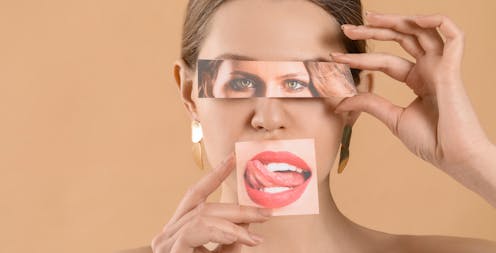
A woman walks into a plastic surgeon’s office with an image she has found online. She wants her body to look like the same, and thinks she knows how to get it. She tells the consulting surgeon exactly what she wants: round, 350cc implants, with full projection. She believes this will get her to a full D-cup shape.
But after the operation, once the physical pain subsides and the scars heal, she’s dissatisfied with the decidedly unnatural-looking result. It’s nothing like the image she hoped to emulate. Because that body was not hers.
This woman wasn’t stupid. In spending many hours online pondering her options and making decisions she was doing exactly what expert services from plastic surgeons to financial advisers encourage clients to do.
Yet, as our research shows, this trend has also shifted responsibility and risks onto customers.
Charged with “doing their own research”, drawing on anecdotal information online to inform their decision making, consumers can become overconfident about their level of understanding. The result is an increasing number[1] of bad outcomes.
How we did our research
To understand more about the paradox of “informed” customers, we conducted a qualitative study[2] of women seeking breast augmentation surgery.
Our research involved a deep immersion into plastic surgery forums over two years. This included an analysis of YouTubers who documented their breast augmentation in online videos, and participation in a private Instagram group designed for women seeking breast augmentation surgery. From this Instagram group, we then formally interviewed 20 women aged between 18 and 34 who had breast augmentation surgery.
Read more: The five most surprising cosmetic surgery trends across the globe[3]
Turning to the internet
The results of our research suggest many women turn to the internet because consulting a plastic surgeon is expensive. An appointment costs, on average, about US$500 (A$700), with the cost of breast augmentation in the US generally ranging from US$4,000 to US$15,000 (A$ 5,600 to $A21,000).
Many women only see their surgeon once, for 30 to 40 minutes, before their surgery. In this consultation everything must be decided – from aesthetic decisions to discussing any medical conditions that may complicate the surgery.
For this reason, customers often spend weeks and months online to prepare and educate themselves before they meet their surgeon. They learn about terminology and techniques, find pictures they like, and talk to others who have gone through the procedure.
They even conduct DIY experiments, such as the “rice-test”, which involves filling two bags with rice and placing them inside their bra as a way of understanding breast implant sizes.
Many women go to these efforts to build some form of expertise for their doctor consultations, to communicate what they want to a professional and get their money’s worth.
The limits of individual expertise
Our study suggests the more women solely relied on lay expertise to dictate how their breast surgery should go, the more likely they were to be disappointed with the outcome. Better results occurred when they carefully selected their doctors and were open to working with them.
Creating aesthetically beautiful breasts must consider myriad factors. But online forums for breast augmentation mostly focus on size and often ignore risks.
Those who reported trying to control the decision making, by asking for very specific products or techniques – as the woman in our introduction did – were more likely to be disappointed by the result. They described feeling their breasts were too small, too large, too perky, too fake-looking or not fake-looking enough.
When asked about why these bad outcomes occurred, they blamed themselves for being bad decision makers. “I should have asked more questions,” one said. “I should have researched more,” said another. “I should have communicated what I wanted better,” said yet another.
But more questions and research were not the solution. What they needed to question was the premise that a medical service provider should simply do what a customer asks.
Research and ‘responsibilisation’
This is part of a wider trend, in which access to unfettered information online has emboldened many people to believe they can work things out for themselves.
It is also reflects a trend in expert services that require deep technical knowledge, termed “responsibilisation”, in which customers are encouraged to do their own research and take responsibility for “coproducing[4]” those services.
While being prepared is superficially good advice, such encouragement also shifts risks to individual customers, who invest a lot of time and effort to become educated through the internet because it is easily accessible and free. But all this “research” does not necessarily lead to better outcomes.
Read more: Distrust of experts happens when we forget they are human beings[5]
Our research also highlights the downside problem when people lose faith in medical expertise.
Women in our study reported happier outcomes when they listened to the doctor.
One woman we interviewed related telling her surgeon what she wanted and being told no. “You will never have that shape,” he said, referring to an image she had shown him. The doctor then discussed with her what was possible. She credits her satisfaction with the outcome to this process of working with her surgeon.
Our research offers a cautionary tale of the limits of lay expertise in online forums. The best outcomes occurred when consumers’ preferences were respected within the limits of medical possibilities.
So it pays to listen to experts. There is certainly a space for online research, but not to the extent that it makes us think we always know better.
References
- ^ an increasing number (www.ncbi.nlm.nih.gov)
- ^ qualitative study (journals.sagepub.com)
- ^ The five most surprising cosmetic surgery trends across the globe (theconversation.com)
- ^ coproducing (journals.sagepub.com)
- ^ Distrust of experts happens when we forget they are human beings (theconversation.com)
Authors: Aphrodite Vlahos, Adjunct Lecturer, The University of Melbourne