
Google AI

Weekend Times


The Times

Business News

Building more houses quickly is harder than it looks. Australia hasn't done it in decades

  • Written by: Ehsan Gharaie, Associate Professor of Project Management, RMIT University
Building more houses quickly is harder than it looks. Australia hasn't done it in decades

Thanks to HomeBuilder[1] and the housing price boom, house building is experiencing its hottest year on the record.

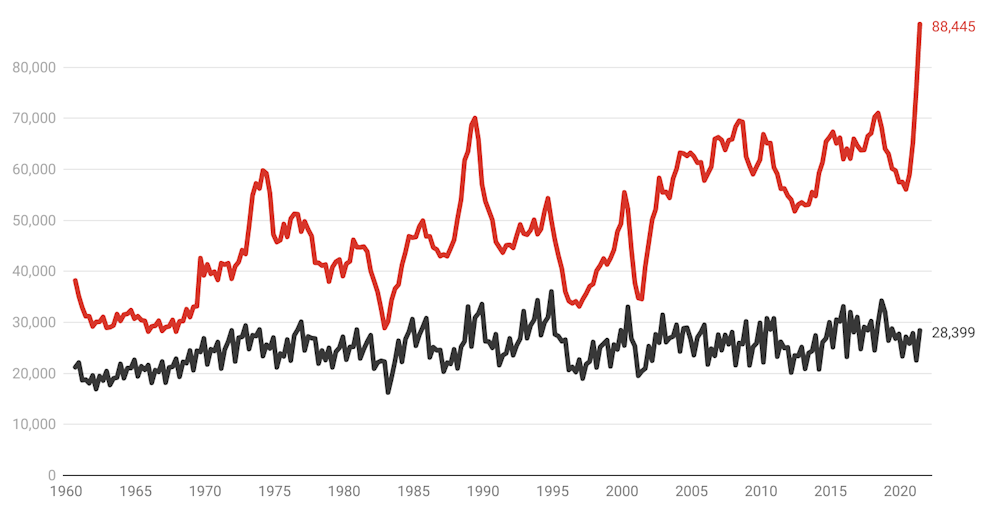
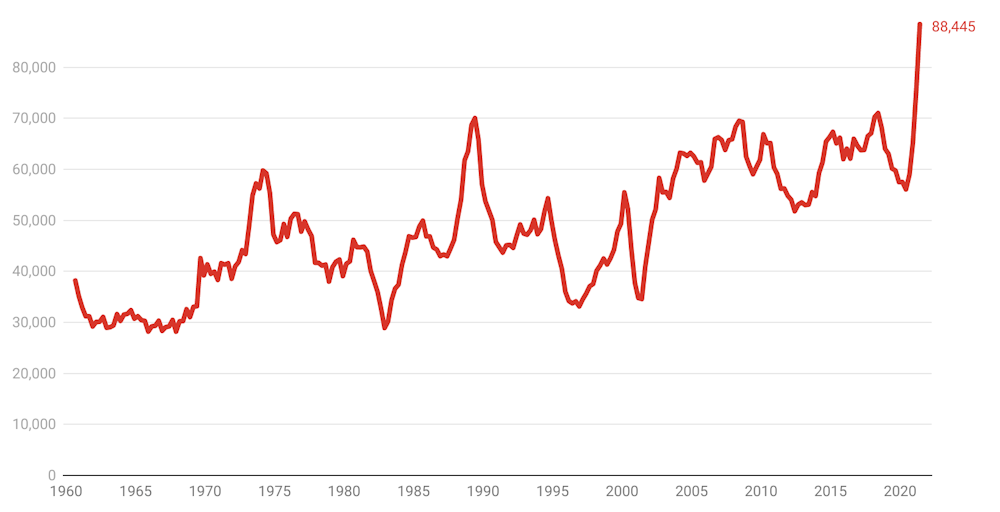
Over the space of a year the number of houses (not apartments) under construction has jumped from 56,060 in the June quarter 2020 to 88,445 in the June quarter 2021 — the biggest peak of all time.

Houses under construction
Australian Bureau of Statistics[2] It would be entirely reasonable to expect the record number under construction to be converted to record completions. That’s the point of construction. But bizarrely, the same set of Bureau of Statistics figures show no such thing. Even after an enormous jump in construction, and all through previous jumps in construction, the number of houses completed each quarter has changed little. In this year’s June quarter, it was 28,399 — little more than the quarterly total at any time over the past five decades. It is as if starting building is one thing, and finishing it is another. Houses under construction, houses completed, quarterly Australian Bureau of Statistics[3] The 88,445 or more houses presently under construction will eventually be built, but it is going to take seriously longer than normal. Our research shows every time the number of houses under construction has peaked, completion times have blown out. Read more: As home prices soar beyond reach, we have a government inquiry almost designed not to tell us why[4] During the smaller 2001-2008 construction boom, the average completion time blew out from 5.2 months to seven. Our projections suggest this time it will sharply blow out from 6.5 months to more than nine by the end of this year. The impact will be felt by hundreds of thousands of Australian house buyers, builders, subcontractors and lenders. Why can’t we build faster? Houses are not built on production lines. Unlike other universal purchases such as cars, each house is built individually. And the method hasn’t changed much in 100 years. The people we call builders are better described as project managers who rarely employ in-house tradespeople or have long-term contracts with subcontractors. The way they manage the process has not changed much since the introduction of construction checklists by AV Jennings[5] in the 1970s. Read more: Home prices are climbing alright, but not for the reason you might think[6] The method is hard to scale up, and unresponsive to demands for speed. It is ripe for innovations such as offsite construction and prefabrication, but it isn’t clear the authorities are especially aware of the problem. Now would be a good time. Builders could absorb the costs of changing processes while demand was high, taking advantage of the changes when demand recedes. But I’m not hopeful. Too much talk is about housing supply in the abstract rather than how to achieve it concrete. References^ HomeBuilder (treasury.gov.au)^ Australian Bureau of Statistics (www.abs.gov.au)^ Australian Bureau of Statistics (www.abs.gov.au)^ As home prices soar beyond reach, we have a government inquiry almost designed not to tell us why (theconversation.com)^ AV Jennings (investors.avjennings.com.au)^ Home prices are climbing alright, but not for the reason you might think (theconversation.com)Authors: Ehsan Gharaie, Associate Professor of Project Management, RMIT University

Read more https://theconversation.com/building-more-houses-quickly-is-harder-than-it-looks-australia-hasnt-done-it-in-decades-170223

The Weekend Times Magazine

Last Call for Tradies Before Christmas

The Christmas bells might not be ringing for Santa yet, but they are fast approaching, and the sooner you start getting organised, the better. Before you start present shopping or...

Year 12 Tutoring For Better Exam Preparation And Academic Confidence

The final year of high school is one of the most important periods in a student's academic journey. It is a time when assessment results, examination performance, and study habits...

Catering Boxes: Practical Packaging That Supports Food Quality and Presentation

Reliable Catering boxes are essential for food businesses that need to transport, store, and present meals safely and professionally. From cafés and bakeries to large-scale caterers and event organisers, catering boxes...

The Best Camera Smartphones for 2021

Everyone is a photographer these days, and it is no surprise, given that the top camera phones on the market are capable of fighting head-on with luxury compact cameras and...

5 Ways to Make Maths Fun

For many students, maths can seem like a daunting subject, but with the right approach, it can become one of the most enjoyable and rewarding parts of learning. Whether you’re...

5 Bars You Cannot Miss While Visiting Sydney

One of the best things about visiting Sydney is the nightlife. While there are a lot of touristic gems for visitors to see throughout the day, Sydney is also widely...

What is Medicines Optimisation and Why is it Important?

Medicines optimisation is a patient-focused approach to safe and effective medication use that helps people get the best possible outcomes from their treatments. Rather than simply ensuring patients take their...

Car subscription offers part-time workers access to a car during COVID-19

New research commissioned by Carly, Australia’s first flexible car subscription provider, surveyed more than 1200 Australians and found that 48% of part time workers would consider car subscription instead of...

Horse Float Maintenance: Keeping Your Investment in Top Shape

Horse floats are equipment that are required for the safe and efficient transportation of horses. Long life and performance are assured with proper maintenance. Safety risks and structural damage may...

hacklink esim new zealandjojobetjojobetmeritkinghacklink panel