The Women's Budget Statement was more like a first step than a revolution
- Written by: Helen Hodgson, Professor, Curtin Law School and Curtin Business School, Curtin University
We’re told that this budget, more than most, delivered for women.
 Commonwealth Treasury[1]
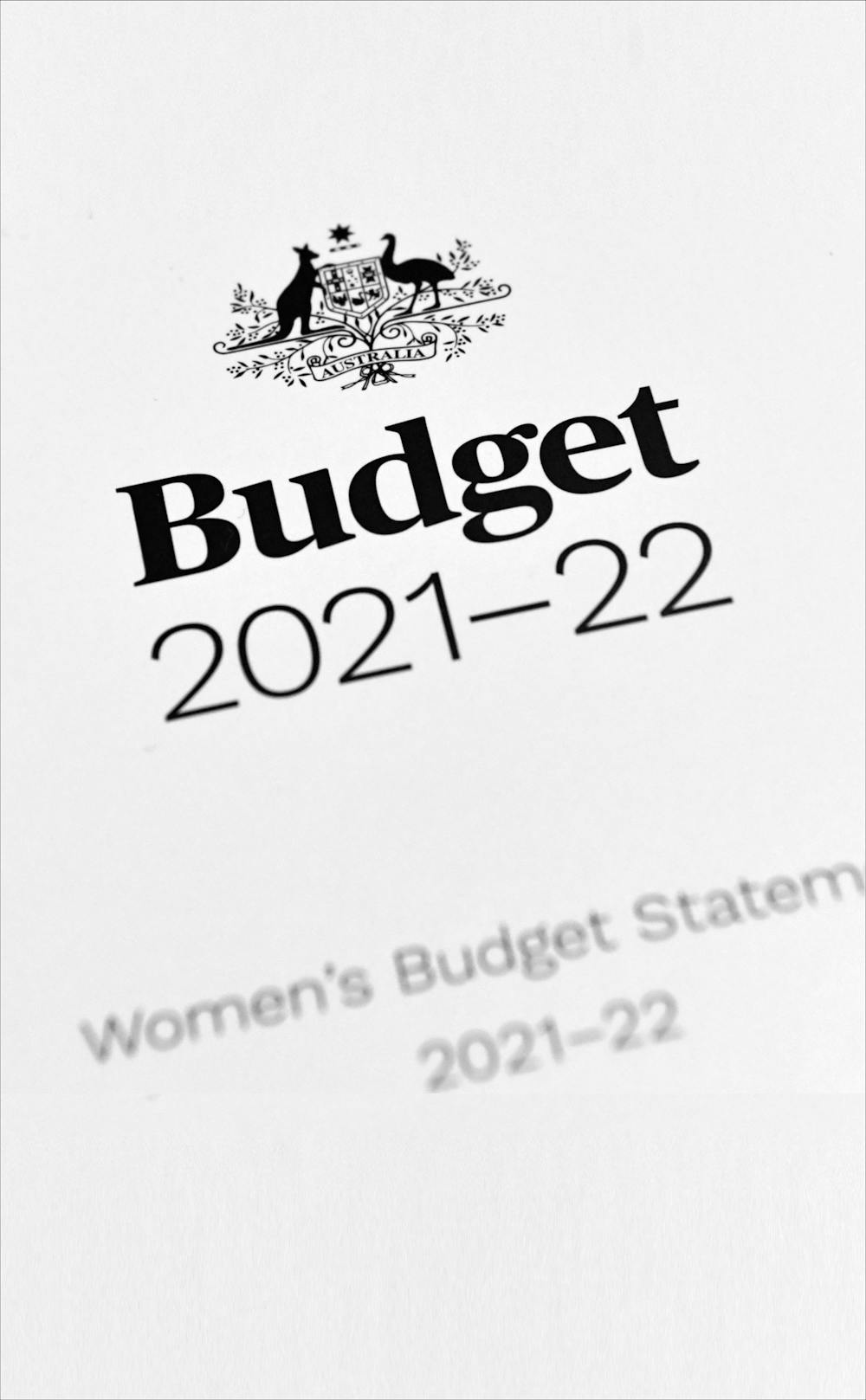
Certainly for the first time in years it was accompanied by a Women’s Budget Statement[2] printed as part of the budget papers rather than as an add-on glossy brochure[3].
The statement reported on the effect of the COVID pandemic on women and on government measures in the fields of women’s safety, women’s economic security and women’s health and wellbeing.
While welcome, and an advance on what’s gone before, it remained a long way short of true gender-responsive budgeting, which is about the entire budget process and everything the government does.
When Australia led the way in the 1980s[4], the analysis took place within each government department.
At times it modified or stopped decisions before they left departments.
The process was hardwired into the budget cycle so that no spending proposals could advance unless they were accompanied by a clear statement setting out their gender implications and effects on equality.
Read more:
Each budget used to have a gender impact statement. We need it back[5]
The approach applied to all measures, whether explicitly gender-focussed or not.
Not yet what it could become
The 2021-22 women’s statement identified A$3.4 billion of spending related to women and gender equity — a mere fraction of 1% of total budget expenditure.
Much of it was piecemeal, or too small to have much impact.
The $200,000 funding for working women’ centres, “to support the continued delivery of free information, advocacy, support and advice on work-related matters including workplace sexual harassment” is unlikely to be enough to keep open the doors of the current centres, let alone revive those that have been forced to shut down.
Read more:
Modelling finds investing in childcare and aged care almost pays for itself[6]
While such measures will help, they don’t address the root causes of labour market segregation and women’s partial exclusion from higher paid, male-dominated sectors such as science, technology, engineering and mathematics.
The extra funding for childcare and for aged care in response to the royal commission will help employment in female-dominated sectors, but it was accompanied by little that would increase pay in those sectors.
Read more:
Two experts on how much the $1.1 billion for women's safety can achieve[7]
Modelling commissioned by the National Foundation for Australian Women found that boosting pay in those sectors would provide an economic boost big enough to almost pay for itself[8].
The boost to funding for violence against women is welcome, especially the new funding for legal services for women escaping violence, which has been slashed over recent decades.
It is welcome too that the proposal to allow women eat into their superannuation when fleeing violence has been replaced by a grant of up to $5,000.
Strategy missing
What’s missing from this first re-booted Women’s Budget Statement is a strategic approach to the drivers of inequality.
Since 2014, when the Abbott Government stopped publishing a women’s policy statement, the National Foundation for Australian Women[9] has stepped in to conduct an independent expert analysis.
This years’ analysis is likely to find the budget didn’t do anything like enough to close gender equality gaps, to reduce caring gaps or deal effectively with violence.
Read more:
Fewer hard hats, more soft hearts: budget pivots to women and care[10]
But non-government organisations can only ever provide an external view: the government holds the data and is the organisation responsible for constructing an evidence-based budget strategy that moves towards gender equality.
It has done it before[11] in the 1980s, using a whole-of-government approach.
This year’s statement can be thought of as a down payment on next steps, but the government needs to begin those steps now. The next budget, regardless of who delivers it, must lay out a roadmap to gender equality.
Commonwealth Treasury[1]
Certainly for the first time in years it was accompanied by a Women’s Budget Statement[2] printed as part of the budget papers rather than as an add-on glossy brochure[3].
The statement reported on the effect of the COVID pandemic on women and on government measures in the fields of women’s safety, women’s economic security and women’s health and wellbeing.
While welcome, and an advance on what’s gone before, it remained a long way short of true gender-responsive budgeting, which is about the entire budget process and everything the government does.
When Australia led the way in the 1980s[4], the analysis took place within each government department.
At times it modified or stopped decisions before they left departments.
The process was hardwired into the budget cycle so that no spending proposals could advance unless they were accompanied by a clear statement setting out their gender implications and effects on equality.
Read more:
Each budget used to have a gender impact statement. We need it back[5]
The approach applied to all measures, whether explicitly gender-focussed or not.
Not yet what it could become
The 2021-22 women’s statement identified A$3.4 billion of spending related to women and gender equity — a mere fraction of 1% of total budget expenditure.
Much of it was piecemeal, or too small to have much impact.
The $200,000 funding for working women’ centres, “to support the continued delivery of free information, advocacy, support and advice on work-related matters including workplace sexual harassment” is unlikely to be enough to keep open the doors of the current centres, let alone revive those that have been forced to shut down.
Read more:
Modelling finds investing in childcare and aged care almost pays for itself[6]
While such measures will help, they don’t address the root causes of labour market segregation and women’s partial exclusion from higher paid, male-dominated sectors such as science, technology, engineering and mathematics.
The extra funding for childcare and for aged care in response to the royal commission will help employment in female-dominated sectors, but it was accompanied by little that would increase pay in those sectors.
Read more:
Two experts on how much the $1.1 billion for women's safety can achieve[7]
Modelling commissioned by the National Foundation for Australian Women found that boosting pay in those sectors would provide an economic boost big enough to almost pay for itself[8].
The boost to funding for violence against women is welcome, especially the new funding for legal services for women escaping violence, which has been slashed over recent decades.
It is welcome too that the proposal to allow women eat into their superannuation when fleeing violence has been replaced by a grant of up to $5,000.
Strategy missing
What’s missing from this first re-booted Women’s Budget Statement is a strategic approach to the drivers of inequality.
Since 2014, when the Abbott Government stopped publishing a women’s policy statement, the National Foundation for Australian Women[9] has stepped in to conduct an independent expert analysis.
This years’ analysis is likely to find the budget didn’t do anything like enough to close gender equality gaps, to reduce caring gaps or deal effectively with violence.
Read more:
Fewer hard hats, more soft hearts: budget pivots to women and care[10]
But non-government organisations can only ever provide an external view: the government holds the data and is the organisation responsible for constructing an evidence-based budget strategy that moves towards gender equality.
It has done it before[11] in the 1980s, using a whole-of-government approach.
This year’s statement can be thought of as a down payment on next steps, but the government needs to begin those steps now. The next budget, regardless of who delivers it, must lay out a roadmap to gender equality.
References
- ^ Commonwealth Treasury (budget.gov.au)
- ^ Women’s Budget Statement (budget.gov.au)
- ^ glossy brochure (pmc.gov.au)
- ^ 1980s (theconversation.com)
- ^ Each budget used to have a gender impact statement. We need it back (theconversation.com)
- ^ Modelling finds investing in childcare and aged care almost pays for itself (theconversation.com)
- ^ Two experts on how much the $1.1 billion for women's safety can achieve (theconversation.com)
- ^ almost pay for itself (theconversation.com)
- ^ National Foundation for Australian Women (nfaw.org)
- ^ Fewer hard hats, more soft hearts: budget pivots to women and care (theconversation.com)
- ^ done it before (theconversation.com)
Authors: Helen Hodgson, Professor, Curtin Law School and Curtin Business School, Curtin University