how charities, buskers and beggars aren’t feeling so festive in our cashless society
- Written by: Spencer M. Ross, Assistant Professor of Marketing, University of Massachusetts Lowell
Collectors for the Paralympic Games carried donation buckets ahead of the recent Santa parade in Auckland, asking for gold coin donations. Onlookers shrugged them off: “Sorry, no cash on me!”
To the rescue, a charity volunteer waved a contactless “tap-and-go” machine that could connect straight to users’ bank accounts. But only a few people reached for their wallets to pull out their cards.
This anecdote reflects a global trend. As the Salvation Army reports, the usual American holiday fundraising drive has struggled in 2020, with 50% fewer donations[1] than last year.
Cash is changing hands less frequently than ever before. In the US, it accounted for 30% of retail purchases[2] in 2020, down from 40% in 2009. In the UK, the change has been even more rapid: only 23% of payments[3] are made in cash, down from 60% in 2009.
We may be becoming a cashless society, but our research shows[4] people are also less receptive to using contactless technology when casually solicited by charities. What happens when your traditional business model relies on bills and coins?
Cash is running out
Cheques and bank cards have been around for decades, but financial technology (fintech) innovations have increased exponentially in recent years. From tap-and-go card readers at retail sites and e-banking apps on smart phones, to peer-to-peer payment apps such as Venmo[5] and PayPal that allow one-touch cashless money transfers, it’s a digital consumer world.
Read more: Brand activism is moving up the supply chain — corporate accountability or commercial censorship?[6]
COVID-19 has further fuelled[7] the cashless revolution. In the early days of the pandemic, the World Health Organization had to deny reports[8] that cash was spreading the coronavirus, but advised people to wash their hands after touching real money. Digital finance and fintech apps saw a 24-32% boost[9] in daily download rates as the pandemic surged.
The declining velocity of cash transactions even led to the US Federal Reserve rationing certain denominations in mid-2020, telling commercial banks it was running out of spare change[10]. Cash withdrawals fell precipitously in the UK, with 40% fewer people[11] withdrawing money from ATMs than in 2019.
By November, “contactless preferred” signs had become the new norm for consumers.
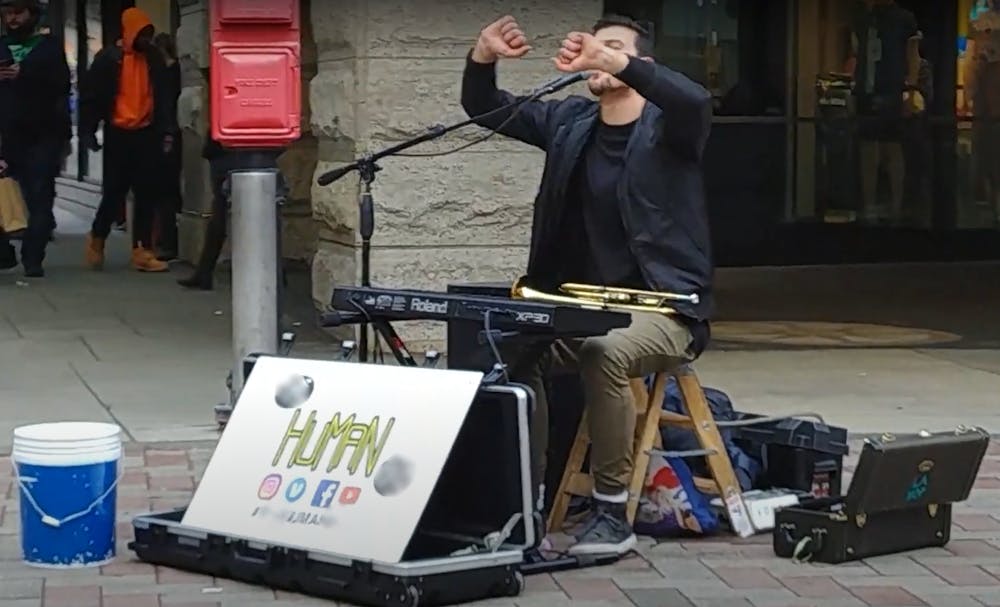 A street performer in Boston soliciting both cash and P2P app donations.
Author provided
A street performer in Boston soliciting both cash and P2P app donations.
Author provided
Overcoming consumer resistance
While retailers and online merchants have benefited from cashless payment options, donation-seekers are left rattling an empty cup.
Aside from people carrying less cash, our research suggests[12] another major reason is that people simply don’t expect to see beggars or buskers with a swipe machine, or a QR code or Venmo symbol on their signs.
We tested this using simple measures of reaction time. People responded faster to cashless options in retail settings or with institutional charities, but took the longest to respond in casual situations, such as street appeals or requests for cash outside malls and shops.
Read more: Woke washing: what happens when marketing communications don't match corporate practice[13]
This makes sense: it feels relatively normal at a formal charity gala, for instance, to use cashless payment methods. For casual fundraisers and the needy, however, it is a major obstacle.
Unlike other kinds of charitable donation, giving to the homeless and needy is almost exclusively impulsive. People typically donate spare change if and when they have it. It’s hardly surprising, then, that beggars and panhandlers have been seeing less spare change[14] since 2015.
A question of trust
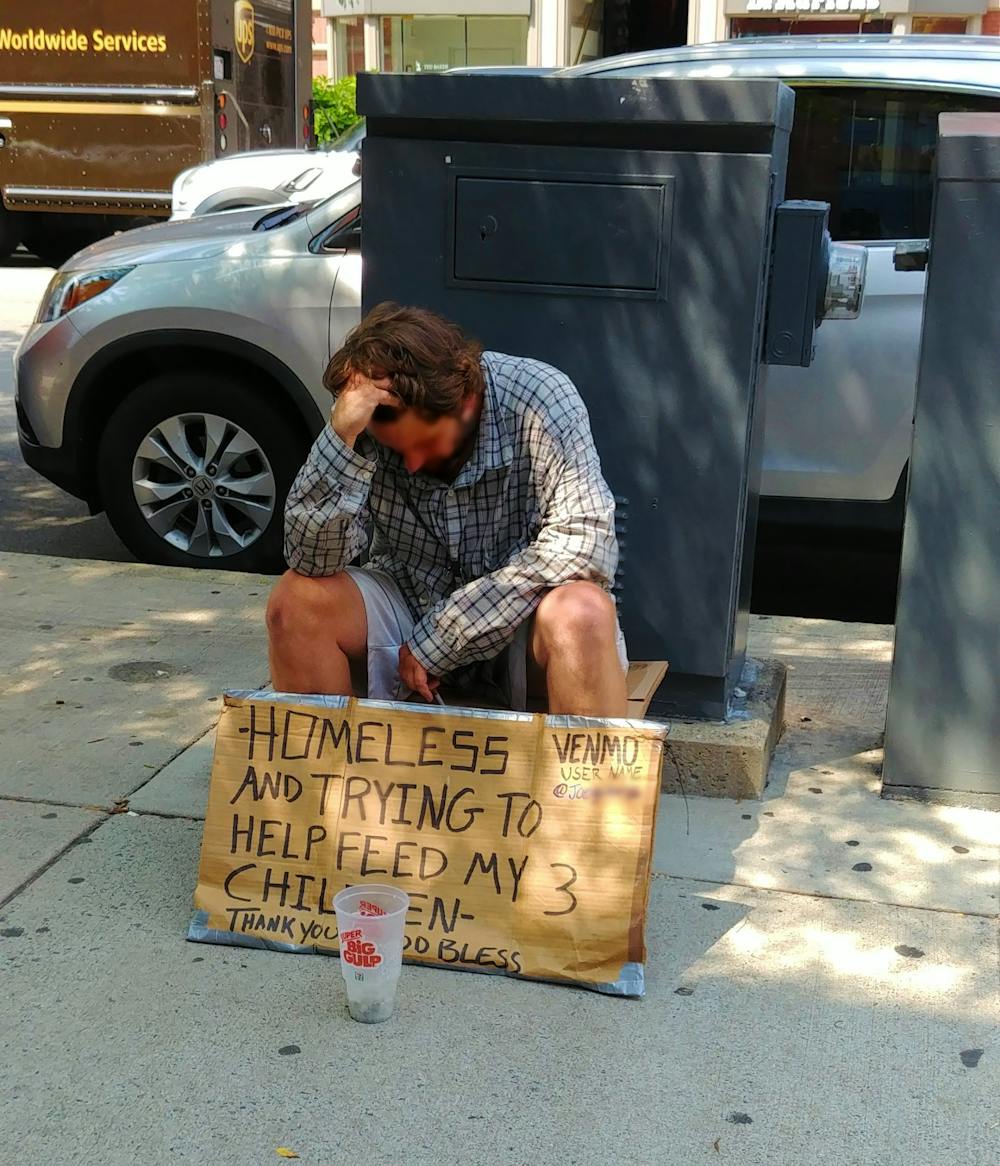 A Boston panhandler soliciting donations through the Venmo payment app.
Author provided
A Boston panhandler soliciting donations through the Venmo payment app.
Author provided
However, there are initiatives aimed at helping donation-seekers adapt to the new normal. Salvation Army bell ringers in the US now accept Apple Pay and Google Pay, while some buskers list their Venmo handles on their instrument cases.
In China, WeChat QR codes are distributed to the homeless[15] to allow mobile donations. And in California, 32% of homeless people[16] have been gifted smart phones from social programs[17] to help them access social and governmental services.
Read more: NZ businesses are still including potentially unfair terms in their general contracts — consumers deserve better[18]
Dipjar[19] is a one-swipe credit card machine that bundles transactions for non-profit organisations. And The Busking Project[20] offers a peer-to-peer payment app that allows fans to connect to street performers and make in-app donations.
Yet scepticism and prejudice[21] tend to greet old-fashioned donation-seekers using modern payment methods. There is an element of trust involved in swiping a credit card, and our research suggests these solutions will have limited practical effect for the foreseeable future.
We need to remember, of course, that consumer acceptance of credit, swipe and other non-cash payment methods has evolved over 50 years[22]. The next time a worthy group or needy individual asks for your help and presents a swipe machine or an app, your response will help determine the pace of this next evolutionary step.
References
- ^ 50% fewer donations (www.npr.org)
- ^ 30% of retail purchases (www.retailcustomerexperience.com)
- ^ 23% of payments (www.bankofengland.co.uk)
- ^ our research shows (easychair.org)
- ^ Venmo (venmo.com)
- ^ Brand activism is moving up the supply chain — corporate accountability or commercial censorship? (theconversation.com)
- ^ further fuelled (www.forbes.com)
- ^ deny reports (www.marketwatch.com)
- ^ 24-32% boost (www.zora.uzh.ch)
- ^ running out of spare change (www.economist.com)
- ^ 40% fewer people (www.bankofengland.co.uk)
- ^ suggests (easychair.org)
- ^ Woke washing: what happens when marketing communications don't match corporate practice (theconversation.com)
- ^ seeing less spare change (www.telegraph.co.uk)
- ^ distributed to the homeless (www.businessinsider.com)
- ^ 32% of homeless people (europepmc.org)
- ^ social programs (www.fcc.gov)
- ^ NZ businesses are still including potentially unfair terms in their general contracts — consumers deserve better (theconversation.com)
- ^ Dipjar (www.dipjar.com)
- ^ The Busking Project (busk.co)
- ^ scepticism and prejudice (easychair.org)
- ^ evolved over 50 years (press.princeton.edu)
Authors: Spencer M. Ross, Assistant Professor of Marketing, University of Massachusetts Lowell