The case for NZ joining the UK in sanctioning Israel over illegal West Bank settlements
- Written by: Weekend Times
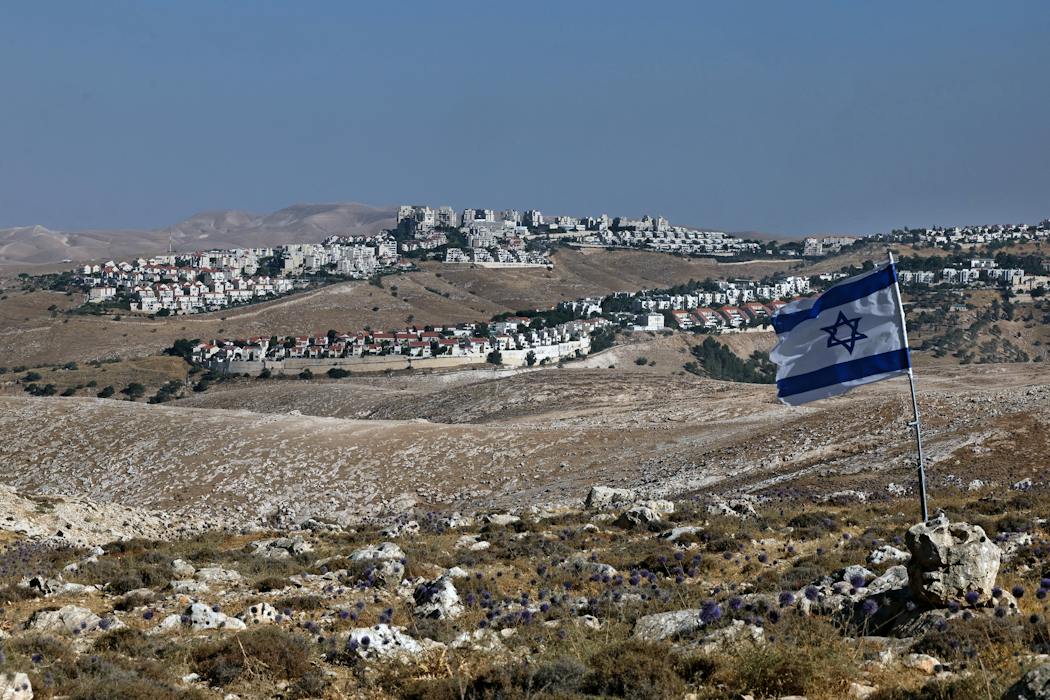
The New Zealand government has so far declined to join the United Kingdom and announce sanctions on goods produced in illegal settlements in the Occupied Palestinian Territories.
The UK is one of 12 countries, including France and Canada, which have announced similar trade restrictions or an intention to do so. The goal is to rescue an eventual two-state solution for Israel and Palestine.
The sanctions are in response to what UK Foreign Secretary David Miliband described as “ethnic cleansing of Palestinians […] perpetrated by settler terrorists”, with the Israeli military “complicit” in those actions.
While condemning the increase in illegal settlements, a spokesperson for Foreign Affairs Minister Winston Peters said New Zealand “has not traditionally used trade measures to address foreign policy issues”.
To do so would be complex and require a full policy process. We are not in a position to do that ahead of the election.
The official response to the UK initiative can be questioned on several grounds.
First, New Zealand has used trade measures in the past to address foreign policy issues, most notably against Russia over its invasion of Ukraine. Imports of gold, oil and gas are prohibited and there is a 35% tariff on all imported Russian goods.
Second, while New Zealand needs to adopt special legislation to impose sanctions outside the United Nations regime, the Russian Sanctions Act – passed in 2022 just three weeks after the invasion of Ukraine – shows it can be done swiftly.
The precise nature of the sanctions may be complex to implement, as the UK has acknowledged. But the intent comes first.
Third, the proximity of a general election should not prevent New Zealand complying with its obligations under international law – especially when the opposition Labour Party has indicated it strongly supports adopting sanctions.
Saving a two-state solution
Israel’s occupation of the West Bank, including East Jerusalem, dates from 1967 and was characterised as a “flagrant violation of international law” by the UN Security Council in 2016.
In 2024, the International Court of Justice confirmed that Israel’s actions amount to an illegal annexation of territory and are contrary to the prohibition on the use of force and the right of the Palestinian people to self-determination.
Despite this, Israel has built around 160 settlements housing 700,000 people since 1967. In the past 18 months, the UN Office for the Coordination of Humanitarian Affairs has estimated over 300 Palestinians have been killed by Israeli soldiers or settlers (with 20 Israelis killed by Palestinians in the same period), and more than 6,000 Palestinians displaced.
In August 2025, Israeli Finance Minister Bezalel Smotrich announced a plan to construct 3,000 settlement homes east of occupied East Jerusalem, known as the E1 settlement plan. This would split the West Bank and isolate East Jerusalem, which Palestine regards as its capital.
This is intentional. Smotrich has asserted the E1 settlement plan “buries the idea of a Palestinian state”. In August this year, Israel opened tenders for the construction of 1,200 settlement homes, prompting the UK sanctions response.
These UK sanctions go further than the limited restrictions on arms exports to Israel introduced in 2024 (extended in 2026), targeted sanctions on individual settlers and Israeli ministers, and even the UK’s recognition of Palestine as a state in 2025.
While trade more generally between Israel and the UK is unaffected, Israel has reacted furiously, closing the British consulate in Jerusalem (which operates as the de facto British Embassy in Palestine) and banning 12 British MPs from entering the country.
Support for a rules-based order
All states have an obligation under customary international law to cooperate to bring an end to serious breaches of certain fundamental rules, including the prohibition on the use of force, illegal occupation of territory, and the right of self-determination.
The International Court of Justice explicitly highlighted this obligation in its 2024 Advisory Opinion which stipulated that states must not recognise Israel’s illegal presence in the Occupied Palestinian Territories. They must also “abstain from entering into economic or trade dealings with Israel” concerning the territories.
For New Zealand, joining trade (and other) sanctions adopted (or slated to be adopted) by 12 other countries would be an appropriate way to comply with this obligation.
Not doing so further risks undermining the international rules-based order on which New Zealand relies to protect its interests in trade, security and the environment – at a time when that order is under extraordinary strain.
New Zealand is already an outlier, given its refusal to join the 157 countries – including Australia and a majority of European countries – that have recognised Palestine as a state.
To join the UK and other nations sanctioning goods produced in illegal settlements in the Occupied Palestinian Territories in no way denies the existence of Israel itself as a state.
But by adopting comparable sanctions, New Zealand would strengthen the global response to Israel’s illegal activities, demonstrate regional leadership, and reassert support for the international rules-based order more generally.
Karen Scott does not work for, consult, own shares in or receive funding from any company or organisation that would benefit from this article, and has disclosed no relevant affiliations beyond their academic appointment.