why the Middle East crisis is also a legal quagmire
- Written by: Anna Marie Brennan, Senior Lecturer in Law, University of Waikato
What began with surprise US and Israeli strikes on Iran one month ago has hardened into a grinding stand-off, with no clear way out.
The conflict’s opening blows on February 28[1] killed senior leaders in Tehran, including Supreme Leader Ali Khamenei[2] – prompting retaliatory missile and drone attacks[3] on Israel, US bases and Gulf infrastructure.
Years of tension over Iran’s nuclear programme[4] and its regional influence have now boiled over into open warfare, with diplomacy faltering as both sides entrench their positions.
On the ground in Iran, the violence is worsening what was already a strained human rights situation[5]. News reporting from within the country carries daily images of damaged neighbourhoods, overwhelmed hospitals and families fleeing tit-for-tat strikes.
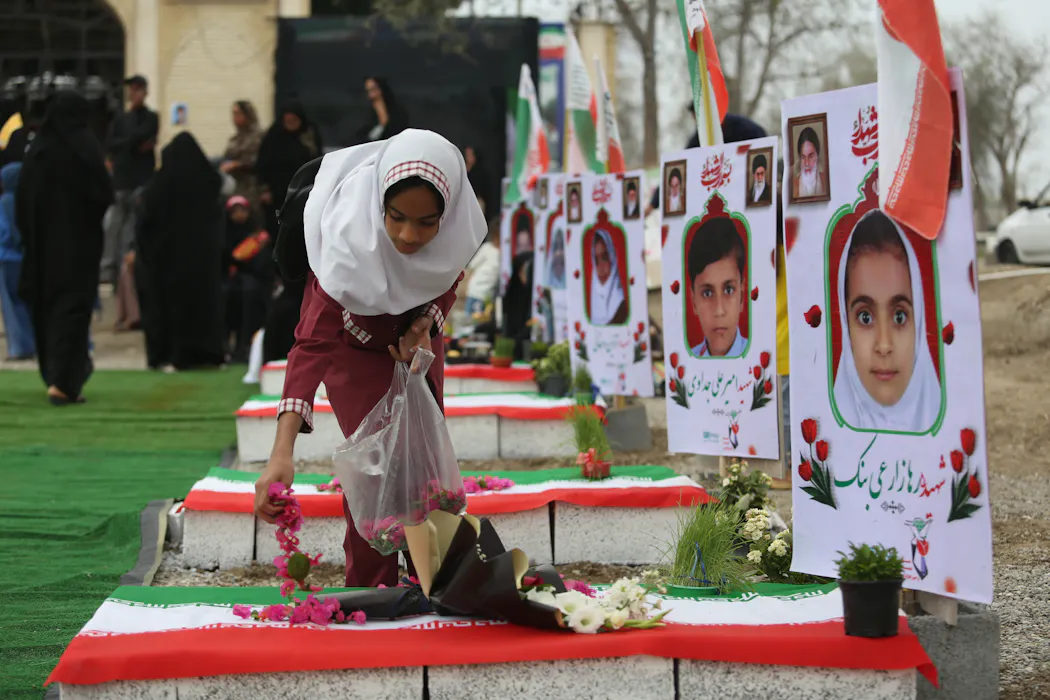
One incident in particular – the US airstrike on a school in Minab[6] in southern Iran that left dozens of girls dead – highlights the scale of the devastation, as well as the war’s murky legal context.
Future war crimes investigators will need to ask some obvious questions. Was the school a civilian site, was it used for military purposes, what precautions were taken and was the civilian harm excessive relative to any military advantage?
Only then will responsibility be able to be determined – but such clarity is likely to be a long way off.
When the law is clear, but accountability is not
Many observers have already criticised[7] the shaky legal basis for the conflict.
Some have described the US position – as set out in a letter[8] to the United Nations invoking self-defence and the protection of Israel against an alleged imminent threat from Iran and its allied groups – as thin.
Others have argued[9] that strikes supporting the stated goal of regime change were unlawful, citing the UN Charter’s prohibition on the use of force against the political independence of a state and the principle of non-intervention.
At this point, it is safe to assume that accountability for alleged international crimes by all sides to this ongoing conflict will remain elusive.
The International Criminal Court[10] has no automatic jurisdiction because the United States, Israel and Iran are not parties to the Rome Statute[11], the treaty that established the court and defines its powers.
A UN Security Council referral[12] of the situation to the court for investigation and possible prosecution is also unlikely, given the high potential for any such move to be blocked by veto-wielding permanent members.
Is any accountability likely to come through internal investigations by the states involved? This too is uncertain, as such investigations are often classified or narrowly framed[13] by military and legal authorities.
This means independent investigators are often left to piece together their cases from satellite imagery[14], authenticated videos, mass graves, weapon remnants and medical and mortuary records.
While this can establish what happened and where, linking harm[15] to identifiable decision-makers and proving intent is far harder while the conflict continues and key military records remain sealed.
This is not to say the laws of war themselves are ambiguous. They require forces to distinguish[16] between civilians and fighters, avoid excessive civilian harm[17] and take practical precautions.
International criminal cases turn on attribution and intent, meaning investigators must show who authorised an attack and what they knew. But without insider witnesses or key evidence, that is difficult, and proper accountability for war crimes often fall short.
A pattern of impunity?
We have seen this pattern before, where efforts to secure accountability are blocked or weakened by international deadlocks.
In 2014, the UN Security Council attempted[18] to refer alleged war crimes and crimes against humanity against civilians in Syria’s civil war to the ICC. The effort failed after Russia and China vetoed it, citing concerns about sovereignty and the impact on a political settlement.
In 2021, the UN Human Rights Council ended the mandate[19] of the Group of Eminent Experts on Yemen – an independent body tasked with investigating and reporting on violations by all parties – after some member states voted against renewing it. This removed one of the international community’s few mechanisms for documenting human rights abuses.
The ongoing crisis in Gaza has also proved a defining test of whether international law can be enforced.
The ICC has opened an investigation into Palestine[20] and issued arrest warrants for senior Israeli and Hamas officials over alleged war crimes and crimes against humanity.
But such warrants depend on states to enforce them, and cooperation has been limited. A parallel UN inquiry has found[21] Israel has committed genocide, yet the path to legal accountability remains contested.
In Iran, a similar outcome – or lack of one – now appears sadly likely.
References
- ^ February 28 (www.bbc.com)
- ^ including Supreme Leader Ali Khamenei (www.cbsnews.com)
- ^ retaliatory missile and drone attacks (www.aljazeera.com)
- ^ Iran’s nuclear programme (www.bbc.com)
- ^ human rights situation (www.ohchr.org)
- ^ US airstrike on a school in Minab (news.un.org)
- ^ already criticised (www.justsecurity.org)
- ^ a letter (www.justsecurity.org)
- ^ have argued (theconversation.com)
- ^ International Criminal Court (www.icc-cpi.int)
- ^ Rome Statute (www.icc-cpi.int)
- ^ UN Security Council referral (www.icc-cpi.int)
- ^ narrowly framed (www.icrc.org)
- ^ satellite imagery (syriaaccountability.org)
- ^ linking harm (international-review.icrc.org)
- ^ distinguish (casebook.icrc.org)
- ^ avoid excessive civilian harm (ihl-databases.icrc.org)
- ^ attempted (press.un.org)
- ^ ended the mandate (www.ohchr.org)
- ^ into Palestine (www.icc-cpi.int)
- ^ has found (www.ohchr.org)
Authors: Anna Marie Brennan, Senior Lecturer in Law, University of Waikato