Weekend Times


Google Workspace

Business News

In Trump’s precarious world, NZ will need all the middle-sized friends it can get

  • Written by Nicholas Ross Smith, Senior Research Fellow, National Centre for Research on Europe, University of Canterbury

When a local political commentator recently suggested[1] (partly tongue-in-cheek) that New Zealand might respond to US President Donald Trump’s new world order by becoming the seventh state of Australia, it was dismissed by the prime minister and most political leaders.

But the fact their views were even sought shows how far the debate has moved since Trump began dismantling the old rules-based international order New Zealand has long considered the basis of its foreign policy.

At January’s World Economic Forum in Davos and more recently in his address to the Australian parliament[2], Canadian Prime Minister Mark Carney laid down a challenge for other “middle powers” to start finding practical solutions to the new global realities.

Carney’s clarion call matters also for smaller powers uneasy about the United States under Trump and rising great-power disorder. New Zealand, with its long-held preference for multiple alliances and foreign policy independence[3], is likely a keen ally in such a middle-power movement.

Yet the hard part remains: how can middle and smaller powers effectively work together when still mostly reliant on great powers for security, trade and technology?

The technological dimension, in particular, makes middle power cooperation harder today. Modern states are existentially dependent on semiconductors, AI systems, 5G infrastructure and cloud computing – technologies produced overwhelmingly[4] by the two “technopoles” of the US and China.
In Trump’s precarious world, NZ will need all the middle-sized friends it can get
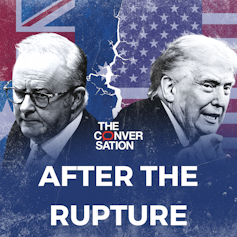
The world order has “ruptured”, Canadian Prime Minister Mark Carney has warned – so it’s time for countries like Australia and New Zealand to forge a new, less US-reliant future. In this new series[5], we’ve asked top experts to explain what that future could look like – and the challenges that lie ahead. Finding a ‘workaround’ In a forthcoming collection of essays[6] about how middle powers might cooperate on vital technology in this turbulent world, the concept of “workarounding[7]” describes how countries can pursue strategic objectives collectively, without routing everything through Washington or Beijing. For New Zealand, technology is already an area of real foreign policy concern[8]. Military interoperability with Australia – a key driver behind potentially joining AUKUS Pillar Two – is a sticking point. More broadly, New Zealand risks being left behind in the AI revolution[9]. The Indo-Pacific region, however, offers promising workaround partners. Beyond Australia – New Zealand’s oldest friend and only formal ally – there is a growing cluster of tech middle powers with which Wellington has positive relationships: India, South Korea and several key ASEAN[10] states. India produces the world’s highest number of IT graduates[11], runs ambitious semiconductor[12] and quantum computing[13] programs, and maintains multiple alliances[14] that allow it to resist being absorbed into either great power orbit. New Zealand’s relationship with India is burgeoning with the announcement at the end of 2025 of a free trade agreement[15]. New Zealand also has a trade agreement with South Korea, and both countries are part of the Indo-Pacific Four[16] group (with Australia and Japan). Home to Samsung, Hyundai and LG, South Korea is often heralded as the most successful tech middle power[17] and occupies an important position in critical international tech supply chains[18]. The ASEAN bloc – driven by key member states[19] – also has a deep institutional instinct for hedging[20] between great powers, and contains five major tech economies: Singapore, Indonesia, Malaysia, Thailand and Vietnam. New Zealand has strong relationships with ASEAN, including a trade agreement and a Comprehensive Strategic Partnership[21]. The problem is that Australia, India, South Korea and ASEAN all face their own tech dependency constraints, and the group lacks a technologically capable anchor outside the US-China duopoly. Europe as a way forward A third party may be able to fill that anchor role – the European Union (EU). While it remains an imperfect geopolitical actor[22], long derided for being a hobbled giant[23] or a geopolitical sleepwalker[24], the EU is still a potential ally to middle powers. That’s because it is not a conventional state and does not have the military capabilities of great powers. This forces it to take a multilateral and multi-stakeholder[25] approach to geopolitics. Importantly, the EU has significant and growing technological weight, most clearly expressed in its regulatory frameworks. Its General Data Privacy Regulation[26] has established a global data governance template[27] that neither Washington nor Beijing can match. Such rules shape how data flows, how AI is governed and how digital markets are structured globally. The EU is also moving decisively into hardware to complement its regulatory power. The 2023 European Chips Act[28] mobilises over €43 billion (A$70 billion) to double Europe’s share of global semiconductor production, spurred by the building of a semiconductor plant in Dresden[29]. Dutch multinational ASML[30]’s near-monopoly on crucial semiconductor manufacturing machines gives Europe genuine structural leverage over global chip supply chains. Furthermore, during the second Trump presidency, the EU has moved quickly to improve its strategic autonomy[31], as well as deepen its Indo-Pacific presence[32]. It is building trade relationships and positioning European tech companies as alternatives to US and Chinese providers. New Zealand’s relationship with the EU is at an all-time high[33] since a free trade agreement came into force in 2024. And there is significant convergence[34] on how both view the Indo-Pacific. The NZ-EU trade agreement includes a dedicated digital trade chapter, and the inaugural trade committee meeting[35] in October 2025 flagged cooperation on digital technologies and critical minerals as priorities. Carney was right about the old “fiction” being over. The task now for smaller powers such as New Zealand is not to mourn it, but to help construct something more durable in its place. This is a networked middle-power order built on shared standards, supply chain resilience and strategic diversification.

References

  1. ^ recently suggested (www.stuff.co.nz)
  2. ^ address to the Australian parliament (www.theguardian.com)
  3. ^ multiple alliances and foreign policy independence (academic.oup.com)
  4. ^ produced overwhelmingly (www.cassis.uni-bonn.de)
  5. ^ new series (theconversation.com)
  6. ^ collection of essays (link.springer.com)
  7. ^ workarounding (responsiblestatecraft.org)
  8. ^ foreign policy concern (www.tandfonline.com)
  9. ^ AI revolution (hai.stanford.edu)
  10. ^ ASEAN (www.cfr.org)
  11. ^ highest number of IT graduates (www.weforum.org)
  12. ^ semiconductor (opengovasia.com)
  13. ^ quantum computing (www.networkworld.com)
  14. ^ multiple alliances (economictimes.indiatimes.com)
  15. ^ free trade agreement (www.rnz.co.nz)
  16. ^ Indo-Pacific Four (www.beehive.govt.nz)
  17. ^ most successful tech middle power (carnegieendowment.org)
  18. ^ critical international tech supply chains (carnegieendowment.org)
  19. ^ driven by key member states (www.abc.net.au)
  20. ^ institutional instinct for hedging (eastasiaforum.org)
  21. ^ Comprehensive Strategic Partnership (asean.org)
  22. ^ imperfect geopolitical actor (www.socialeurope.eu)
  23. ^ hobbled giant (www.chicagotribune.com)
  24. ^ geopolitical sleepwalker (www.epc.eu)
  25. ^ multilateral and multi-stakeholder (hcss.nl)
  26. ^ General Data Privacy Regulation (gdpr.eu)
  27. ^ global data governance template (cepa.org)
  28. ^ European Chips Act (sciencebusiness.net)
  29. ^ semiconductor plant in Dresden (www.nxp.com)
  30. ^ ASML (www.asml.com)
  31. ^ strategic autonomy (ec.europa.eu)
  32. ^ as deepen its Indo-Pacific presence (onlinelibrary.wiley.com)
  33. ^ all-time high (newsroom.co.nz)
  34. ^ significant convergence (gjia.georgetown.edu)
  35. ^ trade committee meeting (policy.trade.ec.europa.eu)

Authors: Nicholas Ross Smith, Senior Research Fellow, National Centre for Research on Europe, University of Canterbury


Read more https://theconversation.com/in-trumps-precarious-world-nz-will-need-all-the-middle-sized-friends-it-can-get-276391

The Weekend Times Magazine

Do we really want our kids drinking alcohol — when we’re told no amount is safe?

For generations, alcohol has occupied a strange, almost sacred place in Australian culture. It marks celebrations, lubricates social gatherings, and — whether we admit it or not — often serves...

Eradicate Sugar To Aid Good Mental Health

It’s R U OK Day tomorrow, Thursday 10 September, the national day of action for people to check in with their peers, family and friends to see if they’re ok.  Twenty...

How To Install PVC Shutters At Home

Homes are the best place for relaxing and refreshing after the hectic and tiring daily life routine. The home should be decorated so that it gives people a warm welcome...

What is Medicines Optimisation and Why is it Important?

Medicines optimisation is a patient-focused approach to safe and effective medication use that helps people get the best possible outcomes from their treatments. Rather than simply ensuring patients take their...

The Role of Headless CMS in Modern Digital Architecture

With a constantly evolving digital architecture landscape, firms are continuously searching for novel avenues that guarantee nimbleness, flexibility, and scalability. A headless CMS sits front and center as one of...

The Biggest Mistakes People Make When Hiring Lawyers in Sydney

Choosing the right legal help can feel daunting, especially when time is short and the stakes feel high. Many people start by searching for lawyers in Sydney, then rely on...

A Modern Approach to Superannuation: SMSF Setup Online

For Australians seeking greater control over their retirement savings, self-managed superannuation funds (SMSFs) remain an attractive option. Today, advances in digital platforms have streamlined the process, making SMSF setup online faster...

Baking Tools and Equipment Your Bakery Needs

It can be hard to resist the smell of fresh bread or devouring a freshly baked cake. Fortunately, some people have a knack for kneading dough and baking up a...

Should I get a COVID vaccine while I’m pregnant or breastfeeding?

From Monday, Australia’s front-line health workers, quarantine staff, border control officers, and workers and residents in aged-care homes will be offered the Pfizer COVID-19 vaccine. Some of these workers will be...

hacklink hack forum hacklink film izle hacklink jetbahistipobetslogan bahis girişirocket play casino australiapadişahbetgalabetmarsbahisjojobetjojobet girişcasinolevant