The Making of an Autocrat: podcast out now
- Written by: Justin Bergman, International Affairs Editor, The Conversation
We used to have a pretty clear idea of what an autocrat was. History is full of examples: Adolf Hitler, Joseph Stalin, Mao Zedong, along with Vladimir Putin, Xi Jinping and Viktor Orban today. The list goes on.
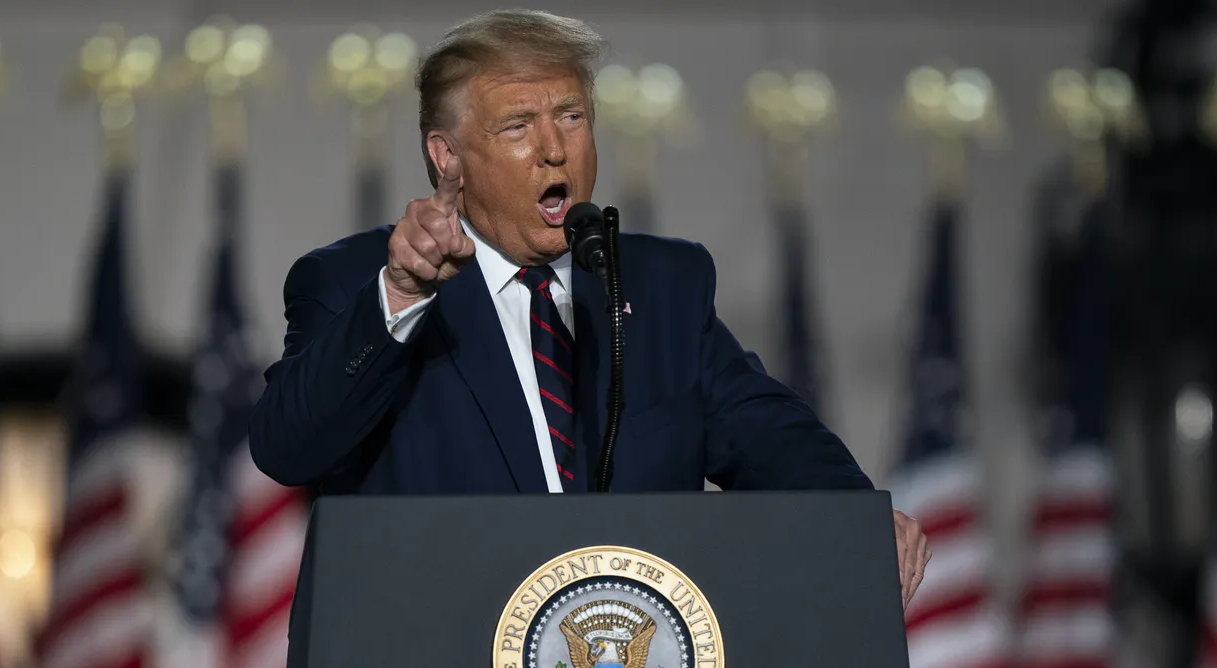
So, where does US President Donald Trump fit in?
In our new podcast[1], The Making of an Autocrat, we asked six experts on authoritarianism and US politics to explain exactly how an autocrat is made – and whether Trump is on his way to becoming one.
This is the step-by-step guide Trump is following, tried and tested the world over by the strongmen Trump seeks to emulate.
Step 1: hijack a party
Like strongmen around the world, Trump’s first step was to take control of the Republican Party, explains Erica Frantz, associate professor of political science at Michigan State University.
Once a would-be autocrat dominates a party like this, they have a legitimate vehicle to begin dismantling a democracy. As Frantz explains:
Our research has shown this is a major red flag for democracy. It’s going to enable Trump to get rid of executive constraints in a variety of domains, which he has, and pursue his strongman agenda.
Step 2: recruit an architect
Every autocrat needs a clan of loyalists, strategists, masterminds – these are the figures behind the scenes pulling the strings. They’re unelected and unaccountable, yet they wield a huge amount of power.
This is the role Stephen Miller has played for Trump, explains Emma Shortis, a Trump expert and an adjunct senior fellow at RMIT University in Melbourne.
I think what Stephen Miller demonstrates, and history has demonstrated over and over again, is that autocrats cannot rise to power by themselves. They often require a singular kind of charisma and a singular kind of historical moment, but they also need architects behind them who are able to facilitate their rise to power.
Step 3: manufacture a crisis
Trump has sounded the alarm that the United States is facing an “invasion” by dangerous gang members. He blames immigrants for the country’s economic problems and claims protesters are destroying US cities.
He is not the first would-be autocrat to manufacture a crisis to seize extraordinary powers. As Natasha Lindstaedt, an expert in authoritarian regimes at the University of Essex, explains, a strongman “loves a crisis”.
A crisis is the way that they mobilise their base, the way that they can depict themselves as the saviour, as this messianic type of figure that is going to save people from this chaotic world.
Step 4: beat the courts
In democratic systems, the courts are a vital check on a leader’s power. They have the ability to overturn laws and, in Trump’s case, the executive orders he has relied on to achieve his goals.
Since taking office, Trump has targeted the judiciary with a vengeance. As Paul Collins, a Supreme Court expert from the University of Massachusetts-Amherst, explains:
It’s all about presidential power. And that’s really significant because it’s going to enable the president to basically inject a level of politics into the federal bureaucracy that we frankly haven’t really seen before in the US.
Step 5: suppress the people
The list of people Trump has punished or threatened[2] since returning to office is long: James Comey, Letitia James, John Bolton, as well as members of the opposition, such as Adam Schiff, Mark Kelly and Kamala Harris.
He has gone so far as to call Democrats “the enemy from within[3]”.
According to Lucan Way, a professor of democracy at the University of Toronto, when a leader attacks the opposition like this, it’s a clear sign a country is slipping into authoritarianism.
It really has this kind of broader silencing effect that I think is quite pernicious.
Step 6: co-opt the military
Since returning to office, Trump has successfully expanded his power over his own party, the courts and the American people. Now, like many autocrats around the world, he’s trying to exert control over the military.
Joe Wright, a political science professor at Penn State University, says:
I am very concerned that getting the military to do illegal things will not only put US soldiers at more risk when they do engage in international missions in the future […] it’s a first step to using the military to target domestic political opponents.
That’s what really worries me.
This series was written by Justin Bergman and produced and edited by Isabella Podwinski and Ashlynne McGhee. Sound design by Michelle Macklem.
Listen to The Making of an Autocrat on The Conversation Weekly feed via any of the apps listed above, download it directly via our RSS feed[4]or find out how else to listen here[5]. Transcripts of these episodes are available via the Apple Podcasts or Spotify apps.
.
References
- ^ new podcast (podcasts.apple.com)
- ^ threatened (www.npr.org)
- ^ the enemy from within (www.nbcnews.com)
- ^ RSS feed (feeds.captivate.fm)
- ^ how else to listen here (theconversation.com)
Authors: Justin Bergman, International Affairs Editor, The Conversation
Read more https://theconversation.com/the-making-of-an-autocrat-podcast-out-now-273457