As Trump rewrites the rules in Venezuela, NZ faces a foreign policy reckoning
- Written by: Robert G. Patman, Professor of International Relations, University of Otago
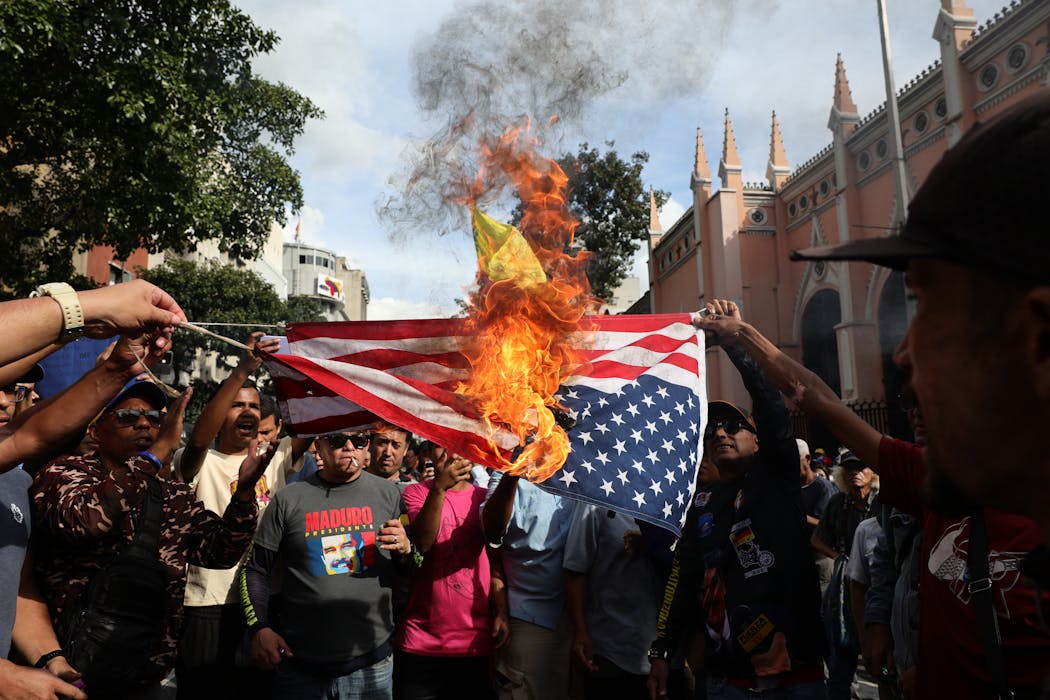
Donald Trump’s seemingly reckless and probably illegal[1] attempt at regime change in Venezuela highlights the need for New Zealand to rethink its current stance toward the United States.
Since taking office, the National-led coalition government has steadily reoriented foreign policy towards Washington[2]. However, the US military operation of January 3 to capture President Nicolás Maduro has exposed the very real limitations of that strategy.
Trump’s intervention in Venezuela had been foreshadowed by a military buildup[3] and series of deadly US attacks on alleged drug boats in the Caribbean and eastern Pacific since September 2025.
But Trump now openly talks about US companies participating[4] in the revival of the country’s oil industry, which will allow access to the world’s largest known oil reserves.
The US will “run” Venezuela, Trump says, until there are conditions for a “safe transition of power”. What that means in reality remains to be seen.
Foreign Minister Winston Peters’ statement[5] that New Zealand “expects all parties to act in accordance with international law” seems optimistic given what has happened so far.
A new Monroe Doctrine
US intervention in Venezuela is largely consistent[6] with the Trump administration’s National Security Strategy, published in December last year.
Among other things, the strategy indicated the US wished to reestablish its dominance in the Western Hemisphere – a sort of updated version of the Monroe Doctrine[7], the 19th century US strategy of dividing the world into spheres of influence overseen by great powers.
But the intervention in Venezuela sets a grave precedent in the context of contemporary international law and security.
Unilaterally removing Maduro from power is an act of war[8] and apparently violates US federal as well as international law.
Under the US Constitution, only Congress has the power to declare war. But there is little evidence the president briefed members of Congress about regime change in Venezuela.
At the same time, Trump’s intervention is at odds with the United Nations Charter[9]. This prohibits interference in the domestic affairs of a sovereign state unless there is a threat to international peace and security. In the case of Venezuela, there clearly was not.
Trump’s application of the “might is right” approach to Venezuela may also create more problems than it solves, particularly if there is resistance to US efforts to govern the country.
While many Venezuelans are understandably elated by the departure of a dictator, this could quickly turn to anger if and when the Trump administration’s intention to “run” the country on its own terms becomes apparent.
Indifference not an option
Above all, there is a very real risk Trump’s unilateral intervention in Venezuela will encourage similar actions elsewhere.
Trump has sent mixed signals about Vladimir Putin’s illegal invasion of Ukraine, and his antipathy to Europe favours a peace deal on Russian terms[10].
But would the US administration be equally relaxed about China invading Taiwan? It’s a prospect that could be increased by the example of another superpower showing scant regard for the territorial integrity of a smaller state in its neighbourhood.
For such reasons, New Zealand cannot be indifferent to the events in Venezuela, and will soon have to make it clear where it stands.
The government’s initial response – that it is “concerned by and actively monitoring developments in Venezuela and expects all parties to act in accordance with international law” – seemed to fall short in this respect.
Certainly, since the end of World War II, all New Zealand governments have firmly supported a rules-based system of international relations embodied in norms of multilateralism and institutions such as the United Nations.
The second Trump administration has consistently demonstrated a disregard, even contempt, for the New Zealand worldview.
A moment of reckoning
Nevertheless, New Zealand has followed Britain, Australia and other liberal democracies in adopting a low-key, accommodating approach toward Washington’s “America First” agenda.
This has meant the government has pulled its punches on a number of key international issues during the past 12 months – including refraining from publicly expressing solidarity with allies such as Canada and Denmark faced with territorial threats[11] from the Trump administration.
The government has also had little to say about Israel’s violation of international law in Gaza and the West Bank, has refused to recognise a Palestinian state, and has been reluctant to publicly question Trump’s trade protectionism.
But it was clear, even before the intervention in Venezuela, that this “wait and see” approach by New Zealand and other democracies failed to moderate[12] the policies of Trump’s populist, radical-right administration.
New Zealand now faces a moment of reckoning in its foreign policy.
It can continue to prioritise closer alignment with an administration that wants the world to be run by great powers through spheres of regional influence.
Or it can stand up for a more inclusive, rules-based approach to international affairs where all states matter, including middle and small powers.
But it cannot credibly do both.
References
- ^ probably illegal (theconversation.com)
- ^ towards Washington (www.1news.co.nz)
- ^ military buildup (stories.theconversation.com)
- ^ US companies participating (www.politico.com)
- ^ Winston Peters’ statement (www.rnz.co.nz)
- ^ largely consistent (www.whitehouse.gov)
- ^ Monroe Doctrine (www.aljazeera.com)
- ^ act of war (www.aljazeera.com)
- ^ United Nations Charter (www.un.org)
- ^ favours a peace deal on Russian terms (www.rnz.co.nz)
- ^ faced with territorial threats (www.cnbc.com)
- ^ failed to moderate (theconversation.com)
Authors: Robert G. Patman, Professor of International Relations, University of Otago