Could the Liberals make a fight of industrial relations without courting disaster?
- Written by: Michelle Grattan, Professorial Fellow, University of Canberra
It’s near-universally agreed that opposition policy development under Peter Dutton was too thin and too late. Now the Sussan Ley opposition is under pressure to produce policy that could arguably be premature.
Before Christmas, Ley will unveil her immigration policy. She’s already flagged it will be heavy on “principles”. The question is whether it contains an overall number (and if so what that is), and how much detail there is.
Here’s the dilemma: the more detailed the policy, the more likely it’s out of date in two years, but the more general it is, the more critics will come down on Ley. The balance was still being fought over in the opposition this week.
Partly, this need for instant policy is about the split in the Liberals over what they stand for. Like two ideological armies, conservatives and moderates have joined battle, each wanting to occupy the internal policy ground as soon as possible. Formulating the immigration policy is reflecting the fractures.
Beyond the pressure to rush, Ley has another fundamental problem: how robust should the opposition make its broad policy pitch?
In a major speech in September[1], Ley urged moving from the age of “dependency” (“the growing expectation that government will provide for every need and solve every problem by spending more”), arguing against middle class welfare. It’s the sort of thing you’d expect Liberals to believe, as part of their credo about containing government spending. But the hazards of running such an argument in an election campaign are obvious.
Taking existing entitlements away from people has always been hard politically – these days, it would seem near impossible, especially given the cost-of-living squeeze.
The cynics might say: in opposition you shut up, in government you act. The Albanese opposition went along with the Coalition government’s stage 3 income tax cuts, and changed them (eventually) in 2024. Dutton was pilloried for his proposed cuts to the public service (not least because they were presented as a crude sledge hammer against the number of bureaucrats). As it looks to its next budget, the government is preparing to extract significant savings from the public service.
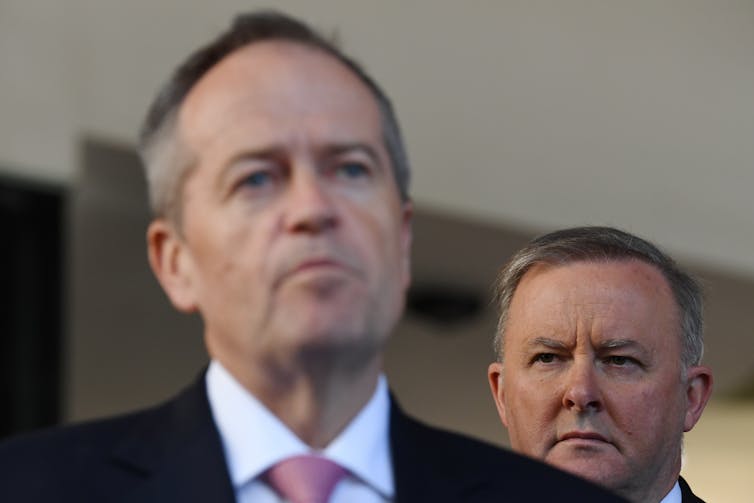
Whatever savings, or tax increases, an opposition proposes make it highly vulnerable. Just ask Bill Shorten: he had “losers” in the policy slate he put to the 2019 election and paid the price.
Given the minefields, many eyes will be on what the Liberals decide on industrial relations, which Ley has already targeted in broad terms.
The government has delivered extensively to the union movement, from facilitating multi-employer bargaining to legislating the “right to disconnect”, and a heap of other pro-worker measures.
Ley told the Centre for Independent Studies in October[2]: “Labor’s restrictive industrial relations changes are acting as a handbrake on productivity.
"Multi-employer bargaining laws are threatening small businesses with conditions they cannot afford. Labor’s push to legislate one-size-fits-all approaches across whole sectors ignores the needs of many employers and workers.
"We will chart a different course. We believe in enterprise-level bargaining. […] We believe in options like flexible hours, remote work arrangements, and modern award structures that reflect today’s digital economy.”
But is the Coalition likely to have an industrial relations policy that matches its rhetoric? And how would that withstand the onslaught of a union/Labor campaign?
Industrial relations should be core business for the Coalition. But did we hear of it at the last election? Thanks to John Howard’s disastrous overreach with WorkChoices, IR is scorched earth for the Liberals. Liberal sources contrast the Howard and Labor strategies – Howard’s “big bang” versus Labor’s “boiling frog” – to transform the IR landscape.
Tim Wilson is the opposition spokesman on industrial relations, employment and small business; he’s looking for a possible safe passage through this minefield.
Amid the Liberals’ election rout, Wilson became a minor hero in his party when he regained the Melbourne seat of Goldstein, which he had lost to “teal” Zoe Daniel in 2022. He’s outspoken and highly ambitious. Unless he’s moved after a change of Liberal leader next year, how he performs in this shadow portfolio will be important for his very obvious political aspirations.
In a little-reported speech to the HR Nicholls national conference[3] a fortnight ago, Wilson threw out some cryptic hints about the way he’s looking at his policy challenge.
Although the address was content-light, he stressed his approach “will be different from my predecessors”.

“If the future of Australia’s economy can be fuelled by nuclear power, we should be looking for equally innovative solutions in industrial relations that are about how we build a focus on simplification, empowerment and alignment to promote harmony.”
Most immediately, Wilson’s attention is on “how we build the movement to advocate for reform”.
“If we go back and prosecute old debates on the unions’ turf, they’ll just be waiting with their baseball bats and intimidatory tactics. They own that field. We need a new playing field for industrial relations that focuses on mobilising those who benefit from simplification and cooperation.
"We need to mobilise a nation of employers sufficient that they see we are fighting for them enough that they want to fight for what we are espousing.”
Wilson said the integration of artificial intelligence in employment presented “a potential reset point in how people will work. It will change the structure of the employment market and the biggest opportunities are there for small business. And we need to seize on that.”
Wilson wants to “actively drive policy to enlarge a small business constituency on a scale this nation has not seen before.” Such a constituency would be “ready to push back against industrial relations tyranny designed to favour Canberra, corporates, organised workers and organised capital,” he said.
But would small business have the will or the ability for pushback? Big business certainly hasn’t – it has been able to do little more than complain about union encroachments into workplaces.
At a political level, if the Coalition wants to propose significant policy changes, it will face the same problem as it will if it proposes to reduce “dependency”. The opposition (and business) can argue IR changes are needed to improve productivity. But suggesting some of the concessions and benefits the unions have recently won be trimmed or overturned would likely receive the same negative response from voters as an assault on dependency. Wilson has his work cut out.
References
- ^ major speech in September (www.menziesrc.org)
- ^ Centre for Independent Studies in October (sussanley.com)
- ^ speech to the HR Nicholls national conference (www.timwilsonmp.com.au)
Authors: Michelle Grattan, Professorial Fellow, University of Canberra