Australia needs more workers. These are the policy changes that would help get them
- Written by: Aruna Sathanapally, Chief Executive, Grattan Institute

Despite the fear of Artificial Intelligence (AI) taking our jobs[1], we actually don’t have enough workers.
The Baby Boomer generation is retiring and Australia’s workforce is ageing. The challenge of finding the workers we need will grow over the coming years.
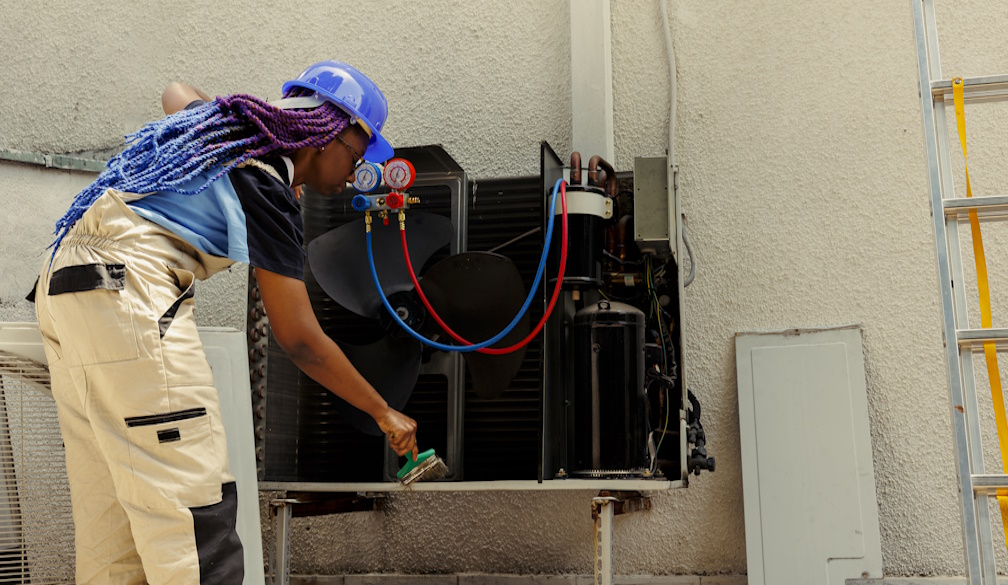
Meanwhile, more workers will be needed to support the clean energy transition, build more housing and meet growing demand for human services – particularly healthcare and aged care.
Here’s what’s driving this situation and what can be done to ensure we get the workforce we need for the services and infrastructure we value.
Australia’s workforce needs are growing
Australians live longer[2] than people in almost every other country in the world, and we enjoy high standards of living in our old age.
As Australians live longer, the population that is over 75, and over 85, are growing to a size we have not seen before.
Our ageing population is already reshaping demand for labour and services, and this will continue in the coming decades. Older people need more care and other services than younger people.
And as countries get richer, their citizens’ expectations of government services increase. These trends are driving growing demand[3] for workers in healthcare, aged and disability care.
Older people also typically live in smaller households (one or two people), which means we need to build more homes[4] for a particular population.
Australia is also in the midst of a whole-of-economy transformation to net-zero carbon emissions, which will require substantially more infrastructure, and a major reallocation of labour and skills. It’s an industrial revolution[5] on a deadline.
At the same time, our working age population is shrinking[6] as a share of the total population. A smaller workforce relative to the size of the population will make it harder to build the homes and infrastructure we need, and provide the care services we expect.
The counter-trend here is technology and AI. AI is likely to bring many productivity benefits[7] and may mean fewer workers are needed in a range of occupations.
But the balance[8] of evidence[9] suggests AI is overall more likely to augment than replace workers, at least in the next few years.
Read more: These jobs will thrive – but others may vanish – as AI transforms Australia's workforce[10]
Making the most of our talent pool
The Australian labour market is strong. Our unemployment rate is low. But Australia can and should aim higher on workforce engagement to increase the number of workers, hours worked and making full use of workers’ skills and expertise.
Beneath the aggregate statistics[11], there are still many groups that face barriers to work or want to work more hours – particularly women.
Read more: New study finds the gender earnings gap could be halved if we reined in the long hours often worked by men[12]
Australian women are much more likely to work part-time[13] than their international peers (or Australian men).
And when you consider that Australian women are among the most highly educated[14] in the world, the untapped potential is even greater.
Migration is another essential part of meeting our future workforce needs and is Australia’s great strength among advanced economies. Migration increases the size of our working-age population, thereby slowing the ageing of the population.
But the biggest benefits come from attracting skills and talent from across the world, ensuring migrants can actually use[15] their training and experience once in Australia, and better supporting migrants to thrive.
Pulling the policy levers
Governments hold many policy levers to help grow Australia’s talent pool. Most directly, the federal government determines Australia’s migration intake and the skills mix.
Australia should aim to be a best-practice migration nation, with a migration system that is:
flexible (rather than overly prescriptive)
focused on the medium-term (rather than short-term skills shortages)
offers a clear pathway from temporary visas to permanent residency (while acknowledging that not all temporary visa-holders can obtain residency)
and ensures that migrants can put their skills and qualifications to best use in Australia.
Governments should also be reducing barriers to work[16], particularly for women with young children. Women with young children are much more likely than the general population to face high “effective marginal tax rates[17]” – the proportion of additional income lost to taxes, reduced welfare payments, additional childcare costs, and HELP repayments – which make the pay-off from work unattractive.
Women with young children are also much more likely than other groups to increase their paid work hours[18] if their effective marginal tax rates are reduced.
Federal and state governments have made important progress in recent years on reducing barriers to work for parents with young children. But there is more to be done.
Even after recent increases in the child care subsidy, a quarter of working-age women who use childcare still face high or very high[19] effective marginal tax rates.
Ensuring high-quality childcare is broadly available and affordable[20] would reduce barriers to work for parents, and older carers too, helping to boost our talent pool.
As Australia’s population ages, older worker engagement will become increasingly important too. Workforce engagement starts to decline when people reach their 50s, and drops steeply for people in their 60s.
Embracing flexible work practices and investing in healthier ageing would enable more people to work for longer.
Australia’s challenge is not job creation, but how to find the workers we need. Our governments will need to pull all the levers to ensure we do.
References
- ^ taking our jobs (theconversation.com)
- ^ live longer (www.who.int)
- ^ growing demand (www.jobsandskills.gov.au)
- ^ we need to build more homes (grattan.edu.au)
- ^ industrial revolution (grattan.edu.au)
- ^ shrinking (treasury.gov.au)
- ^ productivity benefits (theconversation.com)
- ^ balance (institute.global)
- ^ evidence (economics.mit.edu)
- ^ These jobs will thrive – but others may vanish – as AI transforms Australia's workforce (theconversation.com)
- ^ aggregate statistics (www.abs.gov.au)
- ^ New study finds the gender earnings gap could be halved if we reined in the long hours often worked by men (theconversation.com)
- ^ work part-time (grattan.edu.au)
- ^ highly educated (www.oecd.org)
- ^ actually use (activateaustralia.org.au)
- ^ reducing barriers to work (grattan.edu.au)
- ^ effective marginal tax rates (onlinelibrary.wiley.com)
- ^ increase their paid work hours (www.sciencedirect.com)
- ^ high or very high (onlinelibrary.wiley.com)
- ^ available and affordable (grattan.edu.au)
Authors: Aruna Sathanapally, Chief Executive, Grattan Institute