Australia’s knowledge of Russia is dwindling. We need to start training our future experts now
- Written by: Jon Richardson, Visiting Fellow, Centre for European Studies, Australian National University
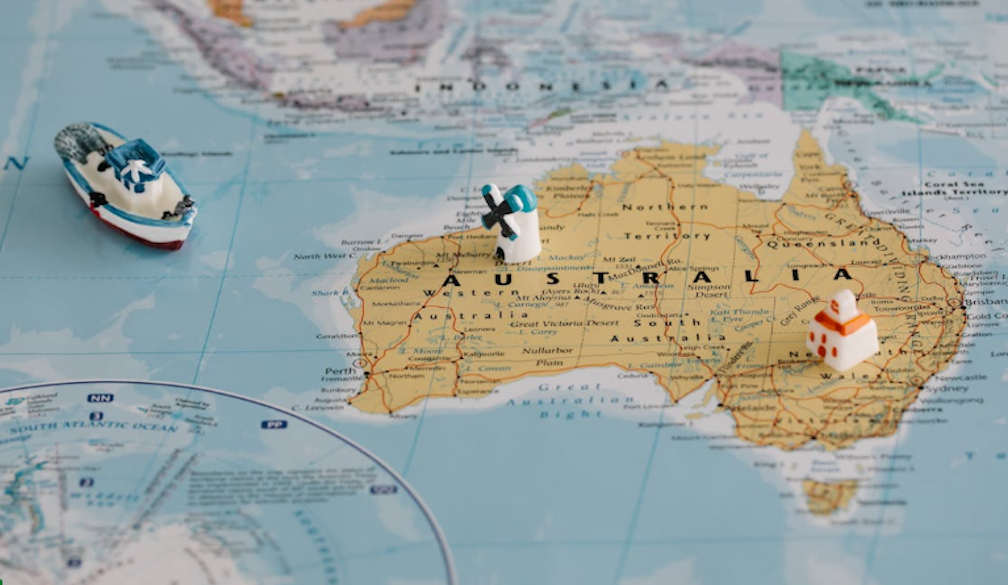
Russia’s possible interest in basing long-range aircraft at an Indonesian airbase not far from Australian shores shook up a relatively staid election campaign last month.
The news, which Jakarta immediately dismissed, caught many by surprise in Australia. It shouldn’t have. While Indonesia’s non-aligned stance makes granting such a request highly unlikely, Russia’s defence and political ties[1] with Southeast Asia have actually been deepening[2] over the last decade, at least.
All of this has gone largely unnoticed in Australia. And this highlights a significant problem: Australia has something of a knowledge deficit when it comes to Russia. This is in part due to the fact our expertise on the country has been hollowed out since the Cold War ended.
Russia’s power plays are expanding globally
The Soviet Union loomed large in Australia’s consciousness during the Cold War, if not high on its list of priorities.
Today, Russia remains a major, albeit slightly diminished, power. It is a nuclear weapons state (it has more than 5,500 nuclear warheads[3], the most of any nation) and a permanent member of the United Nations Security Council. It is also active in other forums of importance to Australia, such as the G20 and APEC, as well as in issues like arms control and climate change.
Most worryingly, under President Vladimir Putin, Russia will no doubt continue to be a disruptor on the international stage.
Russia’s political and security elite perceive the country to be a great power with interests and a right to influence in every part of the world. Just to drive that message home, a giant sign quoting Putin[4] last year read: “Russia’s borders do not end anywhere”.
Even before its full-scale invasion of Ukraine in 2022, Moscow perpetuated an ideology that it is at war with the West. This idea is a key source of legitimacy for Putin’s regime. Russia’s hostile actions[5] against Western democracies continue to proliferate. These include disinformation campaigns, cyber attacks, election interference and, in some regions, sabotage and assassinations[6].
This isn’t focused entirely on Europe and the US, either. Russia has an active – and expanding – military presence in the Asia-Pacific. Russia’s Pacific Fleet, based in Vladivostok, now has more than 20 nuclear and conventional submarines[7] and frequently engages in training exercises with the Chinese navy.
More “normal” relations with Russia will not return soon. A lasting peace in Ukraine seems unlikely if any interim ceasefire deal leaves large swathes of the country under a brutal Russian occupation regime[8]. Putin is unlikely to let go of his ambitions to subjugate Ukraine and limit its independence.
While sanctions have made it harder for Moscow to conduct the war, the Russian economy also does not appear in danger of imminent collapse.
Meanwhile, Southeast Asia has proven susceptible to Russia’s anti-Western narratives, particularly when it comes to the claim that the Russian invasion was provoked by Western policies and threats. Most regional governments have been loathe to criticise the invasion and the leaders of Indonesia and Malaysia have made state visits to Moscow despite it.
Russia has had similar success[9] in pushing disinformation through orchestrated social media campaigns across the Global South, including in parts of Africa where Australian companies have made significant investments in the mining sector.
Reviving Russia literacy
All these trends point to the need to enhance Australia’s modest level of Russia literacy, both in language skills and broader country expertise.
This was the key message of a recent conference[10] on “Russian activities and Australian interests in the Indo-Pacific”, hosted by the ANU’s Centre for European Studies. It was attended by a wide range of government officials, academics, analysts and foreign diplomats.
Australia once had strong Russian-language departments at several universities. It also boasted numerous Russian and Soviet scholars of global repute, such as Harry Rigby[11], Sheila Fitzpatrick[12], Graeme Gill[13], Stephen Wheatcroft[14], Geoffrey Jukes[15] and Stephen Fortescue[16].
Today, the number of university departments teaching Russian language, history or politics has dwindled, with only the University of Melbourne offering a major in Russian language and literature. That university has also added a much-welcomed fellowship in Ukrainian studies[17].
And Australia has few lecturers or researchers in international relations, history or social sciences with Russia expertise, including language skills.
We can – and should – return our university Russian offerings to the levels we had 30 years ago. This can be done without cutting back on the existing expansive focus on other countries and regions. There is also scope for greater focus on Russia and the former Soviet countries in government.
It will hard for Russia to shake off the pattern of failed government reform efforts defaulting to strong, centralised rule with imperial ambitions and an anti-Western posture.
But moves towards reform could eventually bear fruit (again) when Putin leaves the stage. If this were to happen, Russia would remain a major power with a rich cultural legacy and many common interests with Australia in areas such as natural resources. There is also a significant Russian diaspora in Australia.
For Australia, it is a mistake to think of Russia as somewhere far away. Both in simple geography – all state capitals except Perth are closer to Vladivostok than to New Delhi – and in terms of the interplay of global interests.
Or, as British commentator Keir Giles[18] puts it: “You may not be interested in Russia, but Russia is interested in you.”
References
- ^ political ties (en.vietnamplus.vn)
- ^ deepening (www.abc.net.au)
- ^ more than 5,500 nuclear warheads (www.armscontrol.org)
- ^ giant sign quoting Putin (www.newsweek.com)
- ^ hostile actions (www.aspistrategist.org.au)
- ^ assassinations (www.theguardian.com)
- ^ more than 20 nuclear and conventional submarines (www.aspistrategist.org.au)
- ^ occupation regime (insidestory.org.au)
- ^ similar success (africacenter.org)
- ^ recent conference (ces.cass.anu.edu.au)
- ^ Harry Rigby (www.researchgate.net)
- ^ Sheila Fitzpatrick (press.princeton.edu)
- ^ Graeme Gill (www.cambridge.org)
- ^ Stephen Wheatcroft (link.springer.com)
- ^ Geoffrey Jukes (cais.cass.anu.edu.au)
- ^ Stephen Fortescue (catalogue.nla.gov.au)
- ^ fellowship in Ukrainian studies (arts.unimelb.edu.au)
- ^ Keir Giles (www.bloomsbury.com)
Authors: Jon Richardson, Visiting Fellow, Centre for European Studies, Australian National University