How the word ‘incel’ got away from us
- Written by: Farid Zaid, Senior Lecturer, Psychology, Monash University
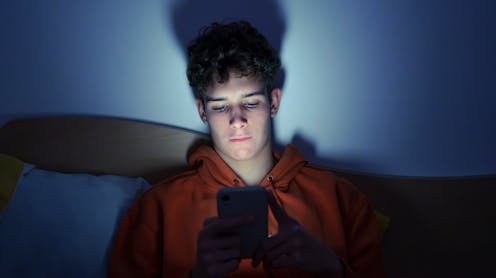
Imagine a young man whose voice has been worn down by years of feeling invisible. Plain, numb and bitter, the “incel” tries to explain[1] the kind of hopelessness most of us would rather not confront:
I believed I was unlovable, so who the hell is gonna love me? I won’t get a good job, and if I don’t get a good job, I won’t be able to live the kind of life I want. I’ll be lonely and depressed, and what’s the point of living?
You start seeing life not as something to look forward to, but as something you just have to survive.
The pain it describes is far more common than we care to admit.
Today, the word “incel” conjures images of angry online forums, misogyny[2] and even mass violence[3].
But it didn’t start that way. Incel began as a term for the ache of not being chosen[4] – an ache that, for many young men, has become defining.
Read more: ‘Looksmaxxing’ is the disturbing TikTok trend turning young men into incels[5]
The birth of ‘incel’
In the late 1990s, a Canadian woman[6] known only as Alana created “Alana’s Involuntary Celibacy Project”, a support group for people of all genders struggling to form romantic or sexual relationships.
There was no ideology, just stories of heartbreak, confusion and the quiet sadness of feeling left behind.
She coined the term “invcel”, later shortened to incel. It was a label for isolation, not anger.
But as it often does, the internet repurposed it and angry subcultures took root[7].
The term hardened: incel began to describe a threat[8].
Today, it refers to a loosely connected online subculture of young men who see themselves as romantically excluded, blame women or society for their condition, and often express their resentment through misogynistic language, fatalism and at times, violent rhetoric.
How did a word born in solidarity become shorthand for male radicalisation and resentment?
Incel evolution
By the mid-2000s, forums such as 4chan, Reddit and obscure message boards had begun to distort the term.
This new banner of incel identity[9] was encompassed by grievance, rage and rejection.
The digital architecture of these spaces didn’t just permit this shift, it accelerated it. Anonymous avatars, endless algorithms and upvote economies rewarded extremity.
Pain was no longer expressed, it was curated, memed and weaponised.
Incel communities developed their own jargon[10]: “Chads” (attractive, socially successful men), “Stacys” (the women who desire them), and “blackpill theory” (a fatalistic belief that one’s romantic or sexual failure is biologically determined and irreversible).
This crude mythology was used to explain why some men supposedly get everything and others get nothing.
As these forums grew, many also became incubators for dehumanising language and open hostility towards women.
Some of the most active subreddits and boards were eventually banned[11] for promoting violent content or glorifying attacks on women.
Law enforcement agencies in several countries have since begun monitoring incel spaces[12] as potential sites of radicalisation.
Read more: We research online 'misogynist radicalisation'. Here's what parents of boys should know[13]
Loneliness and isolation
While these online communities became more extreme, they also came to dominate the cultural narrative – distracting us from a quieter, more pervasive truth: most young men who feel unwanted or invisible aren’t in these online spaces at all.
They’re not angry or radicalised. They’re just trying to make sense of a life that feels increasingly empty – the very men the word incel was once meant to describe.
That emptiness is part of a growing epidemic of loneliness[14], particularly among young men.
As social ties fray and emotional isolation deepens[15], many find themselves without the friendships, intimacy or sense of belonging that once buffered against despair.
One in four Australian men[16] say they have no close friends they can confide in.
These young men are also struggling with the language to name what they feel[17].
Being single often makes these men feel irrelevant and worthless[18]. Disconnected and ashamed, many go silent. Or they go online in search of community.
What can be done?
The first step is resisting the urge to caricature and dismiss.
Most of these young men are not ticking time bombs – they are simply struggling with disconnection. We need more places where that pain can be acknowledged without shame or fear of ridicule.
It starts with how we talk to, and about, young men. That means fostering emotional literacy[19] in ways that feel authentic and supporting initiatives that build connection without moralising.
This can be done through mentorships and community groups that allow for real relationships to form.
We need more male-friendly mental health services[20] and more male psychologists, too: there are more than four women for every man[21] in this field.
Mental health services that reflect men’s lived realities – through tone, approach and practitioner experience – are more likely to break down the barriers[22] that keep many men away.
Policy can help, too: civic infrastructure that fosters belonging – such as community sports clubs, trade apprenticeships and structured volunteering opportunities – play a critical role. These are the spaces where purpose grows roots and where men in particular often find meaning and community outside formal support systems.
Time for a change?
While the threat from radicalised men online remains, maybe it’s time to retire the word incel.
What began as a label for loneliness has become a painful slur for many men – a shortcut for contempt.
When we lose the language to describe the pain, we can lose the people too.
References
- ^ the “incel” tries to explain (doi.org)
- ^ misogyny (www.abc.net.au)
- ^ mass violence (www.bbc.com)
- ^ ache of not being chosen (pmc.ncbi.nlm.nih.gov)
- ^ ‘Looksmaxxing’ is the disturbing TikTok trend turning young men into incels (theconversation.com)
- ^ a Canadian woman (www.bbc.com)
- ^ subcultures took root (crestresearch.ac.uk)
- ^ a threat (www.aspistrategist.org.au)
- ^ banner of incel identity (pmc.ncbi.nlm.nih.gov)
- ^ their own jargon (journal-exit.de)
- ^ eventually banned (www.bbc.com)
- ^ monitoring incel spaces (reason.com)
- ^ We research online 'misogynist radicalisation'. Here's what parents of boys should know (theconversation.com)
- ^ epidemic of loneliness (www.aihw.gov.au)
- ^ emotional isolation deepens (www1.racgp.org.au)
- ^ One in four Australian men (www.amhf.org.au)
- ^ name what they feel (www.sciencedirect.com)
- ^ irrelevant and worthless (researchers.westernsydney.edu.au)
- ^ fostering emotional literacy (doi.org)
- ^ male-friendly mental health services (doi.org)
- ^ more than four women for every man (www.ahpra.gov.au)
- ^ break down the barriers (doi.org)
Authors: Farid Zaid, Senior Lecturer, Psychology, Monash University
Read more https://theconversation.com/how-the-word-incel-got-away-from-us-255109