Despite the national apology, abuse in state care is still happening – only systemic change will work
- Written by: Jennifer Montgomery, Faculty of Health Research Associate, Te Herenga Waka — Victoria University of Wellington
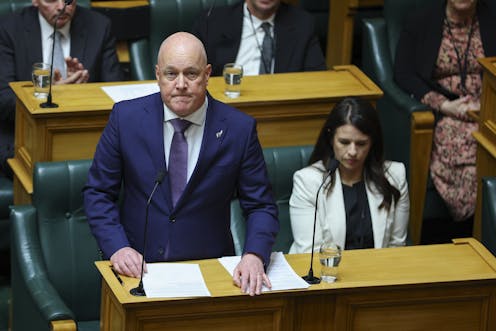
Today marks a long-awaited milestone for survivors of the state care system, with the formal apology[1] by Prime Minister Christopher Luxon acknowledging the catastrophic abuse endured by at least 250,000 people at the hands of state and faith-based institutions between 1950 and 1999.
Luxon acknowledged the “horrific” and “heartbreaking” abuse experienced by survivors and their whānau, and emphasised their stories have been heard and believed.
The apology comes in response to the final report of the Royal Commission of Inquiry into Abuse in State Care – “Whanaketia – Through pain and trauma, from darkness to light[2]” – which was tabled in Parliament in July.
The culmination of a six-year process, the report revealed the staggering individual and social toll of abuse in care, with the average lifetime cost[3] for an individual estimated at NZ$857,000, accounting for health care, homelessness, loss of income and education.
The report also highlighted longstanding systemic racism, with Māori and Pasifika children more likely to be removed from their families and abused in care.
Many survivors continue to live with the intergenerational impacts of institutional trauma, some ending up in the prison system, homeless, or with chronic illnesses or addiction problems. Others have died by suicide[4] without receiving justice.
The report received international attention[5], with the Royal Commission describing its findings as a “national disgrace” and a “stain on our national character”. But, importantly, it also emphasised that most of the factors which led to abuse in state care persist to this day.
Not just historical
Research has identified a long-standing societal indifference[6] to and tolerance[7] of the abuse of children in state care in New Zealand. Acknowledging widespread institutional violence perhaps sits uncomfortably with the national self-image of a safe, fair and progressive country that upholds human rights.
Studies have also shown how state agencies have become adept at avoiding taking responsibility[8] for their failure to protect children, and framing state abuse as a shameful chapter rooted firmly in the past.
However, new research[9] demonstrates the state care system continues to traumatise young people. This is especially true for young Māori, who continue to be removed from whānau at a higher rate[10] than non-Māori, and are consistently overrepresented in state care[11].
This research (partnered with independent youth advocacy service Voyce Whakarongo Mai[12]) centres the underrepresented voices of rangatahi Māori who have recently left state care, and the voices of staff who support them.
Key findings include that child welfare agency Oranga Tamariki does not consistently implement a culturally safe, trauma-informed model of care[13], and there is a serious mismatch between the skills of the care workforce and the needs of young people.
Young people interviewed for this research described being contained in locked residences and isolated from their whānau and community, rather than receiving love, care and a safe place to heal.
They described experiencing a profound disconnection from their cultural identity, whānau/family and whakapapa/genealogy. The care system, they said, did not actively address this cultural disconnection.
Participants reported being treated like prisoners, labelled “monsters”, “bad” and “horrible”, and being exposed to further trauma through punitive seclusion and restraint practices.
Crucially, the research also identifies how young people can heal and grow if and when they are supported to feel safe, loved and heard. But as reports from the Independent Children’s Monitor[14], Mana Mokopuna[15] and the Ombudsman[16], have shown, young people are still leaving care worse off than when they entered.
Regressive and punitive
Aotearoa New Zealand is not unique in its struggle to fix a failing colonial child welfare system that has disproportionately targeted Indigenous children.
However, it has fallen behind other countries – including Australia[17], Canada[18], Ireland[19] and Scotland[20] – that established earlier national inquiries and commissions to investigate abuse of young people in state institutions.
Success in implementing recommendations for systemic change in those countries has been varied. But New Zealand has a rare opportunity to learn from these examples as it grapples with righting past wrongs.
However, as part of its “tough on youth crime” agenda, the coalition government has begun introducing policies that risk maintaining a regressive and punitive approach to young people and families in state care. These include repealing section 7AA of the Oranga Tamariki Act[21], which places obligations on the agency to uphold Te Tiriti o Waitangi.
The introduction of military-style bootcamps[22], a proposed “youth serious offender[23]” category within the justice system, attempts to bring in a Ram Raid Bill[24], and cuts to social service providers[25] all suggest the way forward will not be without obstacles.
Disruption and transformation
The Royal Commission’s report makes 138 recommendations about addressing historical injustices and guiding systemic reform. It has also advised that the government should complete an independent review of progress by 2033.
While the government’s formal apology is a crucial step, survivors have emphasised that without full accountability and meaningful change, these words are hollow.
Significant disruption and transformation within existing structures and systems will be required, with greater investment in supporting whānau and family in the community, and devolving power and resources to iwi organisations.
More investment will also be needed to develop therapeutic, culturally safe and trauma-informed models for out-of-home care settings. These environments will need to be staffed by a professional workforce that is qualified, trained and supported to provide safe care for all young people.
Notably absent from the prime minister’s apology was an acknowledgement of the ongoing abuse and trauma experienced by children in state care.
He did, however, promise several tangible next steps, including new legislation aimed at preventing future abuses. There will also be a NZ$32 million fund established to create capacity for financial redress until a new single redress system is set up next year.
But meaningful change will require government agencies to work collaboratively to ensure the safety and wellbeing of children. There is a need for cross-party agreement on the depoliticisation of children in care, and a shared goal to design a system that will outlive political terms and different governments’ agendas.
Only then can we forge a new path toward a future where every child in New Zealand feels loved, safe and cared for[26].
References
- ^ formal apology (www.rnz.co.nz)
- ^ Whanaketia – Through pain and trauma, from darkness to light (www.abuseincare.org.nz)
- ^ average lifetime cost (www.abuseincare.org.nz)
- ^ died by suicide (www.abuseincare.org.nz)
- ^ international attention (www.bbc.com)
- ^ indifference (static1.squarespace.com)
- ^ tolerance (books.google.co.nz)
- ^ avoiding taking responsibility (journals.sagepub.com)
- ^ new research (openaccess.wgtn.ac.nz)
- ^ higher rate (www.orangatamariki.govt.nz)
- ^ overrepresented in state care (www.orangatamariki.govt.nz)
- ^ Voyce Whakarongo Mai (voyce.org.nz)
- ^ trauma-informed model of care (www.traumainformedcare.chcs.org)
- ^ Independent Children’s Monitor (aroturuki.govt.nz)
- ^ Mana Mokopuna (www.manamokopuna.org.nz)
- ^ Ombudsman (www.ombudsman.parliament.nz)
- ^ Australia (humanrights.gov.au)
- ^ Canada (www.rcaanc-cirnac.gc.ca)
- ^ Ireland (childabusecommission.ie)
- ^ Scotland (www.aberdeencity.gov.uk)
- ^ section 7AA of the Oranga Tamariki Act (www.orangatamariki.govt.nz)
- ^ military-style bootcamps (theconversation.com)
- ^ youth serious offender (www.orangatamariki.govt.nz)
- ^ Ram Raid Bill (legislation.govt.nz)
- ^ cuts to social service providers (www.1news.co.nz)
- ^ loved, safe and cared for (www.abuseincare.org.nz)
Authors: Jennifer Montgomery, Faculty of Health Research Associate, Te Herenga Waka — Victoria University of Wellington