E-scooter riders flouting rules, blocking footpaths and causing accidents? We need to use smart solutions (and bust the myths)
- Written by: Richard J. Buning, Senior Lecturer in Tourism, UQ Business School, The University of Queensland
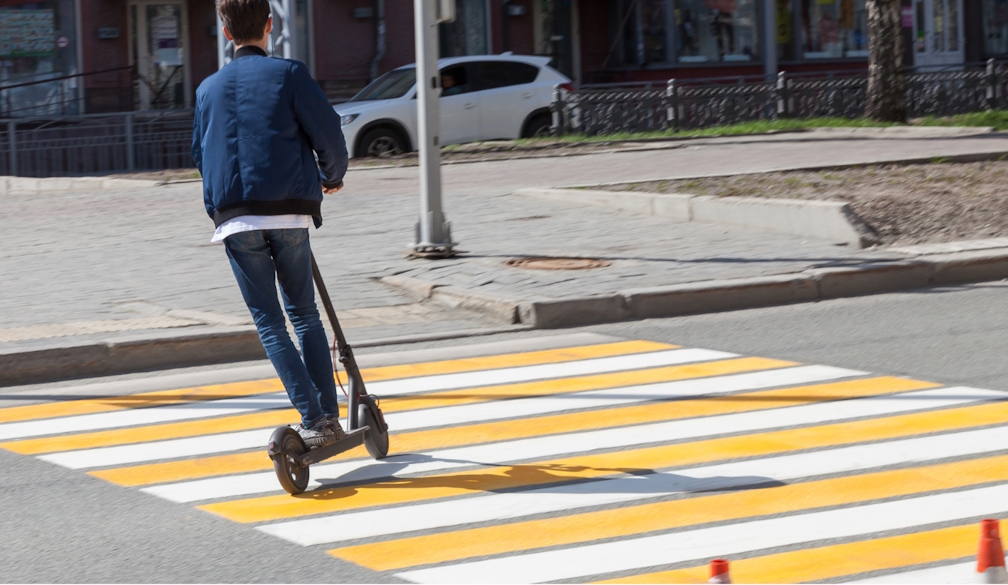
Recent decisions by several Australian and New Zealand cities to discontinue shared e‑scooter services have again thrust misperceptions and moral panic[1] into the limelight.
Some[2] city councils have terminated[3] contracts[4] with one operator of shared e‑scooters over allegations relating to exceeding caps on numbers. Other[5] councils[6] have cited public concerns about footpath riding, accidents, reckless use and parking to explain their decisions.
There have been calls for tougher policing[7] of e-scooters. However, recent research and innovations in the industry offer better, more cost-effective solutions that will ease the pressure on police resources.
These solutions include using readily available technology, including geo-fencing and speed-limiters, and educating riders. Our research[8] has found many of them simply don’t know the rules that apply to e-scooters in their city or state.
Police enforcement is limited
People who see e-scooter riders behaving dangerously often ask what the police are doing about it. In response, police sometimes launch “blitzes[9]” against riding behaviours, such as not wearing helmets. These efforts are focused on locations where e-scooter use is common or is considered a problem.
Yet the overall extent of enforcement is limited. Riders realise the chance of being caught is low. The Centre for Accident Research and Road Safety – Queensland (CARRS-Q[10]) has estimated, for example, that only one fine was issued for every 300 unhelmeted rides on shared e-scooters in Brisbane in late 2022 and early 2023.
In Queensland, enforcement focuses on the “fatal five” – driver distraction, drink driving, speeding, fatigue and unrestrained behaviours. Despite public concern about the safety of e‑scooters, many larger road and community safety issues are already stretching police resources.
This points to the need for other solutions to manage e‑scooters and reduce the demands on police.
State governments and police are responding to public pressure to ‘crack down’ on e‑scooter riders.Many riders don’t know the rules
CARRS-Q research[11] found e‑scooter riders (and people who don’t ride them) often don’t know the road rules. For example, less than half (45%) of the Queensland e‑scooter riders surveyed in 2020 knew the speed limit for riding on the road was 25km/h. When Canberra riders were asked in 2022-23, only 51% knew the correct speed limit.
People typically follow road rules when road infrastructure forces them to, known as self-explaining roads[12]. One example is a physically separated bike way that keeps cars and bikes apart.
In Queensland, e‑scooters are allowed to ride in bike lanes, but only on roads with a 50km/h speed limit or lower. But when scooter riders see a bike lane, many assume it’s a safe place to scoot regardless of the car speed limit.
Regulations are a confusing mess
Road rules for e‑scooters vary greatly across the country[13], as the table below shows. Public information is unregulated, putting the onus on users themselves to look up local road rules on state transport websites.

 A sign next to the e-scooters at JB Hi-Fi largely leaves it to riders to find out about the rules. Richard Buning Technology and infrastructure offer safer solutions There’s also a lot to say about what operators and others can do to manage public e‑scooter use, especially parking. Geo-fencing technology paired with dedicated parking hubs[15] in cities can almost eliminate “scooter litter”. In Melbourne, where provider contracts have been terminated, scooters were allowed to park almost anywhere. Globally, e-mobility parking hubs[16] have become the industry standard. There are many new companies[17] offering diverse parking solutions. One such model allows public e‑scooters to be parked only on private property such as hotel and local business premises[18]. Public and private e-scooters are different beasts The public and the media rarely distinguish between individually owned, private e‑scooters and shared public e-scooters. In fact, the two classes of riders are different people on different vehicles, often riding for different purposes. CARRS-Q surveys[19] have shown private e‑scooter riders are generally older and more likely to be travelling to work or study than riders of public e‑scooters. Private e‑scooter riders more often break the speed limit but are more likely to wear helmets. The latest models of public e‑scooters include numerous safety features[20] that cheaper private models don’t have. These include front suspension, larger wheels, a wider foot platform, better steering and braking, and speed-limiters. Read more: As cities axe shared e-scooters, the many more personally owned ones are in a blind spot[21] Most people see value in e-scooters In a comprehensive study[22] for Brisbane City Council in 2023, we randomly intercepted residents and tourists on the street. We found 83% of users and 42% of non-users believed e‑scooters greatly improve the city experience. Even among non-users, 65% of them still viewed shared e‑scooters and e‑bikes as a public resource. Only a minority (35%) saw them as a nuisance. Research around the world has produced similar findings[23]. Studies have also show negative perceptions are connected to stereotypes[24] of who scooter riders are. It’s a form of what is known as negativity bias[25]. In other words, people more strongly remember and report negative incidents. The stories of the many residents and visitors who happily use e‑scooters as an affordable and car-free way to get to work, explore a city or patronise a local business rarely make it into the media. Read more: We asked Melburnians about shared e-scooters. Their responses point to alternatives to the city council's ban[26] References^ moral panic (journals.sagepub.com)^ Some (www.theguardian.com)^ terminated (www.abc.net.au)^ contracts (www.abc.net.au)^ Other (www.melbourne.vic.gov.au)^ councils (www.abc.net.au)^ calls for tougher policing (www.theguardian.com)^ Our research (www.tandfonline.com)^ blitzes (mypolice.qld.gov.au)^ CARRS-Q (research.qut.edu.au)^ research (www.tandfonline.com)^ self-explaining roads (www.sciencedirect.com)^ vary greatly across the country (www.theguardian.com)^ CC BY (creativecommons.org)^ dedicated parking hubs (www.tmr.qld.gov.au)^ e-mobility parking hubs (www.tandfonline.com)^ companies (micromobility.io)^ hotel and local business premises (www.abc.net.au)^ CARRS-Q surveys (eprints.qut.edu.au)^ numerous safety features (techxplore.com)^ As cities axe shared e-scooters, the many more personally owned ones are in a blind spot (theconversation.com)^ study (theconversation.com)^ findings (www.sciencedirect.com)^ connected to stereotypes (www.sciencedirect.com)^ negativity bias (en.wikipedia.org)^ We asked Melburnians about shared e-scooters. Their responses point to alternatives to the city council's ban (theconversation.com)Authors: Richard J. Buning, Senior Lecturer in Tourism, UQ Business School, The University of Queensland
 "Pin It")