New data reveals rates of family violence among those who died by suicide
- Written by: Kate Fitz-Gibbon, Professor (Practice), Faculty of Business and Economics, Monash University, Monash University
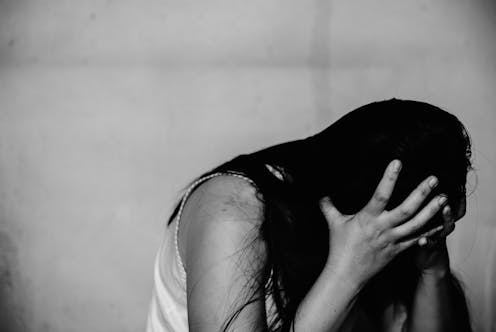
Domestic, family and sexual violence is rightly recognised as a national crisis[1].
While the evidence base has built significantly in recent years, one important missing piece of the puzzle is how these forms of violence have impacted people who die by suicide across the country.
Data released this week[2] by the Coroner’s Court of Victoria provides a detailed account of the experiences of family violence among people who have died by suicide.
The statistics are alarming. They remind us of what many working in this space already instinctively knew: the horrifically high count of lives lost to the national crisis of men’s violence against women is likely far higher than official numbers suggest.
What does the report tell us?
This latest report[3] presents data collected by the Victorian Suicide Register on 4,790 suicides reported between 2009 and 2016.
Over this period, in one in four suicides (24.5%) the deceased had experienced family violence prior to their death.
This rate was higher among females who died by suicide, with evidence of family violence present in 28.2% of cases recorded.
This rate only captures the cases in which evidence of family violence could be identified by the court.
Given all forms of family violence are under reported[4], including to police, legal and other services, this data are likely to underestimate the true rates of family violence experienced by people who die by suicide.
Where there was evidence of family violence prior to the suicide, in half of these the person who died by suicide was the perpetrator of violence.
In one in three cases, the individual who died by suicide had experienced family violence victimisation. In these cases, the deceased was significantly more likely to be a female (62.1%).
The report also records a further 17.5% of suicides where the individual who died by suicide had both used and been a victim of family violence. Little information about this group is provided.
We need to better understand the primary use of violence in these situations, including whether this data includes incidents of misidentification[5] and what the impact of it was. The role of intergenerational experiences of abuse should also be considered.
Gendered abuse
The report highlights gender differences in the records of people who died by suicide in Victoria during this period.
Significantly more males (65%) than females (16%) were recorded as a family violence perpetrator. Conversely, females were significantly more likely to be listed as a victim of family violence (62.1%).
These differences are expected given the gendered nature of family violence. Internationally, research has consistently highlighted the higher risk of suicidality and self-harm[6] among women victims of violence.
The data show just over one in two male perpetrators of family violence who die by suicide had used violence against an intimate partner.
A higher proportion of men (22.1%) who died by suicide than women (10.2%) had perpetrated family violence against numerous people, including a partner and at least one other family member.
The data also show female victims of family violence who died by suicide were more likely to have experienced family violence by their intimate partner.
By contrast, male victims were more likely to have experienced family violence perpetrated by a family member other than their partner.
Many factors at play
The report provides insights into how family violence and suicide interact with other social issues.
While the report doesn’t discuss causation, it does look at prevalence of mental health diagnoses. Nearly three quarters of victims of family violence who later died by suicide had been diagnosed with a mental illness at some point in their lives (72.5% among males, 78.2% among females).
The rate of substance misuse[7] was reported as higher among people who had experienced family violence than among the general Victorian suicide population.
Victims and perpetrators of family violence who died by suicide were more likely to be under financial stress when compared to the broader Victorian suicide population.
This was defined as any evidence of stress or harm relating to the deceased’s financial situation. For example, high debts, loss of money, inability to pay mortgage or bills or afford other costs of living, and gambling-related harms. This is a timely finding given the current cost of living crisis and the need to understand where additional support services may be needed.
More than 60% of male family violence perpetrators who died by suicide in the period studied had experienced at least one legal stressor prior to their death. This included involvement in criminal and civil legal processes, including divorce settlements and child custody cases.
Reflecting the harmful impacts the legal system can have on victims[8], legal stressors were also present in more than a third of the lives of victims of family violence who died by suicide.
Coordination and consistency is key
This data represents an important step forward in quantifying the prevalence of family violence among individuals who died by suicide in one Australian state.
But this violence is a national problem. This data are needed for every Australian state and territory. We simply cannot seek to effectively address and prevent what we do not measure.
Following the recommendations of the recent federal rapid review[9], there needs to be greater coordination at the commonwealth, state and territory levels to gather this data in the same way in every jurisdiction.
Knowing the impact that experiences of family violence may have had on someone’s suicide is also important to understand. This data doesn’t examine the time frame of experiences, nor their proximity to the person’s death. These are crucial factors to inform prevention strategies.
The more we know about how victims experience and interact with services, the more informed early intervention and response efforts can be. It’s likely victims would have encountered a range of different services before they died.
Each of these points is an important opportunity for intervention. Greater understanding, including of what role family and friends may play in supporting their loved ones to seek help, can be used to inform more effective suicide prevention efforts.
First and foremost, each of these lives matter. And they represent additional lives lost in Australia’s national crisis of domestic, family and sexual violence. Current efforts to prevent femicide in Australia should extend to accounting for, and better understanding deaths by suicide following family violence.
The National Sexual Assault, Family and Domestic Violence Counselling Line – 1800 RESPECT (1800 737 732) – is available 24 hours a day, seven days a week for any Australian who has experienced, or is at risk of, family and domestic violence and/or sexual assault.
References
- ^ a national crisis (www.smh.com.au)
- ^ Data released this week (www.coronerscourt.vic.gov.au)
- ^ This latest report (www.coronerscourt.vic.gov.au)
- ^ are under reported (www.aihw.gov.au)
- ^ incidents of misidentification (www.crimejusticejournal.com)
- ^ higher risk of suicidality and self-harm (research.birmingham.ac.uk)
- ^ substance misuse (wrap.warwick.ac.uk)
- ^ on victims (victimsofcrimecommissioner.vic.gov.au)
- ^ rapid review (www.pmc.gov.au)
Authors: Kate Fitz-Gibbon, Professor (Practice), Faculty of Business and Economics, Monash University, Monash University