healthy, affordable and resilient to climate change
- Written by: Lyrian Daniel, Associate Professor in Architecture, University of South Australia
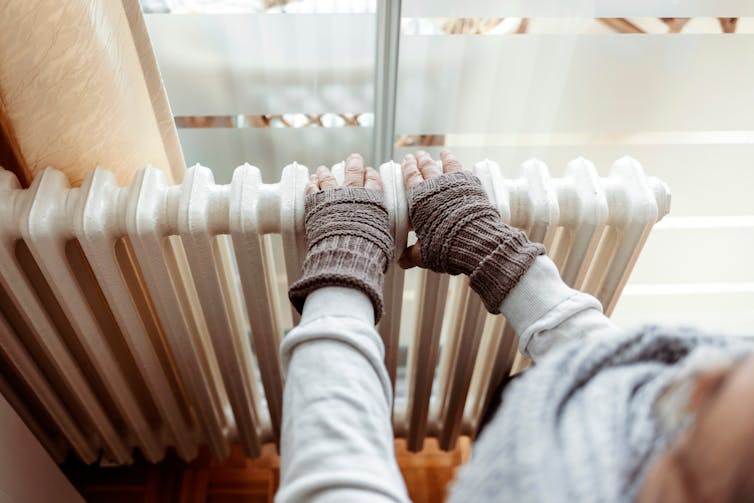
Imagine coming home after a long day at work. It is winter. You step inside your home. It is warm, quiet and dry.
A storm is forecast to blow in tonight. Unprecedented rainfall, they are saying. But you are not worried. You know your house will stay warm, and the roof and gutters will cope with the fourth “once-in-100-year” rainfall event this season.
Come summer, too, you know your house will stay cool, even through any blackouts.
Since moving into your new home, you no longer have to worry about the next electricity bill. Your house is designed well, so it takes very little energy to keep warm in winter and cool in summer.
The house also never gets that musty, mouldy smell. Your child’s asthma has improved greatly. Your own mental wellbeing is better and your risk of heart and blood vessel disease is low.
Imagine if all Australian homes were fit for purpose: healthy, affordable to run and climate-resilient. This is the housing we need, but for many it is not the housing we have, nor is it the housing we are building.
Our new research[1] casts a critical eye across the quality and condition of the Australian housing stock and the policies that govern it. The results were stark. We don’t have much information on the state of our housing stock, but what we do have paints a worrying picture.
‘Patchy’ data, but we know enough to be concerned
Australians hold about A$11 trillion of their wealth[2] in their housing. While we’re very good at calculating our housing’s value, we don’t know much at all about what our 11 million dwellings[3] are like to live in. Data to describe the warmth, energy efficiency and healthiness of Australian homes are best described as patchy.
If we look across this patchwork of information, though, there is a lot to be concerned about. For example, we find:
a large gap between the energy efficiency of new and existing homes
older homes are in poorer condition than newer homes
older homes are more likely to be cold homes.
Australia is lagging on the policy front
We reviewed energy efficiency policies from across Australia. We then compared the findings with an International Energy Agency framework for energy-efficient buildings[4]. Australian policies fall short in terms of regulation, information and incentives, with a reliance on voluntary rather than mandatory measures.
New buildings and major renovations are regulated under the National Construction Code (NCC[5]). In 2022, the code was updated to include a 7-star energy-efficiency rating[6], lower than the 9-star rating experts recommended. We know building codes and mandatory energy-efficiency standards are effective[7] for improving energy performance, saving on energy costs and battling climate change.
While the NCC is a national code, it is enacted by states and territories. They agreed to the updated code[8] of 2022. But adoption of the new standards has been slow[9].
Tasmania and the Northern Territory have decided not to adopt the energy-efficiency standards. New South Wales and Western Australia are not adopting the Liveable Housing Design standard that was included in the code in 2022.
There is a national plan for improving existing buildings to achieve net zero emissions. However, policymakers recognise that current policy settings are not sufficient[10] to achieve net zero.
Essential policies, such as mandatory disclosure of the energy performance[11] of homes and minimum standards for rental properties[12], have not been widely adopted.
Information and incentives for improving existing buildings are mostly voluntary. The ACT is the only state or territory that requires disclosure of energy-efficiency ratings. Rebates for things like solar panels differ in different parts of Australia and change over time.
Change is political, but not impossible
With Australia so far behind, we sought to understand how and why political change occurs. Or doesn’t. We drew lessons from two case studies discussed in our report.
The first looked at the adoption of the Liveable Housing Design Standard[14]. It took over a decade for the standard to progress from a voluntary measure to inclusion in the 2022 National Construction Code.
The case study revealed the influence of the property lobby in hampering the adoption of the standard. At a broader scale, many experts we spoke with for the research noted the high political stakes of intervening in housing policy.
The second case study reflected on the powerful role of a decades-long program of empirical research and strong narratives for change in realising Healthy Homes Standards[15] for rental properties in Aotearoa New Zealand. It also showed the importance of a reformist government and minister that were able to leverage the research evidence to enact change.
Australia needs to move, quickly and with big steps
On the global stage, Australia is lagging in both its recognition of adequate housing as a human right[16] and its commitment to action on climate change[17].
We so desperately need national leadership. A national vision. And a national plan to achieve the housing we need, for all Australians.
To learn more, you can register for the Australian Housing and Urban Research Institute’s October 1 webinar, Sub Standard – Lifting Australian building quality[18].
References
- ^ new research (www.ahuri.edu.au)
- ^ A$11 trillion of their wealth (www.abs.gov.au)
- ^ 11 million dwellings (www.abs.gov.au)
- ^ framework for energy-efficient buildings (iea.blob.core.windows.net)
- ^ NCC (ncc.abcb.gov.au)
- ^ 7-star energy-efficiency rating (theconversation.com)
- ^ standards are effective (www.science.org)
- ^ agreed to the updated code (www.abcb.gov.au)
- ^ has been slow (www.abcb.gov.au)
- ^ current policy settings are not sufficient (www.dcceew.gov.au)
- ^ mandatory disclosure of the energy performance (theconversation.com)
- ^ minimum standards for rental properties (theconversation.com)
- ^ Jelena Stanojkovic/Shutterstock (www.shutterstock.com)
- ^ Liveable Housing Design Standard (ncc.abcb.gov.au)
- ^ Healthy Homes Standards (www.hud.govt.nz)
- ^ adequate housing as a human right (www.ahuri.edu.au)
- ^ commitment to action on climate change (www.climatecouncil.org.au)
- ^ Sub Standard – Lifting Australian building quality (www.ahuri.edu.au)
Authors: Lyrian Daniel, Associate Professor in Architecture, University of South Australia